

|
Getting your Trinity Audio player ready...
|
Fresno County supervisors on Tuesday approved a 940-acre, age-restricted development near Friant nearly 20 years in the making, a project developers say would allow older Fresno-area residents to retire close to home.
The Friant Ranch housing project has faced years of litigation over its environmental impacts, including court orders requiring further air quality analysis. But much of the board’s discussion Tuesday focused on water availability for the community, which would be within sight of Friant Dam.
Attorney Bryan Wagner, representing Friant Ranch Development, said developers had secured substantial water rights to ensure the 2,500 homes and nearly 6 acres of commercial development would have adequate water, even during drought years.

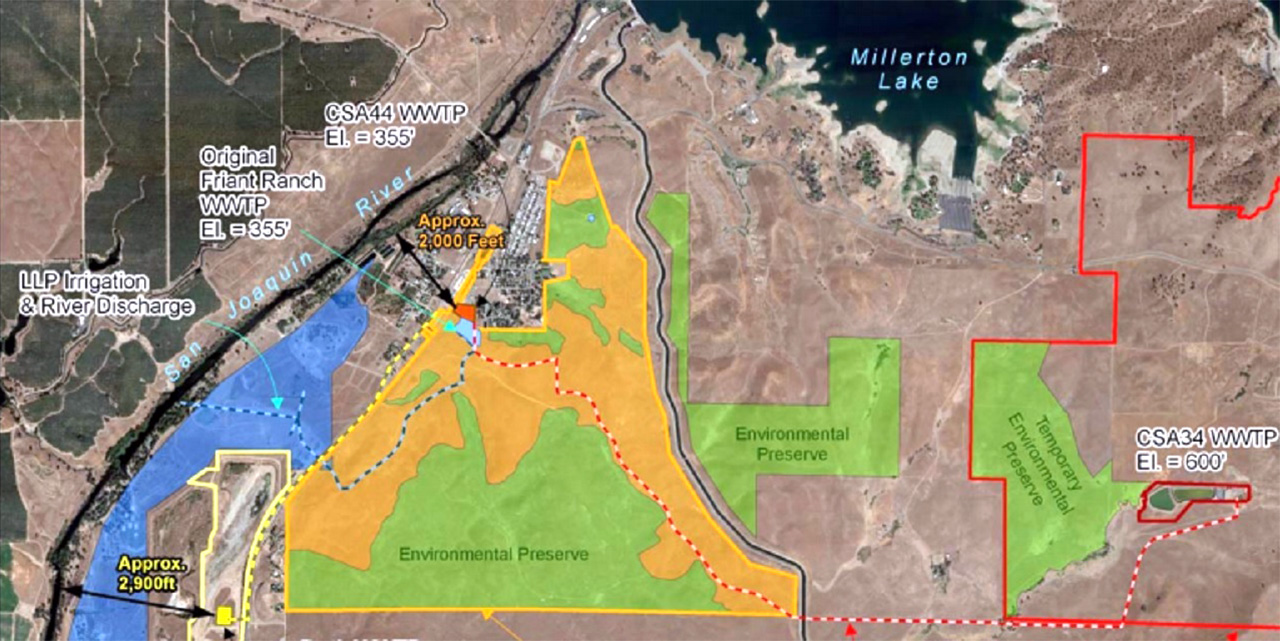
Wagner said nearly half the property would be preserved as natural habitat.
“I don’t want to toot our own horn, but we’ve tried to do a good job that will really create a pedestrian-friendly town that will become a gateway to recreation,” Wagner previously told GV Wire.
Supervisors approved the project 4-1, with Supervisor Brian Pacheco opposed.
Environmental Groups Call for Broader Impact Studies
Local environmental groups and some nearby residents expressed concerns about the environmental impacts of the project, which is geared toward residents 55 and older.
Lawsuits against Friant Ranch began in 2014, resulting in two dismissals and an order from the California Supreme Court requiring further study of short- and long-term air quality impacts.
Because of the court decisions, County Counsel Doug Sloan told supervisors that the scope of the environmental studies should be limited to air quality issues.
Representatives from the League of Women Voters and the Sierra Club, however, said the passage of time warranted additional study and public review of potential impacts on traffic, water, and the nearby river.
Kay Bertken, president of the League of Women Voters, said the Lower Tule River Irrigation District, which would supply water to Friant Ranch, did not have adequate water supplies during the last drought.
“Who will be responsible when there’s another multi-year drought?” Bertken said.
Why Can’t Fresno Develop Along the River?
Supervisors latched onto these concerns, asking questions about water availability.
Supervisor Brian Pacheco pointed to Madera County’s ability to develop along the San Joaquin River. Although Riverstone and Tesoro Viejo have faced water quantity issues, he questioned why Fresno County has not seen similar development.
“I see our colleagues out in Madera are putting successful project after successful project on the map and developing that,” Pacheco said. “It seems we should be able to do that on our side, but in our experience, we haven’t been able to do that.”
At full buildout, which Wagner estimates will take about 10 years, the development is expected to need 915 acre-feet of water annually.
In 2005, developers secured 2,000 acre-feet of water through the Lower Tule River Irrigation District on a “first priority” basis.
Following the 2014-15 drought, however, the developers renegotiated the agreement, securing a water banking arrangement of up to 1,800 acre-feet, enough for about two years of water, Wagner told GV Wire.
Wagner said smaller yards designed for retirement-age residents would help minimize landscaping water use.
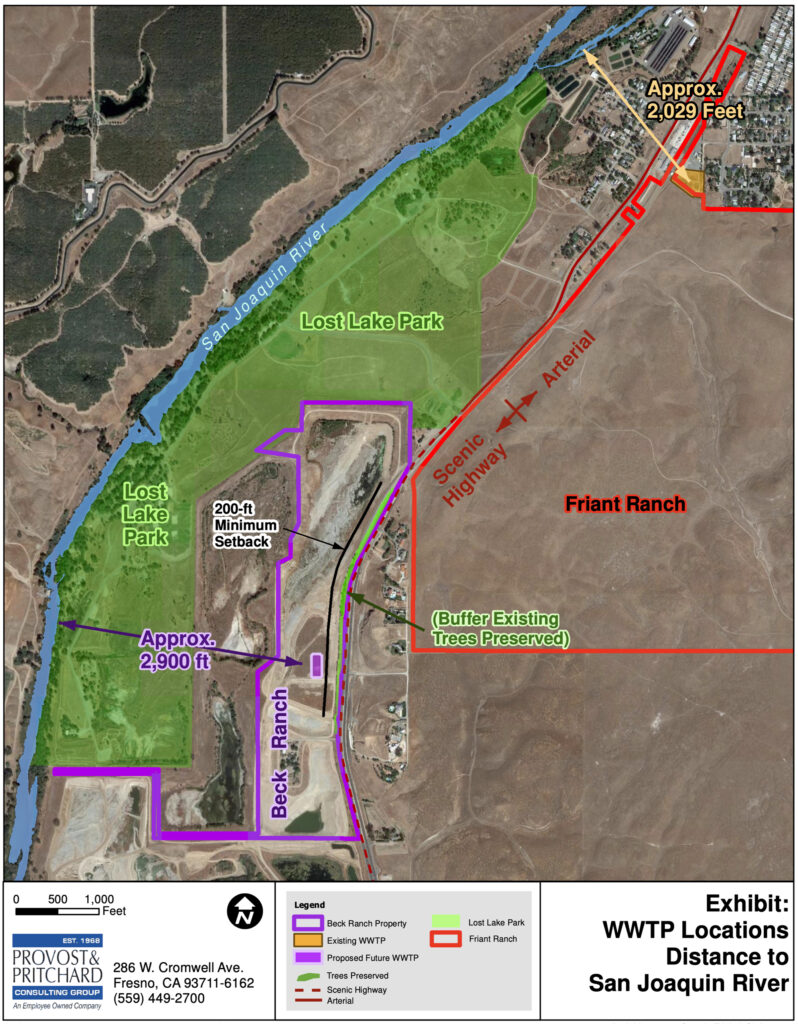
A wastewater treatment facility would also recycle water for some landscaping needs at Friant Ranch and Beck Ranch.
The treatment plant would be available to residents of the existing Friant community, allowing them to connect to the facility once it becomes available and eliminate the need for septic systems if they choose.
Bertken said the wastewater treatment facility could leak up to 69 acre-feet of effluent annually, while Wagner noted that septic systems also leak.
Fred Faysal, chief water operator for nearby Waterworks District 18, said at Tuesday’s meeting that Friant Ranch’s federal water credits would help bring more water to the community.
“To keep providing water to this community, we’re going to need those allocations,” Faysal said.
Self-Contained Community With Retail, Medical Offices
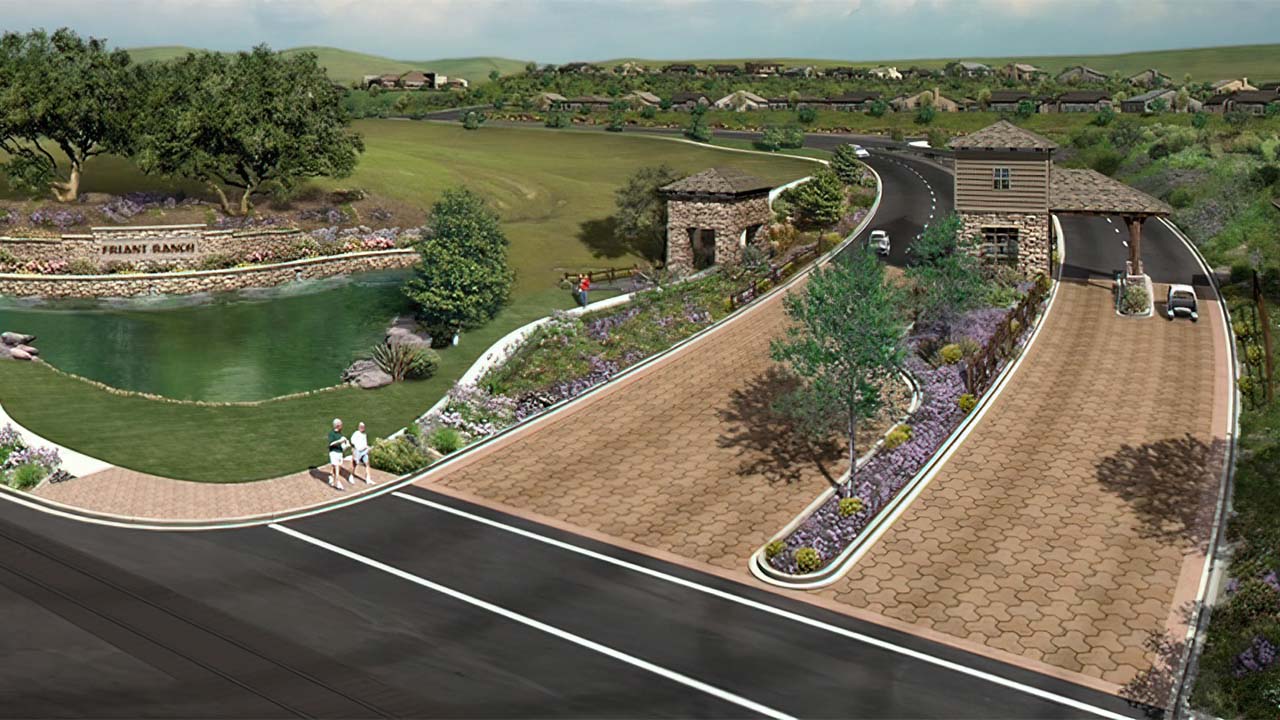
Only a few minutes from Table Mountain Casino, Friant Ranch would at full buildout bring 2,500 homes and 250,000 square feet of commercial development, including medical offices, retail, and other amenities to make the development a complete community, Wagner said.
Housing would range from single-family homes to condominiums, fourplexes, and stacked flats, catering to people looking to downsize while maintaining active lifestyles.
While a majority of homes would be limited to people aged 55 years or older, about 180 units of apartments would provide workforce housing, both for people working in Friant Ranch or at nearby Table Mountain, Wagner said.
Twelve miles of bicycle and pedestrian trails would connect the community, offering residents alternatives to driving.
Having medical offices and grocery stores within the development would allow residents to attend medical appointments or shop for groceries without needing their vehicles, Wagner said.
The 460 contiguous acres of natural space would preserve both the habitat and the native species. Wagner said given what he’s seen in other communities, such as those near the American River or Sacramento River, he expects many of the residents to volunteer in preservation efforts.
Retention basins in the developed portions of Friant Ranch would help with drainage.
“We’ve tried the preserve the natural arroyos and things that are on the site already to keep it as natural and open as possible,” Wagner said.
Friant Ranch Gives Retirees a Place to Settle Down Close to Home: Wagner
Despite previous California court rulings, the project could face additional legal challenges.
Although outside counsel and county counsel told supervisors that courts required revisions to the environmental studies only on air quality issues, Radley Reep, a consultant with the League of Women Voters, said the current environmental study acknowledges changes involving the wastewater treatment plant and endangered species in the years since the original study was adopted.
“If this goes to court, the court would overturn it in two seconds,” Reep said.
Gary Lasky of the Sierra Club said air quality impacts could encompass a broad range of issues.
Both the Sierra Club and the League of Women Voters have sued over the Friant Ranch development.
Developers Hope Friant Ranch Keeps Retirees Close to Home
With supervisor approval behind them, Wagner said the group has about two years of planning for the infrastructure ahead of them. The development group is taking infrastructure costs entirely on its own.
Over four phases, Wagner expects full buildout to be completed in about 10 years, and with California’s population aging, he said demand will only grow.
He said developers and the Bigelow and Silkwood families want a place for Fresno area residents retire close to home rather than moving to Arizona or Nevada.
“Our hope is that Fresno area residents that want to retire and are still active and looking for recreational activity, that they will like this,” Wagner said. “They’ll sell their home in town, which will free up housing for other people to move into, younger families, while they stay in the area, stay with their families, keep their economic power here instead of taking it to the coast.”