

|
Getting your Trinity Audio player ready...
|
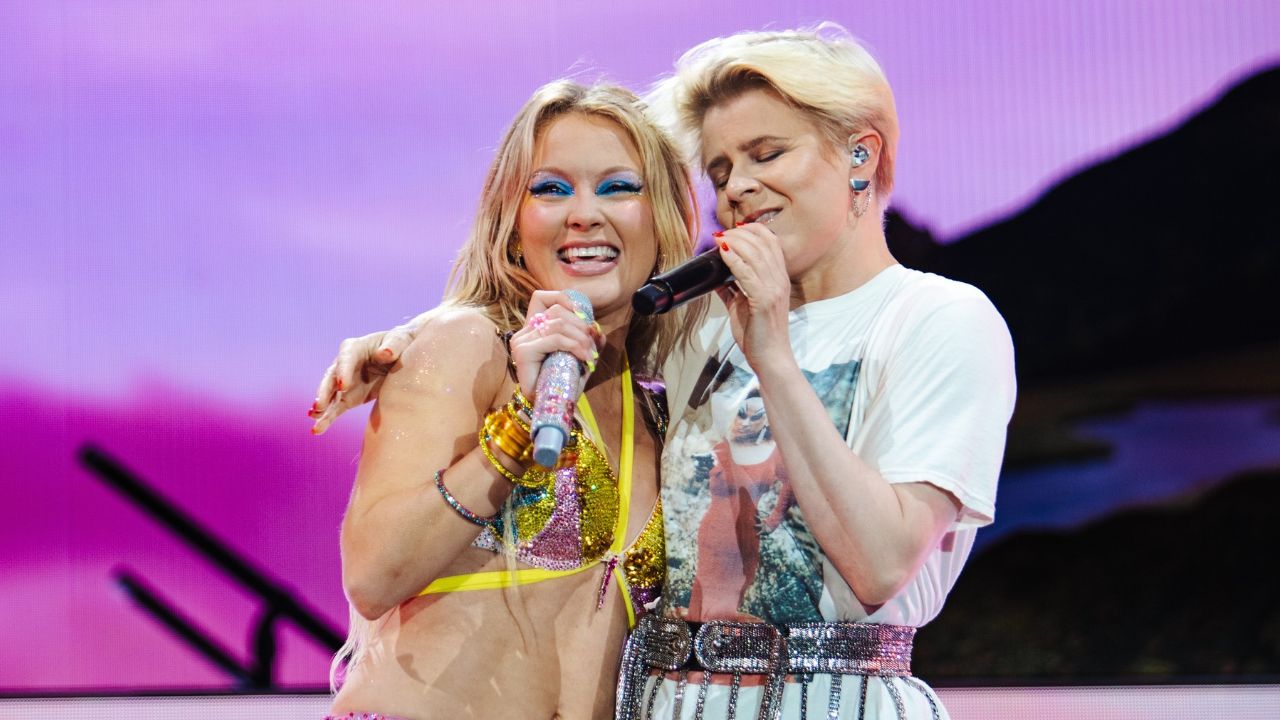
When Robyn started singing “Dancing on My Own” at Portola, I did what felt completely natural in the moment and FaceTimed my mom.
I was at the front, off to the side of the stage, where we had somehow found enough space to breathe despite the enormous crowd packed around us. My mom answered, and within seconds we were singing along together through my phone as thousands of people around me did the same.
There was something fitting about it. I was listening to one of the great millennial anthems about dancing alone, yet the last thing I wanted in that moment was to experience it by myself. I wanted my mom there, even if she was hundreds of miles away and appearing on a screen in my hand.

As we sang, I looked above Pier 80 and saw clouds start covering the light. For a place defined by concrete, warehouses, metal structures, and enough bass to shake your entire body, it was an unexpectedly beautiful scene.
Anthony W. Haddad
The Millennial Re-View
Robyn was onstage, my mom was singing with me, and the crowd seemed to know every word.
That is the image I keep returning to from my second year at Portola.
Portola Still Felt Special the Second Time
Last year, I walked onto Pier 80 without really knowing what to expect. I had heard plenty about Portola, but nothing quite prepared me for a festival that embraced its industrial surroundings rather than trying to disguise them.
I ended up loving the concrete, the warehouses, the strange little corners, and the feeling that the entire festival existed somewhere between a massive dance party and a temporary city built on the waterfront.
Coming back this year meant that novelty was gone, and that became part of what made the weekend interesting. I already knew what Pier 80 looked like, how much walking would be involved, and how the warehouses could somehow swallow thousands of people and turn into enormous dance floors. None of that stopped me from wanting to return.
If anything, wanting to come back after the surprise was gone felt like a better compliment to Portola. A festival can impress you once because everything feels new, but returning means the experience has to offer something beyond discovery. Portola still felt special because it has developed a personality that does not feel interchangeable with every other major music festival.
Portola Gave Millennials a Nostalgia Buffet
The music remains the biggest reason for that, although some of the artists I was most excited to see were not necessarily the names someone might first associate with a festival so rooted in electronic and dance music. Zara Larsson and Robyn were the top of my list, while Tove Lo, Tiësto, and Swedish House Mafia gave the weekend an unmistakable millennial streak.
Portola essentially handed my generation a nostalgia buffet, and I was more than happy to take a plate.
Seeing Zara was a bucket-list moment. Hearing the songs I already knew while standing in the middle of Portola was enough for me, and everyone seemed to know there was a good chance Robyn would make an appearance at Zara’s set. Even when you expect something like that, there is still a difference between anticipating it and actually seeing it happen.
Tove Lo, Tiësto, and Swedish House Mafia added to that feeling in different ways. There was something surreal about hearing artists and songs connected to earlier periods of my life while standing at a festival that still felt completely current. A lot of millennials grew up during the era when electronic music exploded into the mainstream, and hearing some of those sounds again carried considerably more weight now that we are older and, in my case, considerably less capable of recovering from a festival weekend.
That became the larger theme of Portola this year. Nostalgia does not have to mean living in the past, especially when the music that shaped an earlier part of your life can suddenly feel new again in a completely different setting.
The people helped create that feeling, too. Some of the friends I see at festivals are fellow media people I may only cross paths with a couple of times a year, which has turned weekends like Portola into something closer to reunions. We arrive for the artists, but part of the experience has become finding one another again in another city, at another festival, before everyone eventually disappears back into their regular lives.
Portola Is More Than Its Stages
Portola also reminded me that some of the most memorable parts of a festival happen away from the music. Farmhouse World was one of those places this year, creating a pop-up that somehow felt warm and intimate in the middle of Pier 80’s industrial chaos.
Kasem “Pop” Saengsawang, the chef behind Farmhouse Kitchen Thai Cuisine, turned the space into something that felt less like another festival food stop and more like its own little world. It was thoughtful, immersive, and spectacular enough that it made me want to stop moving for a while, which is not an easy thing to accomplish at a festival where I am constantly thinking about the next set.
That experience also highlighted my one real frustration with Portola this year: I wish the festival had done a better job of showing us beforehand what was waiting beyond the stages. I wanted to see more about the other food vendors, sponsor activations, and pop-ups spread throughout the festival.
Portola clearly understands how to use social media, and its strange, self-aware meme culture has become part of the festival’s personality. Considering the festival sold out, that strategy deserves plenty of credit, but I would love to see some of that same energy used to show people who already bought tickets what else they can expect when they arrive.
I enjoy wandering around a festival, but I should not have to treat finding its best pop-ups and vendors like a side quest.
Old Can Become New Again
By the time I left Portola, I was exhausted, my feet were reminding me that festival season had officially reached its end, and I was more than ready to go home. At the same time, I was already wondering what Portola would do next year and when I would get another weekend like this with the people I only seem to see when festival season rolls around.
That is probably why I keep coming back to Robyn and my mom. Plenty of concerts leave you remembering the production, the crowd, or the song that closed the night, but every so often a moment becomes attached to something much bigger than the performance happening in front of you.
I will remember looking up at that stage and my mom while thousands of people sang around me. More than anything, I will remember holding up my phone and seeing my mom singing back.
Last year, Portola showed me something new. This year, it reminded me that old can become new again, especially when familiar music, old memories, and people you care about suddenly meet in a place you never expected.
Last year, Portola was my concrete playground. This year, it became a nostalgic jungle. While Robyn sang about dancing alone, I realized how much better those moments can be when you have someone to share them with.
About the Author
Anthony W. Haddad is a Fresno-based reporter and columnist known for the award-winning Millennial View column series and Local Side Quests, which explores overlooked events, businesses, and experiences across the Fresno area. His work covers a wide range of topics, from pressing local issues and community concerns to the everyday challenges, culture, and experiences shaping life in the Central Valley.
—
Connect with Anthony W. Haddad on social media. Got a tip? Send an email.