



|
Getting your Trinity Audio player ready...
|
When Jennifer and Darrell Taber moved to Shaver Springs in 2017, they knew the water in the area was “not great.” For decades, the state and the county have dealt with water issues ranging from high uranium levels to high gross alpha particles in the water.
More recently, iron and manganese levels have exceeded maximum allowable thresholds.
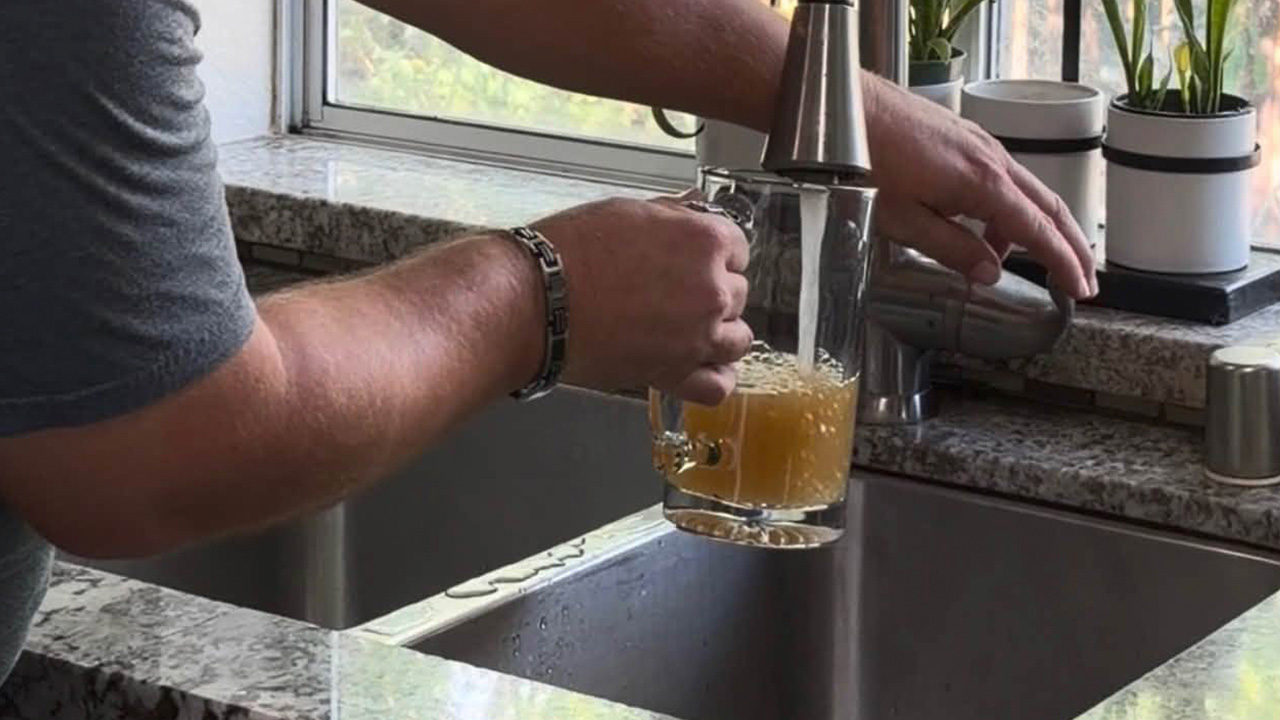
For going on six years, following the Creek Fire, Jennifer Taber said water in the area has been a yellow-orange color far more consistently than in the past. In July, the problem became especially bad when uranium, gross alpha levels, and manganese at the district’s most consistent well exceeded safe levels. This caused the county to issue a warning to residents to not give water to infants because of the manganese and to avoid long-term consumption as gross alpha and uranium can cause cancer.

Now, the State Water Resources Control Board recommends residents avoid drinking and cooking with the water altogether.
That recommendation comes with nearly $400,000 in new money from the state and county to help find a new well and subsidize bill payments that for some residents have increased by 250%.
“The State Water Board and Fresno County now jointly recommend that Shaver Springs customers use an alternative water source for drinking and cooking,” Blair Robertson, spokesperson with the water board, told GV Wire. “Limited or incidental ingestion is not considered an immediate health risk. Infants and small children should use an alternative water sources exclusively for drinking and preparing infant formula because of elevated manganese levels.”
Residents Call for Consistent Messaging
The state’s messaging however, did not filter down to all residents until The Fresno Bee reported the update on Friday. In an interview with GV Wire on Thursday, the Tabers had not heard about the new recommendation.
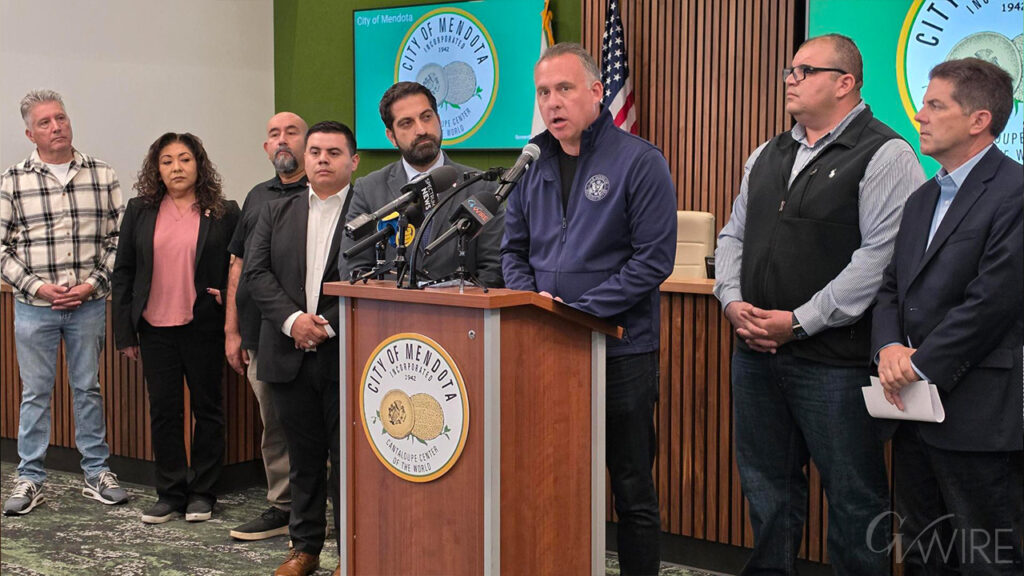
The recommendation to avoid cooking and consuming the water comes after Supervisor Nathan Magsig took to social media to show himself drinking local water in response to calls to do so from residents. He then reaffirmed on KMJ’s Broeske and Musson show and at the Sept. 22 board meeting that he drank the water.
Messaging may be the least of residents’ worries, however, as limited efforts since 2013 have not produced long-term improvement. More than half of a $1.3 million grant went to digging two test wells found to be contaminated. A roughly $350,000 self-imposed property assessment paid by residents went to studying water-system improvements that proved infeasible.
The county now hopes the remainder of that state grant will help buy existing private wells.
Darrell Taber told GV Wire he acknowledges that the brownish discoloration largely comes from natural contaminants, but he says it’s part of a larger problem of the county downplaying the troubles at Shaver Springs, where for decades, the county and state have tried to find a solution to ongoing water problems.
State and county water warnings describe the uranium, gross alpha, and manganese contamination as only being a problem “over many years.” For Shaver Springs residents, having dealt with the issue for more than a decade, they have few alternatives.
“When they’re five, six, seven, sometimes 30 times over the (maximum contaminant level), that’s not just a nuisance issue or just a slight discoloration. That’s a health response issue now when you’re at those levels,” Darrell Taber said.
Shaver Springs Problem Not New
The county follows the state’s lead when it comes to noticing about water issues, said Fresno County Supervisor Nathan Magsig. The problem has not hit the threshold of an order to avoid drinking water, which comes with a state of emergency declaration.
But issues with the water are not new and the county has for decades worked with the state to find new water sources for the district of about 70 homes.
Magsig said that it takes coordination with multiple state agencies to secure funding to rectify the problems.
“We are doing everything in partnership,” Magsig said. “Because without the state funding, if all these costs were fully borne by the residents, because there’s only 70 homes out there, it would be impossible for those resident to fully pay for the fully loaded costs of trying to find the solution to the water challenges that exist in that area.”
In 1988, members of the Shaver Springs Water District petitioned the county to manage the district after they could not financially handle the operational tasks. Now, the county legally owns the water system, administering it for residents and ensuring compliance with state law, according to county documents.
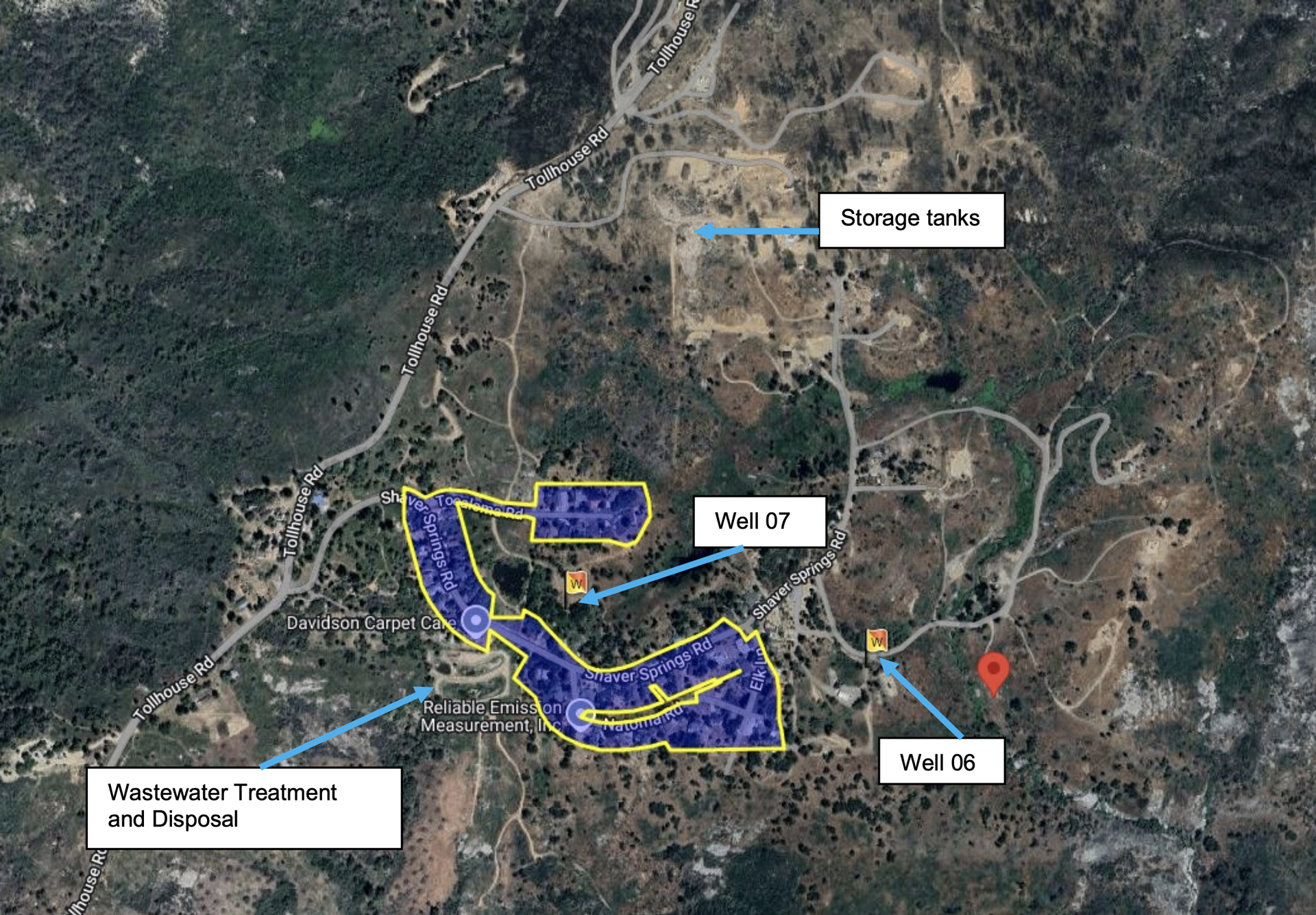
Over the course of time, the system has had to abandon four wells. The county keeps well No. 5 inactive because of high iron levels. Now, the district relies on wells No. 6 and No. 7 to supply the system, with No. 7 — dug in 2019 — the one the community relies on the most.
Those wells feed three storage tanks, one of which the state has for more than a decade said needs replacing, according to state water records.
In 2013, the state put a massive overhaul of district infrastructure on its priority list when contamination at five of the six wells meant residents had to use bottled water. At the time, the state told the county to find surface water rights for the district.
The state also ordered four of the five contaminated wells destroyed, as well as one of the storage tanks. Replacing the storage tank would have cost $100,000 at the time. The state also called for new water pipelines.
The county destroyed the wells but never replaced the storage tank. Nor has the county inspected the conditions of the tank, with Magsig and special districts manager Chris Bump telling residents at the August community meeting that the cost to inspect the tank would be too high. Magsig said the county is looking to use a portion of the remaining grant funding to pay for a dive team.
Bump told GV Wire that because the state did not provide funding, the tanks were not replaced.
$700,000 on Failed Test Wells
Building new infrastructure in the district is not cheap and options are limited.
Shortly after the state order, the county put a Prop. 218 tax on homes in the area to repay the state for plans on a new water system, assessing a $1,000 a month on each home for 5 years, which totaled about $350,000. After those plans resulted in an infeasible water system, residents opted to buy a new well.
However, that new well that has since produced contaminated water.
In 2023, the county received $1.2 million from the state to drill a new well for residents. Not much came from that grant after the county spent $700,000 on two test wells dug about 100 feet from an existing well site previously shut down for contaminants. Results from those test wells also found unacceptable contamination levels.
“The community was really upset about that, too,” Magsig said. “You get a grant and then you spend this money and you end up with nothing.”
Magsig said the county used geology experts to locate the two sites.
Now, the county is looking at using the remainder of that money to purchase one of two nearby private wells. Those wells are relatively old, but they have produced strong amounts of water in the past, Magsig said.
By November, the county will know whether it can use the roughly $500,000 remaining to purchase one of the wells. In the meantime, the county is examining the wells for productivity. $240,000 of the $400,000 in new money from the state and county will go into researching the strength of those wells, Robertson said.
Residents have asked for a treatment plant, but those solutions can be costly.
Magsig said he’s looked at installing treatment directly at the well, but since contaminants fluctuate, it can be hard to get the right system.
“Trying to come up with a solution when the iron and manganese and the uranium and gross alpha levels are fluctuating makes it challenging because manganese and iron may be the issue today and a year from now it could be uranium,” Magsig said. “The type of filtration system that you have, it’s going to change depending on what the constituents are that you’re trying to remove from the water.”
Water Bills Increased by 300% for Some
In 2025, the county raised water and sewer rates after it said funding wasn’t sufficient for upkeep on the system. Water rates went from $49 a month to $85 a month. Sewer rates went from $25 to $110.
That’s before the 1,000-gallon allotment kicks in. With the average family of four using about 8,000 gallons a month, that amount adds up. Jennifer Taber said she pays about $800 every two months for water. Residents also get billed for calling the county for water issues, Jennifer Taber said.
With the system built and paid for, however, and county staff working working amongst the various water systems, Jennifer Taber questions the reasoning for the pay increase.
“The thing is, we don’t have any treatment, and our infrastructure is from the 1960s,” Jennifer Taber said. “If they upgraded our infrastructure or if we had treatment, and they raise our rates, we would understand.”
Many residents have also not been paying water bills, exacerbating the problem, Magsig told residents at the community meeting.
Testing Methods in Doubt
Residents also complain about the county’s testing methods.
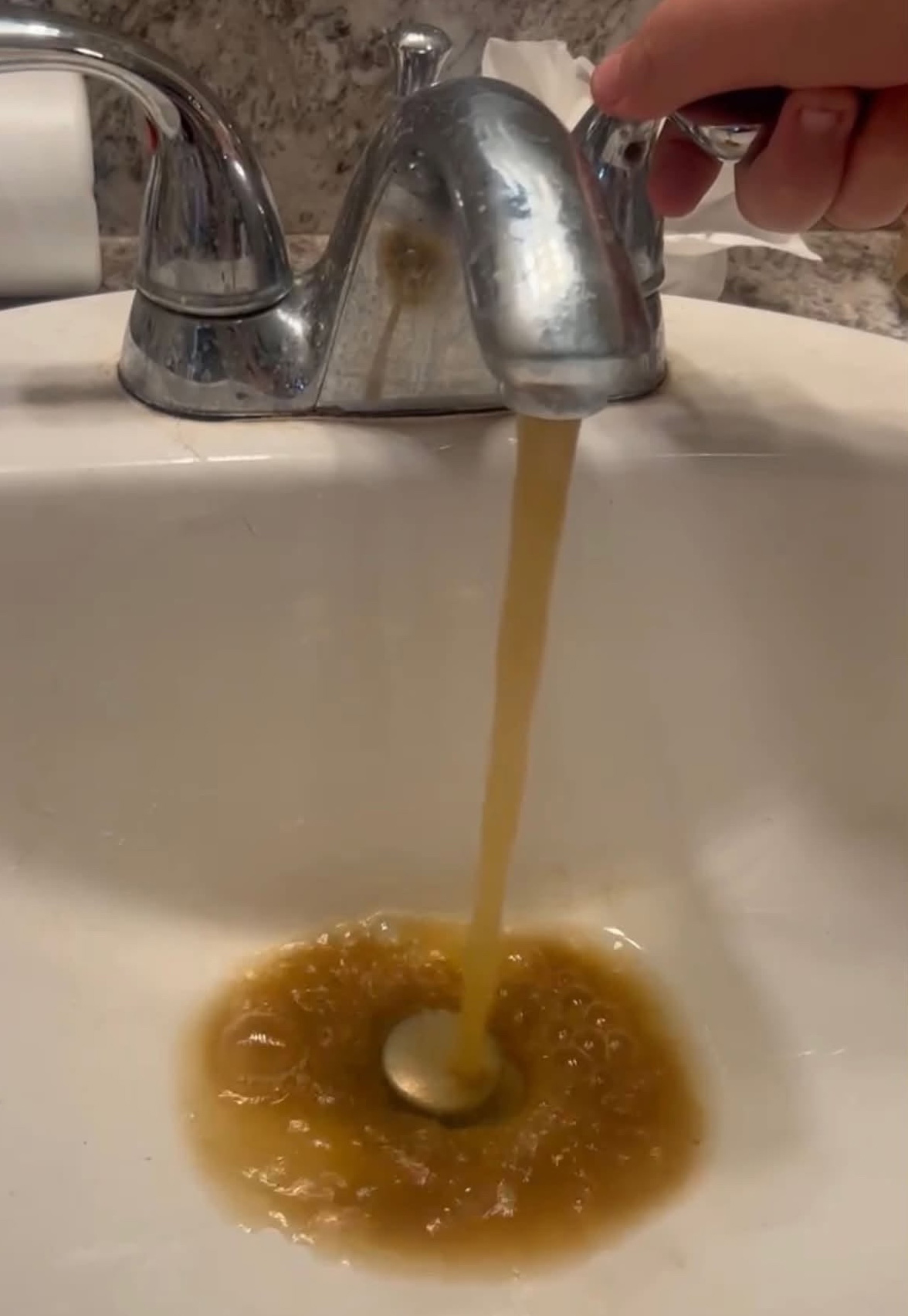
Starting with discoloration, residents and the county argue back and forth about the cause. Magsig says residents’ old plumbing exacerbates issues. He’s posted social media videos of himself pulling water from outdoor sources and from water tanks showing clear water.
Many residents, however, say they’ve seen the discoloration coming straight from the main.
Turbidity at well No. 7 — the measure of suspended material that causes haziness — is at 42 units, far exceeding the maximum level of 5, according to the latest test results from the water control board. Well No. 6 has acceptable turbidity levels.
But residents also distrust testing methods. Magsig told GV Wire that the county pulls water for testing straight from the water main. Residents repeatedly attest, however, that county staff pull water from hose bibs and faucets at homes downstream from home water filters, distorting test results.
Robertson with the county has two sampling stations independent of customers’ homes. An updated sampling plan will verify that claim. The water board likewise directed the county to install sample taps at the storage tanks after residents have long said that the water near the tanks needs to be directly tested.
“It’s our understanding that they have two dedicated sample stations — not connected to customers homes — and they are constructing a third one,” Robertson said. “We are in the process of verifying that with the water system through the review of an updated sampling plan.”