


|
Getting your Trinity Audio player ready...
|
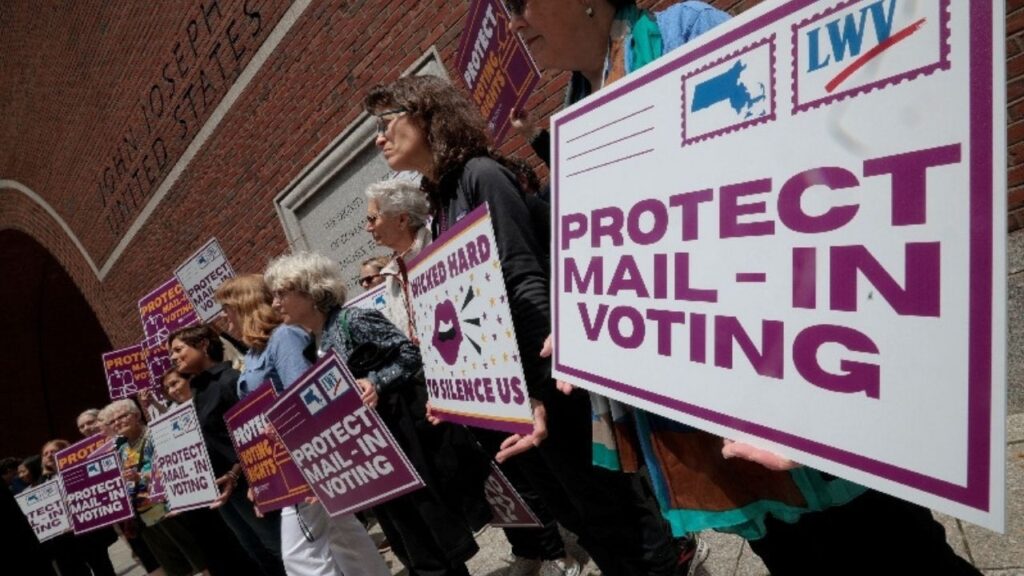
A second federal judge blocked President Donald Trump’s administration from implementing a new U.S. Postal Service rule that tightens mail-in voting requirements, even as the U.S. Supreme Court weighs the administration’s request to lift a separate order halting the same policy.
Washington-based U.S. District Judge Carl Nichols’ decision late on Sunday comes as Trump’s Republicans battle to retain control of both houses of Congress in the November 3 midterm elections. Trump, who falsely claims his 2020 presidential election defeat was the result of widespread voter fraud, has for years called for restrictions on voting by mail though often votes by mail himself.
Nichols granted a request from the Democratic Party and groups including the NAACP for a preliminary injunction blocking the rule, which they argued was an unlawful intrusion by the federal government into election administration.

The judge, who was appointed by Trump during his first term in the White House, wrote that the new rule could make it harder for some people to vote by mail and that the new regulation exceeded the Postal Service’s authority.
“No statute grants the Postal Service the power to issue key parts of the rule,” Nichols wrote.
The U.S. Department of Justice on Monday notified the 6-3 conservative-majority U.S. Supreme Court of the decision, which it argued Nichols would be compelled to set aside if the justices rule in the administration’s favor in its earlier appeal of a similar decision.
Supreme Court Considers Rule
In a separate case, Boston-based U.S. District Judge Indira Talwani blocked the rule on September 4 at the behest of Democratic-led states and voting rights groups.
The administration swiftly asked the Supreme Court to pause that order so the USPS could implement the new rule, meaning the final decision on whether the restrictions can proceed likely rests with the nation’s top court.
The rule would require states to submit a list of voters eligible to receive mail ballots to the USPS and to place unique barcodes on outbound and return ballot envelopes. The USPS would be empowered to refuse to deliver ballots to voters who do not appear on the lists or in states that do not comply with the new standards.
In urging Nichols to block the USPS rule, the Democrats in an August 25 court filing wrote that the U.S. Constitution assigns the role of administering elections to the states with congressional oversight, not the president and executive branch agencies. The Democrats said the rule risked disenfranchising millions of eligible voters.
“Congress has enacted nothing to empower USPS or the President to interfere with States’ decisions about who should receive a mail ballot or how mail-ballot envelopes should be designed,” the Democrats wrote.
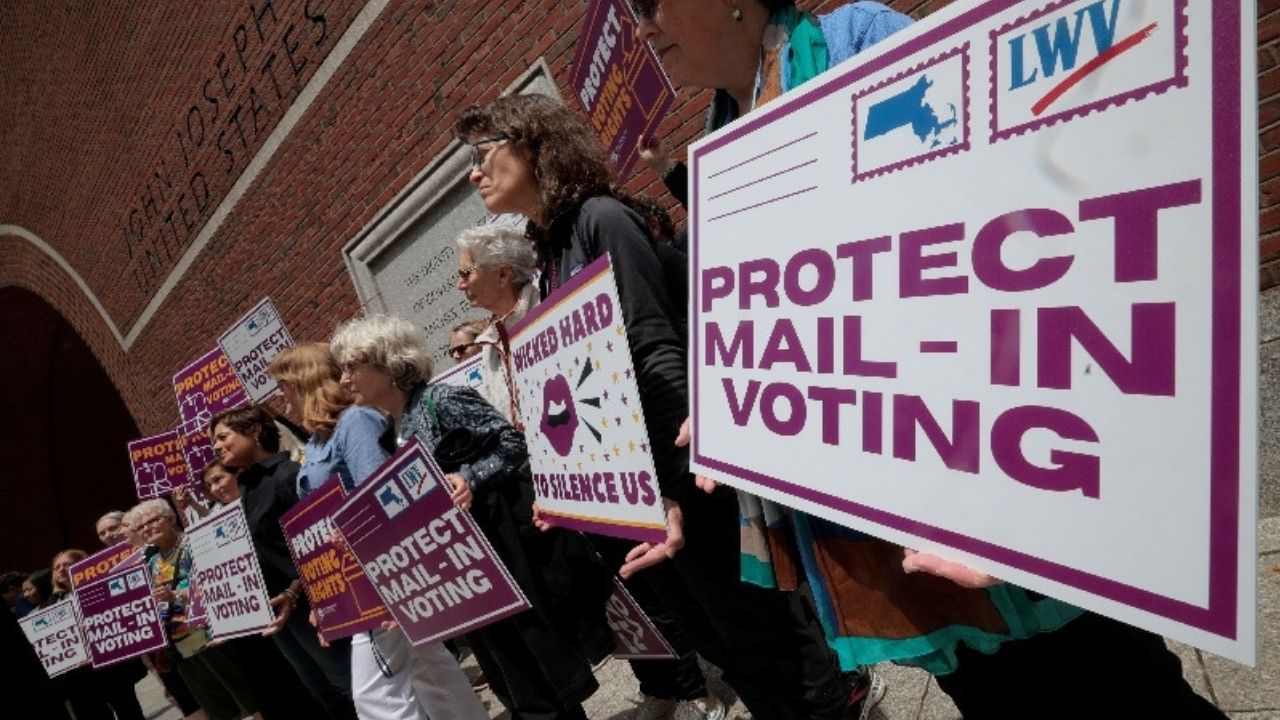
Mail in Voitng All 50 States Allow Mail Voting
Justice Department lawyers, representing the administration, said the USPS was not seeking to “seize control” of federal election administration. The lawyers said states would retain control over who was eligible to vote.
“The rule does not displace a single state election law. And it need not and should not prevent a single voter from voting by mail,” the lawyers said in a September 4 filing.
All 50 states allow for some form of mail-in voting. Of those, 29 states allow voters to ask to cast ballots by mail without providing a reason, and eight conduct their elections entirely by mail.
(Reporting by Luc Cohen in New York; Additional reporting by Nate Raymond in Boston; Editing by Alex Richardson and Bill Berkrot)