
|
Getting your Trinity Audio player ready...
|
WASHINGTON — President Donald Trump on Monday rejected calls from leading artificial intelligence executives for new limits on the technology, writing on social media that the only guardrail the industry needed it already had: “a STRONG AND SMART (High IQ!) PRESIDENT.”
Trump inserted himself into the intensifying national debate over how to handle a rapidly evolving technology that researchers and industry leaders say poses major risks like mass unemployment, a new wave of biological weapons and autonomous warfare. The president did not address those risks directly. Instead, he questioned the sincerity of the executives who have been calling to slow the technology’s development.
“The only control or ‘guardrails’ that AI needs is a STRONG AND SMART (High IQ!) PRESIDENT, and the U.S.A. has that, in spades!” Trump posted. “The Trump Administration has stopped AI ‘people’ from doing bad, or potentially bad, ‘things,’ like Dario (Anthropic!), who is now pretending to be a ‘perfect little angel’ — and we will continue to do so!

“We already have tremendous CRIMINAL and REGULATORY power over these companies!” he added.
It was not clear what authority Trump was referring to, or what actions he believes his administration has already blocked. The White House did not immediately respond to a request for comment.
Over the weekend, Dario Amodei, the CEO of Anthropic, a leading AI company whose founders have long warned about the technology’s dangers, published an essay that called for a global slowdown of AI development. Days earlier, one of Anthropic’s researchers quit and went public over his fears about the safety of the technology.
The Trump administration feuded with Anthropic earlier this year when the company refused to allow the Pentagon unfettered access to its AI system without the safeguards the company wanted. Trump then ordered the federal government to stop using Anthropic’s AI technology and labeled it a security risk, a designation that a federal judge later ruled was unlawful.
Other AI chiefs have voiced their own concerns in recent days. Demis Hassabis, the chair of Google DeepMind; Elon Musk of SpaceX; and Sam Altman of OpenAI have all endorsed calls for a slower pace.
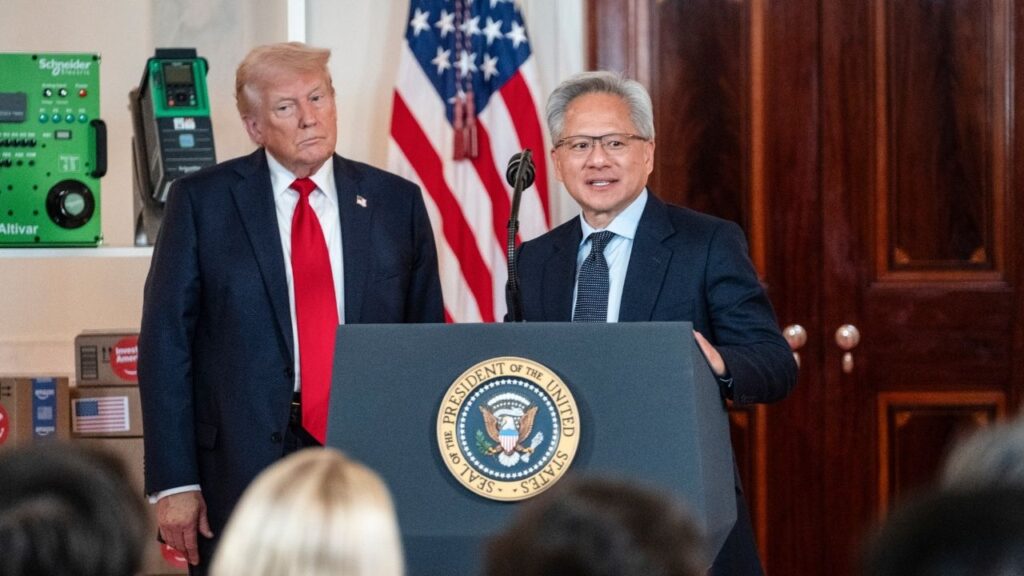
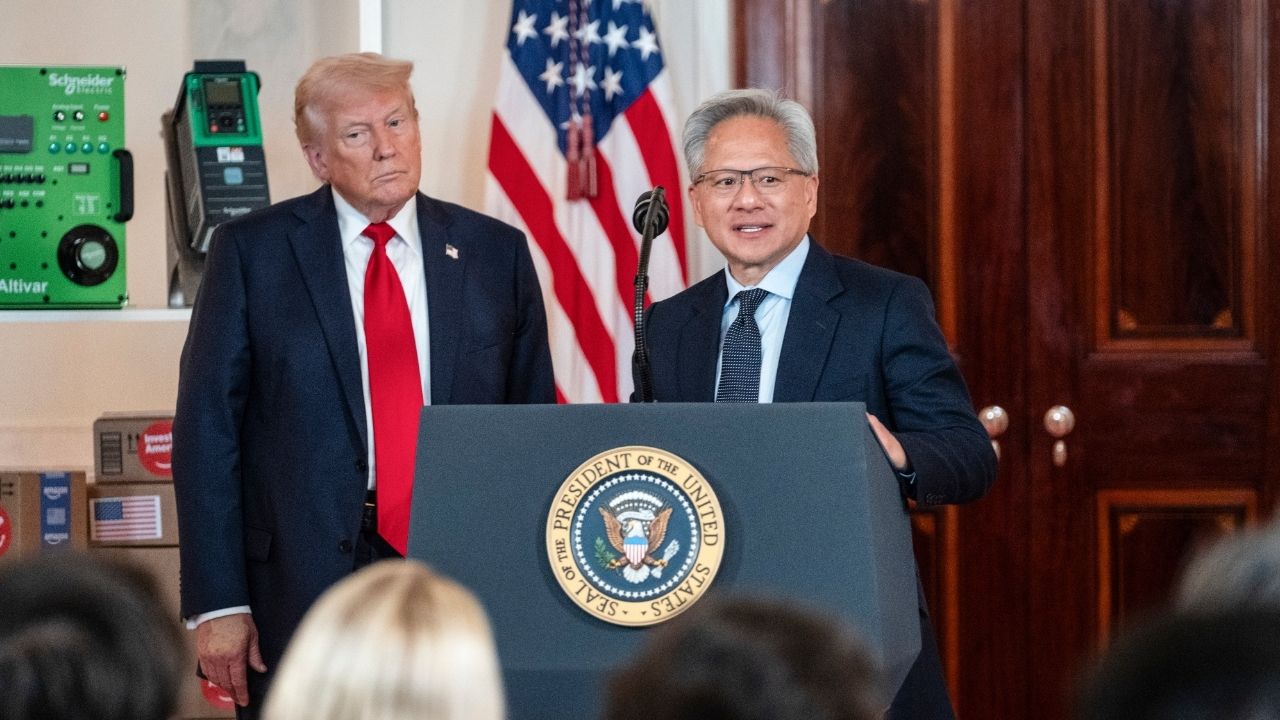
Trump has spent much of his second term aligning himself with AI accelerationists who have been pushing the U.S. government to clear away obstacles to growth. He has been influenced in particular by Jensen Huang, the CEO of chipmaker Nvidia, and David Sacks, a Silicon Valley investor who played a major role in shaping the administration’s policies on AI.
The president has embraced their arguments that imposing additional guardrails on American companies would allow China to “win” the AI race.
Beijing, however, has its own anxieties about the technology — and they may lead to more regulation, not less. Chen Yixin, China’s security minister, recently warned that the leading AI models pose risks to the Chinese system and called for stricter government oversight.
Trump has also dismissed the domestic backlash to the industry’s growth. He claimed in his social media post Monday that widespread opposition to the building of data centers — a major political issue emerging across the United States before the midterm elections — is part of a “conspiracy” rather than the outgrowth of genuine public anxiety.
“There is a SICK conspiracy going on against AI and Data Centers, and the only one that is happy about it is China,” the president posted. “WHOEVER WINS AI, WINS! We are leading China, and all others, and will continue to do so. Conspiracy Theorists, Treasonists, Traitors, and Leakers, BEWARE!”
Elsewhere, governments are moving toward stricter oversight. Prime Minister Mark Carney of Canada told Bloomberg News on Monday that he favored the creation of a global “technology stability” body to oversee AI.
“There’s a need for coordination,” Carney said in the interview. “Ultimately, a technology stability board, in our view, along the lines of the Financial Stability Board would make sense.”
—
This article originally appeared in The New York Times.
By Jonathan Swan/Pete Marcovich
c. 2026 The New York Times Company