

|
Getting your Trinity Audio player ready...
|
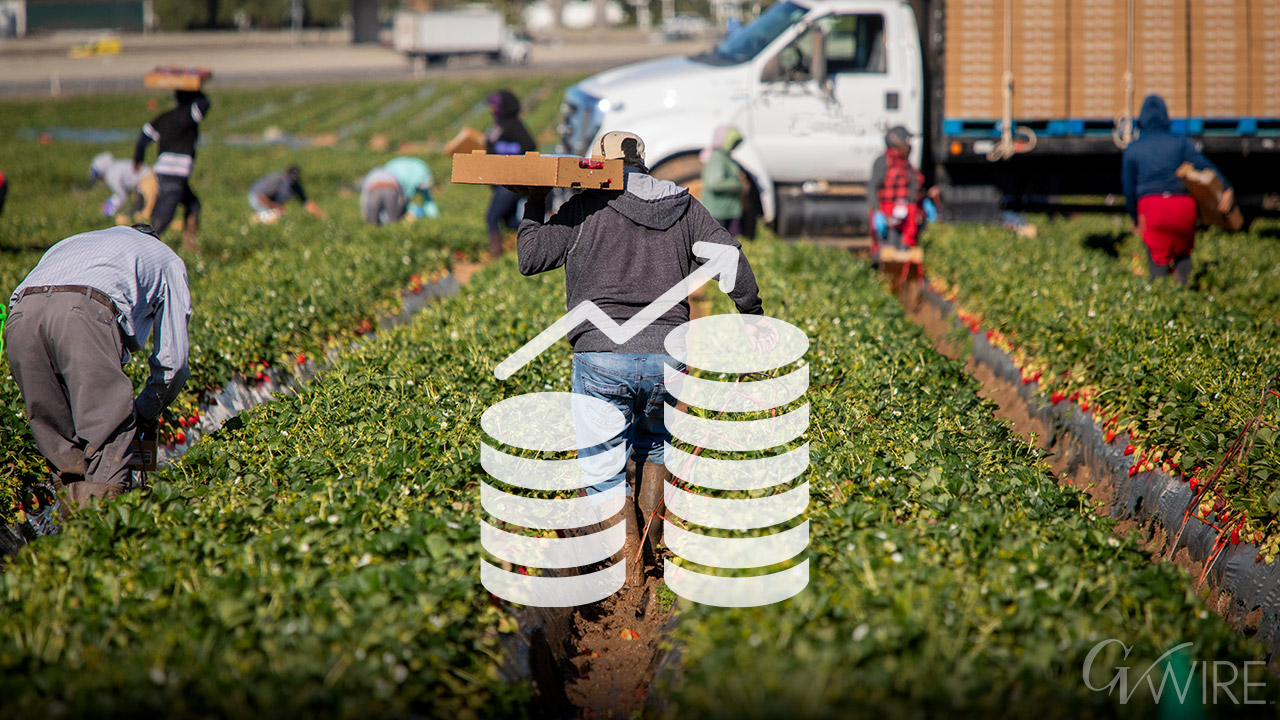
With California legislators approaching minimum wage hikes industry by industry, Sacramento this year turned its eyes to agriculture. Now, Assembly Bill 2646, which raises the minimum wage of non-U.S. residents authorized to work in the state to $19.75, awaits Gov. Gavin Newsom’s signature.
Bill author Maggy Krell, D-Sacramento, told assemblymembers in May that the bill restores a pay floor removed by President Donald Trump when in late 2025 he lowered the minimum for H-2A workers — the target population, despite them not being named in the legislation, according to Western Growers.
“The truth of the matter is those who are doing the hard work, who are waking up before dawn, working on those farms are barely getting by and some are not getting by at all,” Krell said at the hearing in May.

At that same hearing, however, many Republican legislators said higher pay requirements add to burdens faced by farmers — already beset by California’s water costs, federal retaliatory tariffs, overtime rules, and more.
Assemblymember David Tangipa, R-Clovis, said producers and processors, some of them iconic, are already shutting down.
“Ask anybody who’s worked at Blue Diamond, Del Monte, Wawona, packing houses, all of them have shut down recently,” Tangipa said. “How many more need to be shut down before we learn our lesson?”
H-2A Requires Free Housing, Meals
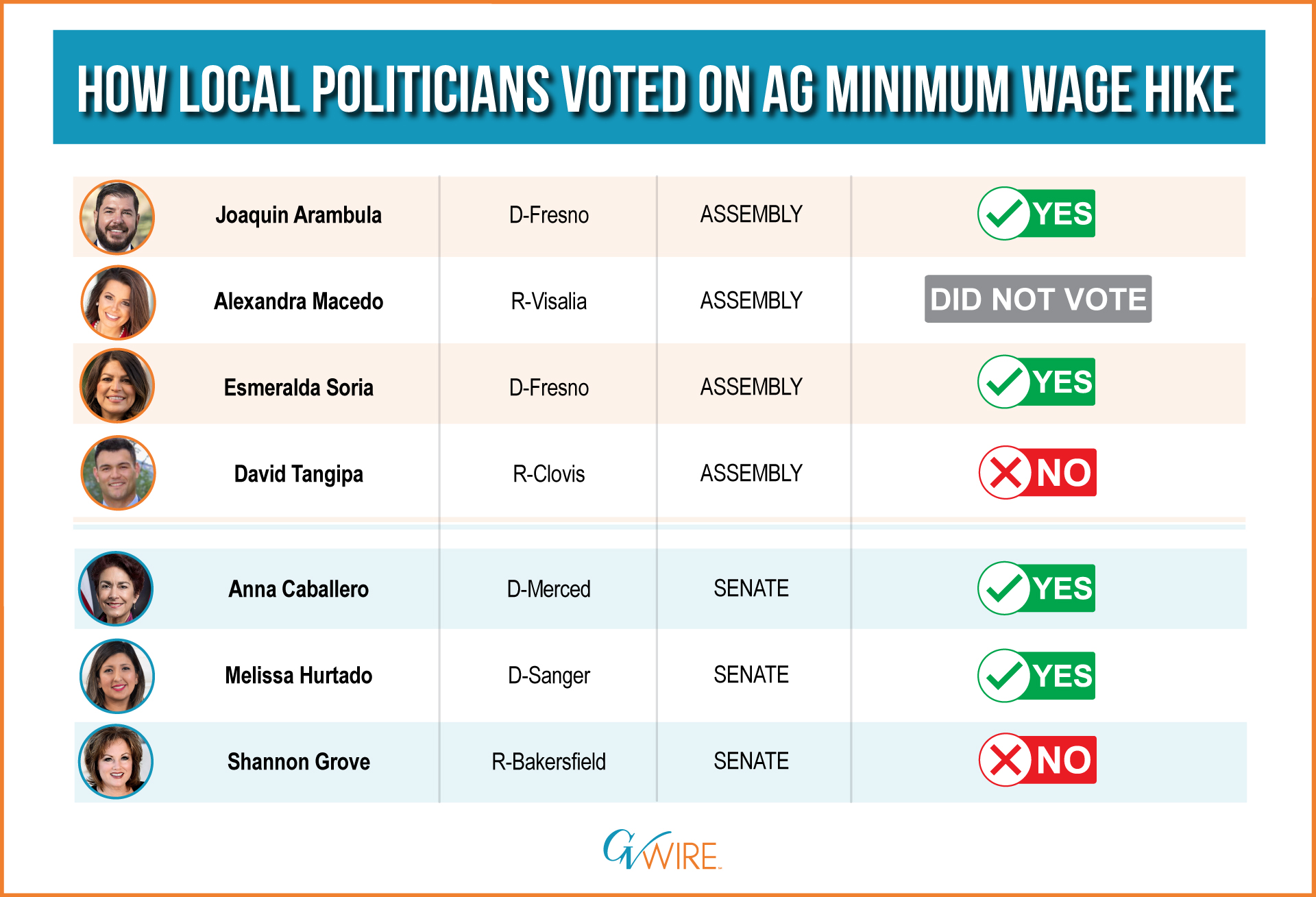
Newsom has until Sept. 30 to sign AB 2646. Locally, Assemblymembers Esmeralda Soria, D-Fresno, Joaquin Arambula, D-Fresno, and Sens. Anna Caballero, D-Merced, and Melissa Hurtado, D-Sanger, supported the bill.
Tangipa and Sen. Shannon Grove, R-Bakersfield opposed the bill. Assemblymember Ali Macedo, R-Visalia did not register a vote.
Soria said ag laws require finding a balance. She said the Legislature needs to look at regulations that don’t work.
“When we ask ag to do more, we need to give more resources,” Soria said.
If approved by Newsom, the bill would take effect Jan. 1, 2027. The bill targets non-California residents approved to work here, adding also “corresponding employees” — meaning California residents.
Farmer advocacy groups say that means H-2A workers.
In an analysis of the bill, Jason Resnick with Western Growers said the H-2A program is already of the most highly regulated in the country.
Under H-2A, employers must provide free housing, transportation costs to and from the job site, and provide either three meals a day or free and convenient cooking facilities.
“The result is easy to predict: higher costs for California farms already squeezed by labor, water, energy, insurance, regulation and unforgiving market conditions,” Resnick said. “Sacramento often talks as if these costs can simply be absorbed. They cannot. They are passed on to consumers, borne by growers operating on razor-thin or negative margins, or avoided entirely when production moves elsewhere.”
‘When They Shut Down, Nobody Gets Any Salary’: DeMaio
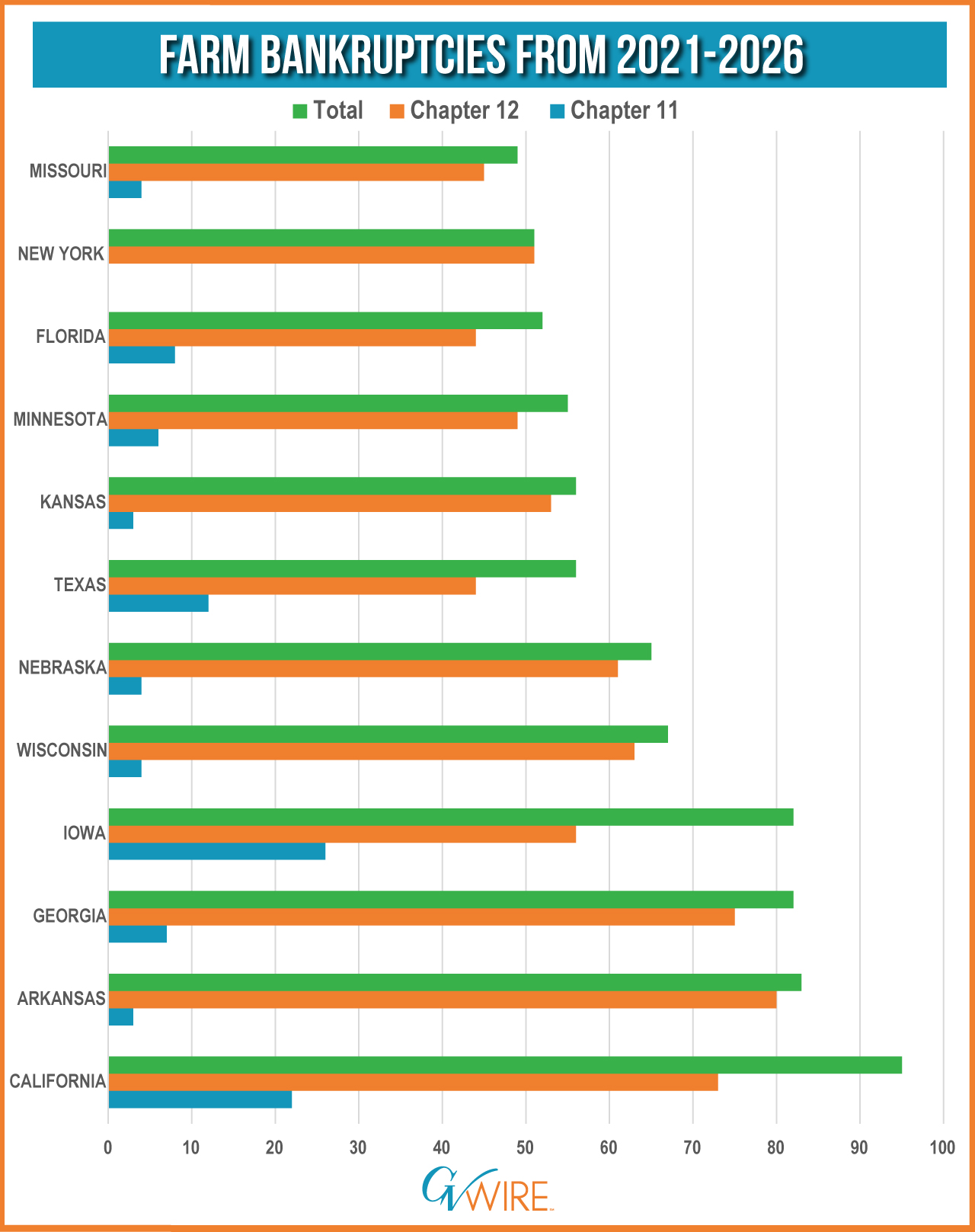
From 2021-2026, California recorded the most farm bankruptcies in the country, according to the Farm Journal.
Chapter 12 bankruptcies — the chapter most used by farmers — totaled 73, the third most behind Arkansas and Georgia. Combined with Chapter 11 farm bankruptcies, used occasionally by farmers excluded from Chapter 12 because of size or business structure, California surpasses those two states.
Notable bankruptcies included Prima Wawona in 2024, Trinitas Farming that same year, and more recently, Del Monte.
That Del Monte bankruptcy left peach and pear growers throughout the state without a source to process their fruit.
Those bankruptcies also don’t capture businesses that have left the state or downsized.
Last year, almond giant Blue Diamond closed a key processing facility in Sacramento. On the farming side, wine grape growers have significantly retreated. In part because of oversupply, but growers often also cite higher operating costs.
Plantings of all kinds have significantly reduced as well because of California’s groundwater pumping restrictions.
Assemblymember Chris Rogers, D-Santa Rosa, said during the May hearing that he recognizes the impacts created by Trump’s trade policies.
“We recognize that the cost of everything has gone up, but it doesn’t mean that this Legislature should balance that by keeping the wages artificially suppressed for folks that need that help the most,” Rogers said.
Responding to Rogers and other legislators, Assemblymember Carl DeMaio, R-San Diego, said three producers in his area shut down, citing state cost increases, not Trump policies.
“First, we choke them off of water, then we regulate the heck out of them,” DeMaio said. “When they shut down, nobody gets any salary.”
How Has Minimum Wage Hike Affected Restaurants?
California minimum wage debates are an ongoing battle. Senate Bill 3, approved in 2016, raised it to the current $16.50.
Since then, legislators have approached the issue with industry-specific hikes. In April 2024, Newsom approved a controversial bill to raise the minimum wage for fast-food workers to $20 an hour. Later that year, voters for the first time in California history rejected a minimum wage increase bill.
Two years after the fast-food wage hike, experts and insiders say the increased pay comes with consequences.
A major Carl’s Jr. franchisee declared bankruptcy earlier this year, specifically citing the minimum wage increase, according to industry magazine Restaurant Dive.
Despite raising “substantial revenue” at its nearly 60 locations in both southern and northern California, the franchisee reported a net loss of $2 million in the first three months of the year due to “significant ongoing operating expenses.”
UC San Diego researchers found the law resulted in fewer jobs and an industry-wide push toward automation.
Assemblymember Macedo, during the May hearing, said when California implemented its ag overtime laws, many farm labor contractors simply cut hours.
“If they’re doing this to avoid paying higher overtime fees, what is going to happen to farmworker jobs?” Macedo said.