


|
Getting your Trinity Audio player ready...
|
The U.S. and Canada are closing in on a trade deal in which Washington could cut some contentious tariff rates on Canadian-built cars and trucks, and key metals, a source familiar with the matter said on Wednesday.
U.S. President Donald Trump had threatened a new batch of tariffs on Canadian imports starting on Wednesday but, citing progress in talks, pushed back the date to Saturday.
Trump told reporters the United States will “probably have a deal with Canada.” Canadian Prime Minister Mark Carney said on X that the two sides were “moving towards an agreement.”

Until a deal is formally reached, negotiators face a deadline of 12:01 a.m. EDT (0401 GMT) on Saturday, when tariffs on $20 billion worth of Canadian goods are scheduled to take effect.
Auto Tariffs Cut to 15%
The source said the proposed deal was expected to cut top-line tariff rates on Canadian-built cars and trucks to 15% from the existing 25%. Industry executives say that rate threatens to kill domestic auto manufacturing.
Two auto executives said Canada was pushing to reduce the tariff to 10%.
The 15% top-line autos tariff also would come before deductions for the value of U.S.-produced content, bringing the effective rate substantially lower, the source told Reuters. The proposed deal would also halve the top-line tariff rates on Canadian steel and aluminum to 25%, the source said.
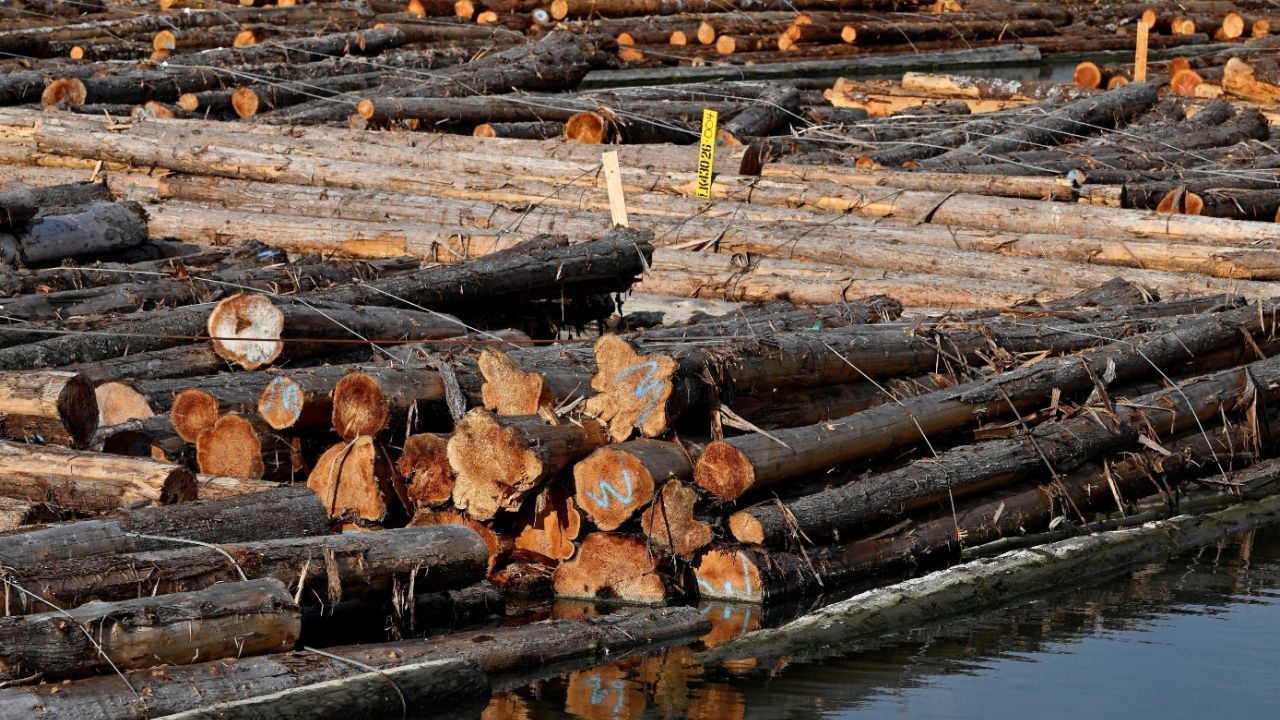
Two industry sources familiar with the deal added that these lower steel tariffs would apply only to a certain import volume under a quota arrangement. One of the sources said the quota would likely be set at 4 million metric tons per year, and any imports above that level would be subject to the original 50% steel tariff.
Washington imposed the steel, aluminum and autos tariffs last year under a national security law, prompting Canadian countermeasures.
Carney Briefs Premiers
Carney briefed the premiers of the 10 provinces about the state of the discussions Wednesday afternoon.
“It was a constructive and, frankly, a very important conversation,” Dominic LeBlanc, the Canadian minister responsible for trade with the U.S., said of Carney’s meeting with provincial leaders. “We have more work to do.”
Nova Scotia Premier Tim Houston told reporters that Carney had asked the provinces to return U.S. alcohol to store shelves. Most provinces stopped distributing U.S. alcohol products in response to tariffs Trump imposed on goods from Canada last year.
“We’ll work through that process,” Houston said. “Of course, it’s pending a final deal that is representative of the types of things we’re hearing today.”
Officials Express Confidence
U.S. Trade Representative Jamieson Greer told reporters after meeting his Canadian counterparts earlier in the day that negotiators had reached an agreement that would protect American workers and strengthen the North American economy.
Trump hailed what he called a great deal subject to the finalization of documents that would mean U.S. manufacturers and farmers would not pay any tariffs to export their goods to Canada.
Pressed on what Washington would do about the U.S. auto tariff, Trump replied: “They were paying a high number. We’re reducing it a little bit.”
It is unclear whether auto tariffs will be resolved this week or delayed until a broader scheduled review of the U.S.-Mexico-Canada trade deal, which looks set to drag on into next year.
A White House proclamation said senior U.S. officials had been told Canada had committed to remove what Washington considers discriminatory or unequal treatment of U.S. alcoholic beverages, cheese and motor vehicles.
A Leger opinion poll showed on Wednesday that 56% of Canadians want Carney to make no further concessions to the U.S.
(Reporting by Promit Mukherjee in Ottawa and David Shepardson in Washington; Additional reporting by David Ljunggren, David Lawder and Amanda Stephenson; Editing by Caroline Stauffer, Rod Nickel and Matthew Lewis)