
|
Getting your Trinity Audio player ready...
|
WASHINGTON — The Trump administration plans to spend millions of dollars equipping immigration officers with gloves that can deliver electric shocks.
The Department of Homeland Security described the gloves as a “de-escalation device,” but critics have expressed alarm over equipping immigration agents with another tool that they say could actually escalate their use of force. The plans have also drawn concern from some former Immigration and Customs Enforcement officials who have questioned use of the gloves against people accused of violating immigration laws, which are mostly civil offenses.
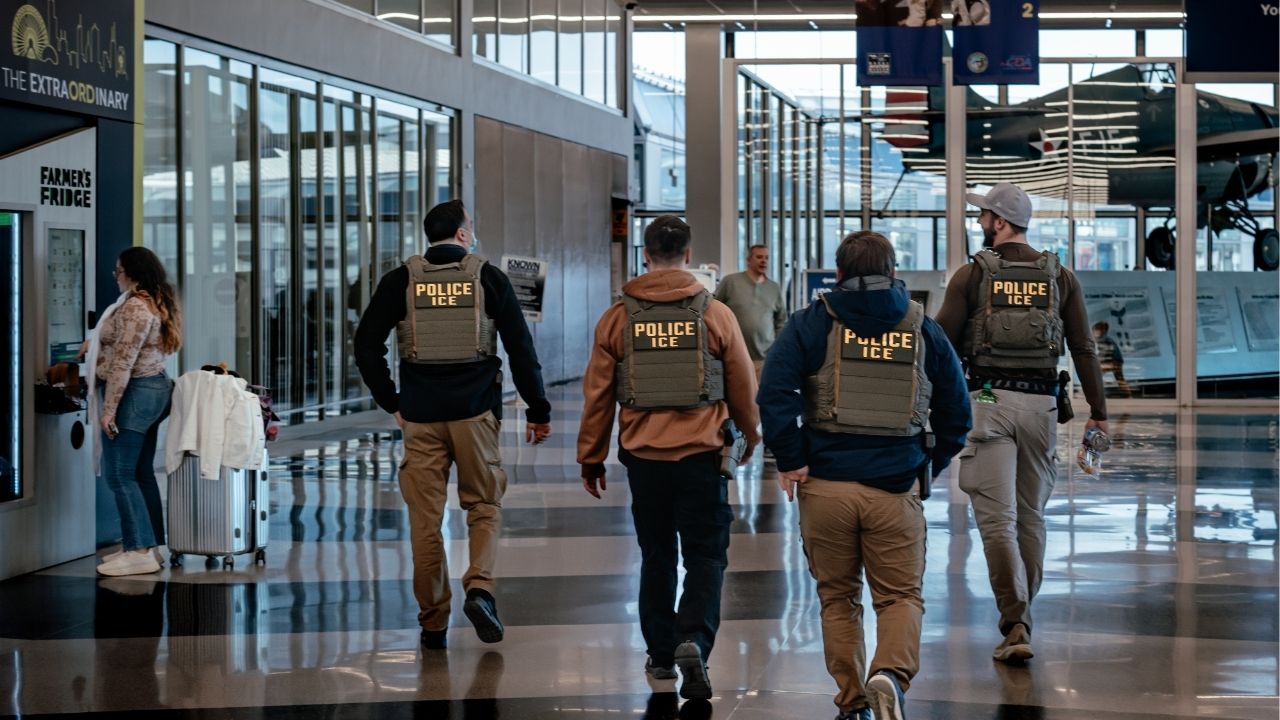
ICE has already been criticized for its aggressive tactics as it carries out President Donald Trump’s mass deportation campaign. Immigration agents have deployed pepper spray against protesters, dragged people out of vehicles and fatally shot at least six people since Trump returned to office, drawing calls for greater accountability.

In a notice published Monday, the Homeland Security Department said it planned to purchase the “CTG-5 G.L.O.V.E.,” which stands for Generated Low Output Voltage Emitter. It also said it planned to issue them to ICE officers and agents who work on immigration enforcement and criminal investigations. The contract could be worth up to $20 million, and the purchase could be complete by the end of March, according to the notice.
The department did not answer questions about how the gloves would be used, such as whether they would be used to apprehend individuals during immigration operations or during encounters with protesters.
“ICE is constantly assessing the needs of our officers in the field to ensure they have the tools and equipment necessary to safely arrest and remove criminal illegal aliens from our country,” the department said in a statement. “Every decision is made with careful consideration and appropriately reviewed to ensure that any technology ICE utilizes is consistent with all applicable law enforcement policies and standards.”
The Associated Press reported earlier about the notice. The G.L.O.V.E. is relatively new and untested; it has not been widely adopted by police departments, and some policing experts had not even heard of it before the news of the ICE contract broke.
It is manufactured by Compliant Technologies, a Kentucky-based company that says its products “empower officers to de-escalate tense situations quickly.” A user manual for the gloves says the technology is capable of inhibiting “the subject from performing coordinated muscle movement.”
Sometimes referred to as a stun glove or a shock glove, the device has been marketed to law enforcement in the past few years. It uses pain to induce compliance, by delivering an electric shock on contact. It emits a much lower voltage than a Taser, according to the company’s specs. The company says the voltage is too low to work through dry clothing or hair. It takes only about a second to switch the gloves on with the press of a button.
It was deliberately designed to be what the company calls “low-optics,” meaning that it resembles a regular glove and “looks better on video” than other types of force used by the police, according to Chief Adam Glueck of the Cape Girardeau Police Department in Missouri, which uses the gloves, speaking in a video that is featured on the Compliant Technologies website.
He said he was initially skeptical because of the sheer volume of new tools that are marketed to law enforcement agencies, but was persuaded by a demonstration in which the glove was used on him. “As soon as you put it on my arm, I was absolutely convinced,” Glueck said. “I went straight down to the mat. I didn’t think about anything other than I wanted that pain to stop.”
The testimonials posted on the company’s website suggest the tool has been adopted more for use in jails than by patrol officers. The company calls it a de-escalation tool. While the public may think of de-escalation as involving nonviolent tactics like dialogue and maintaining a safe distance, in policing, less-lethal or nonlethal weapons are also viewed as a component of de-escalation, since using them may make a higher level of force unnecessary.
Jeff Niklaus, the founder of Compliant Technologies, declined to comment.
Civil rights advocates and former ICE officials under Democratic administrations said they found it troubling that officers could be equipped with a new tool that made it easy to inflict pain.
“Giving ICE agents, who have been reckless with their use of force over the last year, gloves that can deliver electric shocks is terrifying,” said Jenn Rolnick Borchetta, the deputy project director on policing for the American Civil Liberties Union. “These are gloves that deliver an electric shock with a simple press of a button, and that means that force can be deployed really easily. And we’ve seen that ICE agents are already too quick to use force. We’ve seen that ICE agents routinely are not giving warnings.”
After a lawsuit in Kentucky involving the G.L.O.V.E. system, Niklaus blamed inadequate training for the treatment of the plaintiff and said no injuries had been caused by the gloves.
The department’s planned contract also underscores the vast amount of new funding that Congress has approved for Trump’s deportation campaign. The billions in federal funding have allowed ICE to hire more than 12,000 additional officers and purchase new technology, including facial recognition tools.
—
This article originally appeared in The New York Times.
By Madeleine Ngo and Shaila Dewan/Jamie Ketler Davis
c. 2026 The New York Times Company