


|
Getting your Trinity Audio player ready...
|
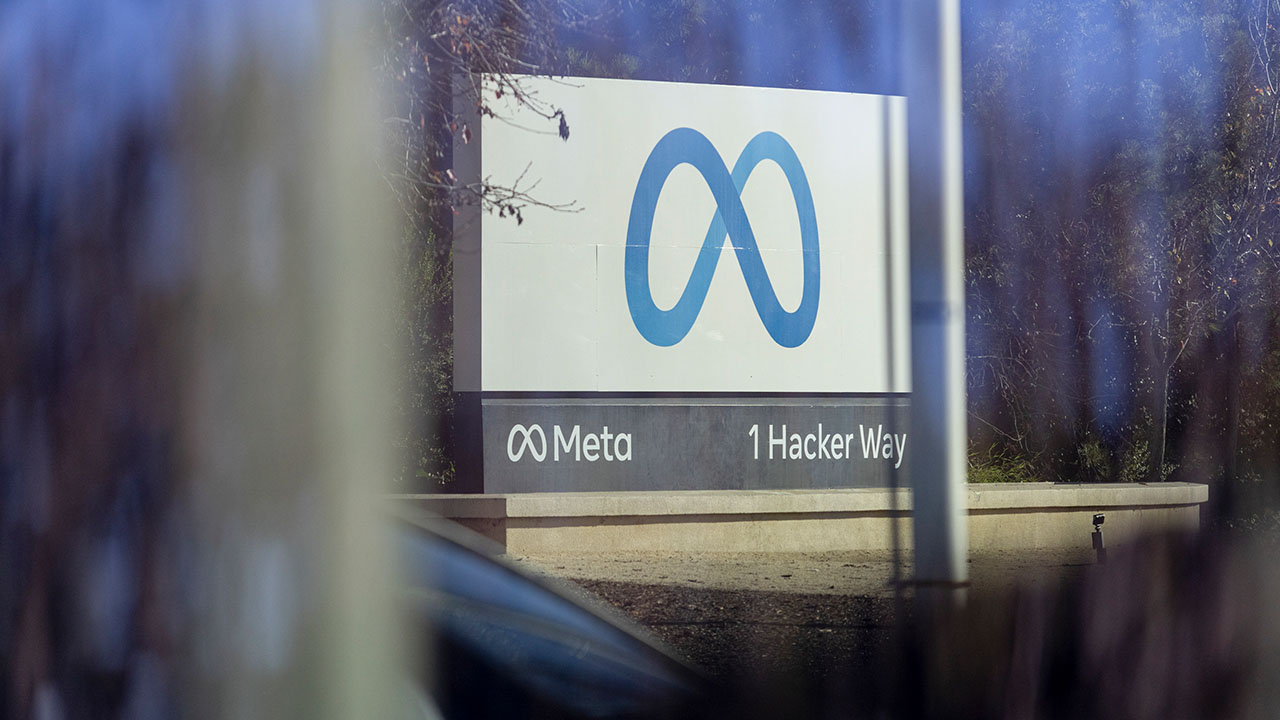
Last month, Mark Zuckerberg, Meta’s CEO, boldly came out in support of “open source” artificial intelligence models that are publicly available to download and modify without payment or approval. The way forward, he said, was through “openness and putting the power of tech into more people’s hands, not fewer.”
On Monday, Zuckerberg doubled down on that support.
Meta released an open version of its most powerful AI model, Muse Spark. Called Muse Glimmer, it is nearly identical to Muse Spark and can generate code, text and images. Muse Spark, which debuted in July as a “closed” AI model that people pay to access, will remain closed.

Muse Glimmer is an “open weights” model, which means its weights, or the underlying calculations that determine how the model works, are made public. It is not fully open source, which is when the entirety of the model’s underlying code is made public.
The new model was accompanied by a 14-page essay from Zuckerberg laying out his vision for AI. The technology should not be feared, he said, and the United States needs to retain its primacy over China in the AI race. Without naming Anthropic and OpenAI, the rival AI companies that have called for tight controls on the technology, he criticized their approaches, saying that concentrating AI power in the hands of just a few companies is hazardous.
“Rather than centralizing superintelligence, we should distribute it,” Zuckerberg, 42, wrote in the essay, which he titled “The Future Is for Everyone.” He added, “This has the potential to begin a new era of personal empowerment.”
Meta’s new model is likely to add to a contentious Silicon Valley debate over the direction of AI development. Anthropic and OpenAI have argued that AI should be restricted because it is dangerous and needs to be safely developed in a contained fashion. But Meta, Nvidia, Microsoft, Google and others have backed open-source, saying the technology must be freely available so people can further develop AI and build new businesses.
The debate was turbocharged last month when Chinese startups released powerful open AI models that appeared to threaten the technological edge held by U.S. companies. Officials in Washington became embroiled in the debate, with OpenAI and Anthropic raising concerns about Chinese open-source AI models with regulators, while Nvidia and others pushed against restrictions.
(The New York Times has sued OpenAI and Microsoft, claiming copyright infringement of news articles. The two companies have denied the claims.)
Meta has long supported open-source AI and was for years one of the few American tech giants to give away its top AI models for free. That changed last spring, after Meta fell behind Anthropic and OpenAI in the AI race. It began developing a closed AI model instead.
That model, Muse Spark, was developed under Alexandr Wang, 29, an AI entrepreneur whom Meta hired last year to be its chief AI officer. The company began selling access to Muse Spark for the first time last month. Last week, Meta also released Muse Code, a stand-alone coding assistant powered by Muse Spark.
Muse Spark does not perform as well as leading AI models from Anthropic and OpenAI on measures such as coding, reasoning and writing, according to leaderboards that track AI benchmarks. Meta has positioned the model as a cheaper alternative to its rivals.
That strategy is similar to Chinese AI companies and their inexpensive open-source models. The Chinese models have become increasingly popular in the United States as companies seek to cut their AI bills, as well as in developing nations such as Kenya and Uganda.
In his essay, Zuckerberg also expanded on Meta’s vision for superintelligence, which includes giving people personal “agents,” the AI bots that can “work 24/7 on your behalf to improve your relationships, health, career, finances, home management, hobbies, and more.”
His 8-year-old daughter has been using AI to code and create videos, he added, and he is using AI with her to design a robot. “Everyone will soon have invention superpowers,” Zuckerberg said.
China has advantages in the AI race, Zuckerberg added, such as the ability to build data centers and nuclear power facilities quickly and with fewer regulations. He called for a new process for government oversight of AI development, and defended distillation, a practice in which AI labs use rival models to help train their own. Meta also said it would create a $1 billion fund to invest in communities where its data centers were built.
In the coming months, Meta plans to release a cutting-edge AI model, internally called Watermelon, that will be more powerful than Muse Spark. Zuckerberg did not say if the model would be open or closed.
—
This article originally appeared in The New York Times.
By: Eli Tan and Mike Isaac/Jason Henry
c.2026 The New York Times Company