


|
Getting your Trinity Audio player ready...
|
WASHINGTON — Over the weekend, President Donald Trump rejected a return to full-scale war. But as he tries to find a way out of a conflict he started, Iran has proved a stubborn enemy.
On Tuesday evening Iran fired multiple missiles on U.S. bases in Jordan. The U.S. military intercepted the missiles with apparent ease, but the incident has drawn Trump once again back into fighting.
The United States struck back in a “powerful response” against Iran on Wednesday evening, U.S. Central Command said on social media. “We’re going to be hitting them very hard, because it’s our turn to hit them,” Trump told reporters earlier in the day.

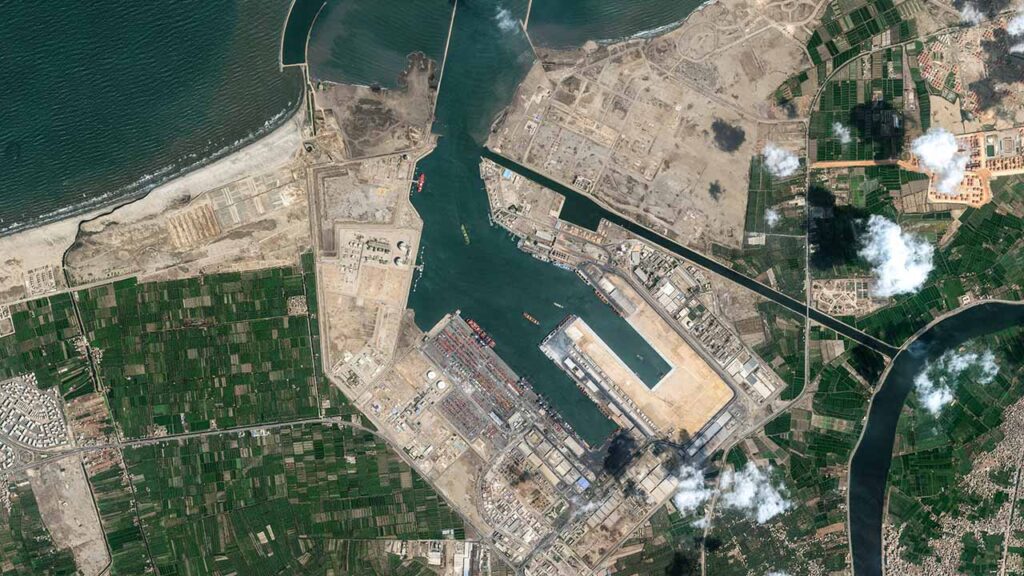
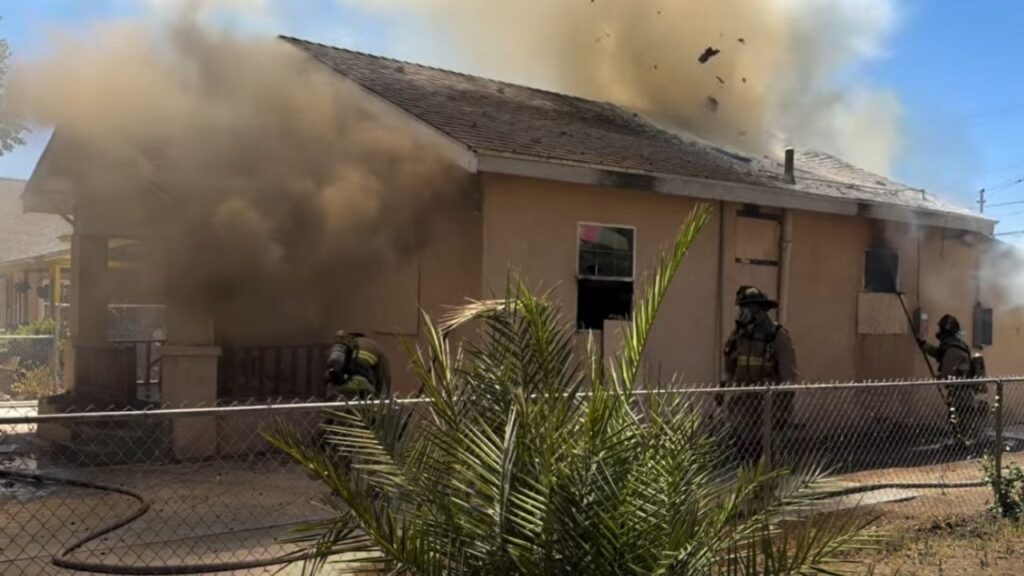
The Iranian and U.S. moves come as the war has widened quickly, with Saudi Arabia joining U.S. forces in striking Iranian proxies in Iraq, an American tanker in Egypt set ablaze from an apparent drone strike, and tensions rising between Ukraine and Iran.
The war, which Trump has been trying to bring to a diplomatic conclusion since April, is now threatening to grow bigger at the very moment the United States wants to move past it.
“When Trump started the war, he thought he could control it,” said Vali Nasr, a professor at the Johns Hopkins School of Advanced International Studies. “The Iranian response is to extend the battlefield much, much wider, so the United States has to defend a broader battlefield.”
Experts said that at this stage in the war, which the United States launched with Israel five months ago, Iran wants to demonstrate the military adage that the enemy always gets a vote.
“Iran wanted to demonstrate that they are not going to sit back and wait for the U.S. or Israel to strike at a time of their preference,” said Jason Campbell of the Middle East Institute. “They are trying to seize the initiative, or at the very least keep the U.S. and Israel on their back foot.”
U.S. military commanders prepared a plan for Trump that would have started another dayslong bombing campaign. U.S. forces had moved air assets to Israel in preparation for those attacks, and those planes remain in place should Trump change his mind in the face of the Iranian action.
In the deliberations over that plan, Gen. Dan Caine, the chair of the Joint Chiefs of Staff, cautioned privately that resuming major combat operations against Iran was doable but would dangerously deplete interceptors available to the military’s Central Command, according to two people briefed on the discussions.
On Wednesday, U.S. Central Command said it struck dozens of Revolutionary Guard targets in Iran, “including military command centers, missile and drone facilities, coastal surveillance and defense sites and maritime capabilities.”
In a Fox interview on Tuesday, Trump seemed to weigh the misery and humanitarian costs that resuming major operations, including more strikes against Iran’s infrastructure, including bridges and power plants, would inflict on Iran’s civilian population.
“And who am I hurting there?” he said. “I’m hurting the people. So I’m not looking to do that.”
But between Trump’s doubts and his vow to hit Iran hard, the U.S. strategy is not at all clear.
Trump had recently seemed intent on bringing Iran back to the negotiating table. Some of the countries that have been mediating talks, including Pakistan and Qatar, are trying to do the preparatory work to restart such discussions.
Experts, however, are deeply skeptical about what kind of deal Trump can make.
Officials in the Trump administration now rarely discuss the list of priorities they had at the beginning of the war, which included eliminating Iran’s nuclear program but also eroding Tehran’s missile capability and curbing its proxy forces.
“The justification for the war has fluctuated considerably over the last few months,” Campbell said. “It has been months since you have heard Trump or any other senior official mention anything other than the nuclear program.”
In an odd way, the Trump administration’s current struggles with Iran are at least partly the result of the U.S. success at the start of the war.
Ayatollah Ali Khamenei, Iran’s supreme leader for nearly 37 years, was killed in the opening strike by an Israeli attack based on U.S. intelligence. He was quickly succeeded by his son, Mojtaba Khamenei, a far more hard-line leader who does not share his father’s caution. U.S. intelligence agencies have assessed the son is more open to pursuing a nuclear weapon than his father, who had long renounced their use.
What is more, the leaders of the old regime — most of whom were also killed in the war — often choreographed retaliatory strikes in a way meant to save face at home while not escalating hostilities against the U.S.
“That was the old Khamenei,” Nasr said.
Iran’s new leaders, he added, want to inflict as much damage on the United States and its allies as it can to deter a future war against their country.
Nicholas Hopton, a former British ambassador to Iran, Qatar and Yemen, called the five-month conflict “a misadventure” that is not winnable by military means alone.
“The president of the United States still doesn’t seem to have made up his mind whether he wants a negotiated solution to this or to try for some kind of military conclusion, which all observers who know the situation in Iran and have worked in the Gulf would say is highly unlikely to work,” Hopton, who is now a distinguished fellow with the Royal United Services Institute for Defense and Security Studies in London, said in a webinar on Wednesday.
—
This article originally appeared in The New York Times.
By Julian E. Barnes, Helene Cooper and Eric Schmitt/Doug Mills
c. 2026 The New York Times Company