

|
Getting your Trinity Audio player ready...
|
Accurately describing the state financial situation depends largely on a person’s definitions of “balanced” and “deficit.”
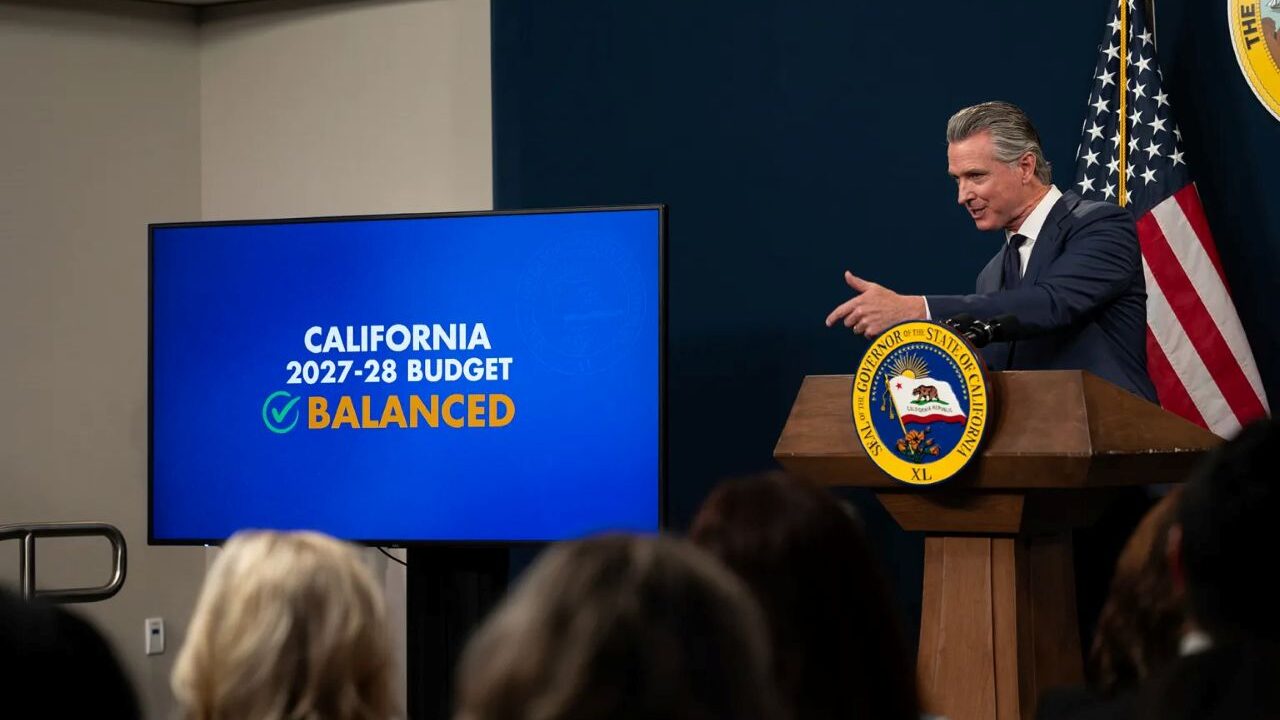
Gov. Gavin Newsom and legislative leaders describe the 2026-27 budget they negotiated as “a balanced spending plan with zero deficit.”
The basis for that claim is that the totality of money they propose to spend in the fiscal year that begins on Wednesday would be covered by tax revenues during the year — plus transfers from emergency reserves and off-book loans, such as delaying payment of $3.9 billion in constitutionally required state aid to schools and community colleges.

In reality, the $351 billion budget and its $251 billion general fund would spend as much as $20 billion more than the state expects to receive in revenues during the fiscal year.
This commentary was originally published by CalMatters. Sign up for their newsletters.
The difference is the true deficit, as the Legislature’s nonpartisan budget analyst Gabe Petek sees it — and as common sense dictates. In his review of the revised budget Newsom released in May, Petek said, “Despite the current revenue boom, the state now faces a structural budget imbalance — meaning ongoing revenues are insufficient to support ongoing expenditures.”
Overspending Revenues the Past Four Years
Newsom and legislators have been overspending revenues for the last four years, ever since he declared that the state had a $97.5 billion surplus, basing it on what the administration later acknowledged was a $165 billion error in projecting future revenues.
The false surplus sparked a sharp increase in spending that has outstripped revenues ever since. Prior to this year’s budget process, Petek tabbed total overspending at $125 billion since 2022, covered by what he describes as a “wall of debt.”
Newsom pledged that his final budget would not only close the chronic deficit but leave his successor — presumably Xavier Becerra — with a healthy fiscal situation. Not only did the budget not close the ongoing deficit, but Jason Sisney, the Assembly’s budget advisor, projects an operating deficit continuing through the next governor’s first four-year term, although reduced by 2029-30 to $8.4 billion.
If that occurs, it means that the “wall of debt” could easily soar beyond $150 billion by then.
Budget Analyst Repeatedly Warns About Deficit Spending
Petek has repeatedly warned Newsom and legislative leaders that years of deficit spending make California ill-equipped to cope with a revenue downturn because it is inordinately dependent on taxing the incomes of the state’s highest income residents, particularly on the fruits of their investments in the stock market and other assets.
“Periods of elevated revenues, such as the current cycle of strong personal income tax receipts, are typically when the state should be strengthening its fiscal position,” Petek said in his May review of Newsom’s budget. “Instead, the May revision draws it down — relying on roughly $20 billion in reserve withdrawals and suspended deposits, as well as $4 billion in borrowing (on top tens of billions of dollars of existing borrowing), to achieve budget balance.
“These actions should be reserved for addressing revenue shortfalls in downturns, not to balance the budget during a revenue boom.”
Double Dereliction of Duty
Unfortunately, Newsom and legislative leaders ignored that advice in fashioning the final budget — one that increases spending over the May budget by another $5 billion, restoring many of the reductions in healthcare and social programs that Newsom’s budget contained.
The budget represents a double dereliction of duty by the state’s political leadership. It both continues the practice of overspending revenues and covering it with more debt. It debases the language by claiming to have balanced a very imbalanced budget.
Sadly, too, much of the state’s political media has tended to parrot politicians’ false claims rather than adopt Petek’s far more realistic view of the state’s very imbalanced finances, and in doing so have been complicit in the deception.
This article was originally published on CalMatters and was republished under the Creative Commons Attribution-NonCommercial-NoDerivatives license.