



|
Getting your Trinity Audio player ready...
|
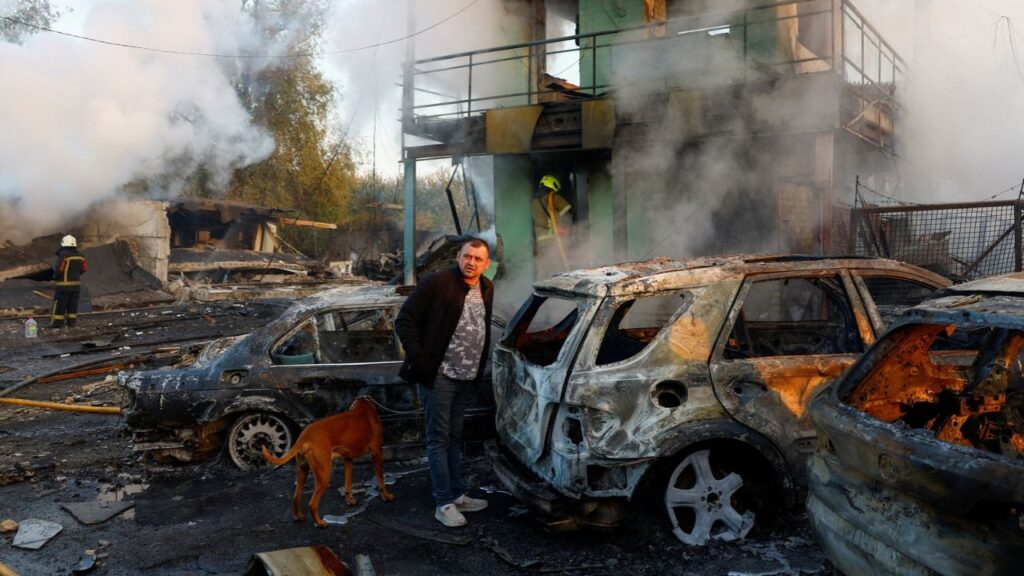
Bahrain said it had been targeted early Saturday by Iranian drones in an apparent retaliation after the United States launched strikes on Iranian military sites overnight, a flaring of hostilities that showed the limits of the truce between Washington and Tehran.
Hours later, a shipping monitor run by the British navy reported that a vessel in the Strait of Hormuz had been struck by an unidentified projectile, the second such attack since Thursday. The strikes could further deter ships that had hoped to pass through the waterway, which Iran had agreed to reopen as part of the ceasefire with the United States.
The attacks on Saturday came after the U.S. military said it had attacked Iranian missile drones and coastal radar sites in response to Iran firing drones at a container ship a day earlier. President Donald Trump said Friday that Iran had “foolishly” violated the ceasefire with its attack in the strait.

There were no immediate reports of damage in Bahrain, which accused Iran of “destabilizing security, exporting chaos and undermining regional stability.” Before the ceasefire, Iran regularly launched strikes against neighboring Persian Gulf states in retaliation for U.S. and Israeli attacks.
The Iranian government did not immediately comment on the attacks. Iran’s Foreign Ministry accused the United States on Saturday of violating the ceasefire and vowed that the Iranian military would “defend the country’s sovereignty, security and national interests with all its strength.”
Before the overnight clashes, the deal between the United States and Iran signed this month had led to relative calm in the region, with an uptick in vessels traversing the Strait of Hormuz and signs of an emerging agreement, backed by the Trump administration, to wind down the war’s second front in Lebanon.
Both the United States and Iran have sought to demonstrate that they have emerged victorious from the conflict, which is leading them to test one another’s red lines, analysts say. For now, neither side seems interested in a return to full-blown war.
The war began in late February with a massive joint U.S.-Israeli military campaign against Iran that drew in much of the Middle East and sent global energy prices skyrocketing. It also ignited a war in Lebanon, where Israel has been fighting Hezbollah, an armed group backed by Iran.
Here’s what else we’re covering:
— U.S. strikes: The U.S. strikes against Iranian missile and drone targets on Friday lasted about 90 minutes, a U.S. official said. Six fighter jets struck four Iranian sites along the Strait of Hormuz and on Qeshm Island, according to the official, who requested anonymity to discuss the operation.
— 60-day talks: The preliminary U.S.-Iran agreement delayed discussion of many of the thornier questions, including the future of Iran’s nuclear programs, to a 60-day negotiation period that began last week in Switzerland.
— Lebanon: The Trump administration announced a rare agreement between Israel and Lebanon on Friday that U.S. officials hope could help end the conflict between Israel and Iran-backed Hezbollah militants there. The deal stipulates that Israeli forces withdraw from a small portion of the territory they occupy in southern Lebanon, making way for Lebanon’s army to take control. Hezbollah quickly rejected the agreement.
— Global energy: Oil prices had risen after the Iranian attack on Thursday but eased Friday, falling to levels last seen before the war. The U.S. strikes on Iran came after markets had closed for the weekend.
–
This article originally appeared in The New York Times.
By Aaron Boxerman/Euan Ward/Ismaeel Naar/David Guttenfelder
c.2026 The New York Times Company