
|
Getting your Trinity Audio player ready...
|
For weeks, the Israeli news media has been obsessing about the once-ironclad U.S.-Israeli relationship.
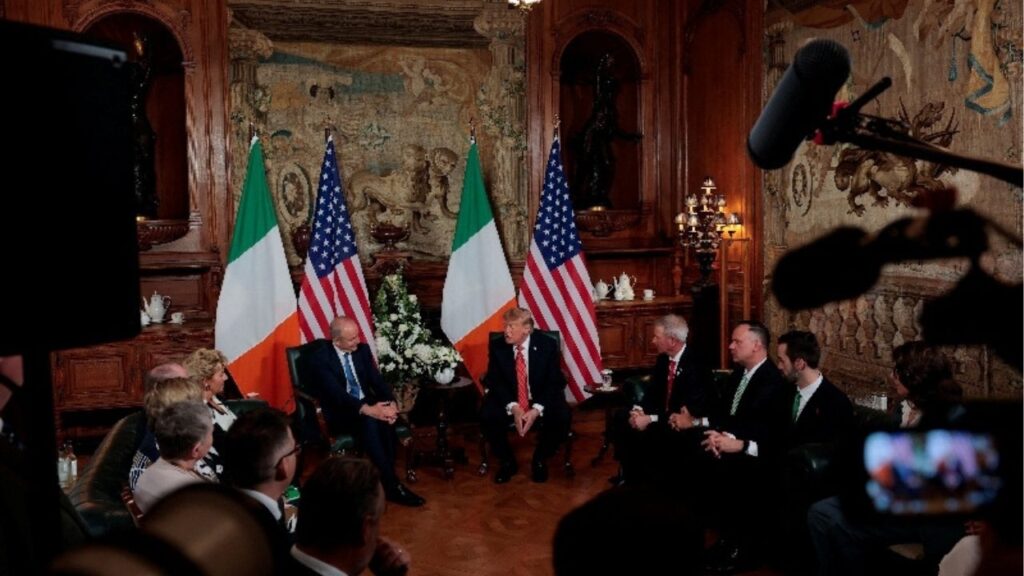
President Donald Trump’s pursuit of a peace deal with Iran, which many Israelis see as a betrayal, and his repeated berating of Prime Minister Benjamin Netanyahu, have raised doubts about whether they can still call Trump the best friend in the White House that Israel has ever had.
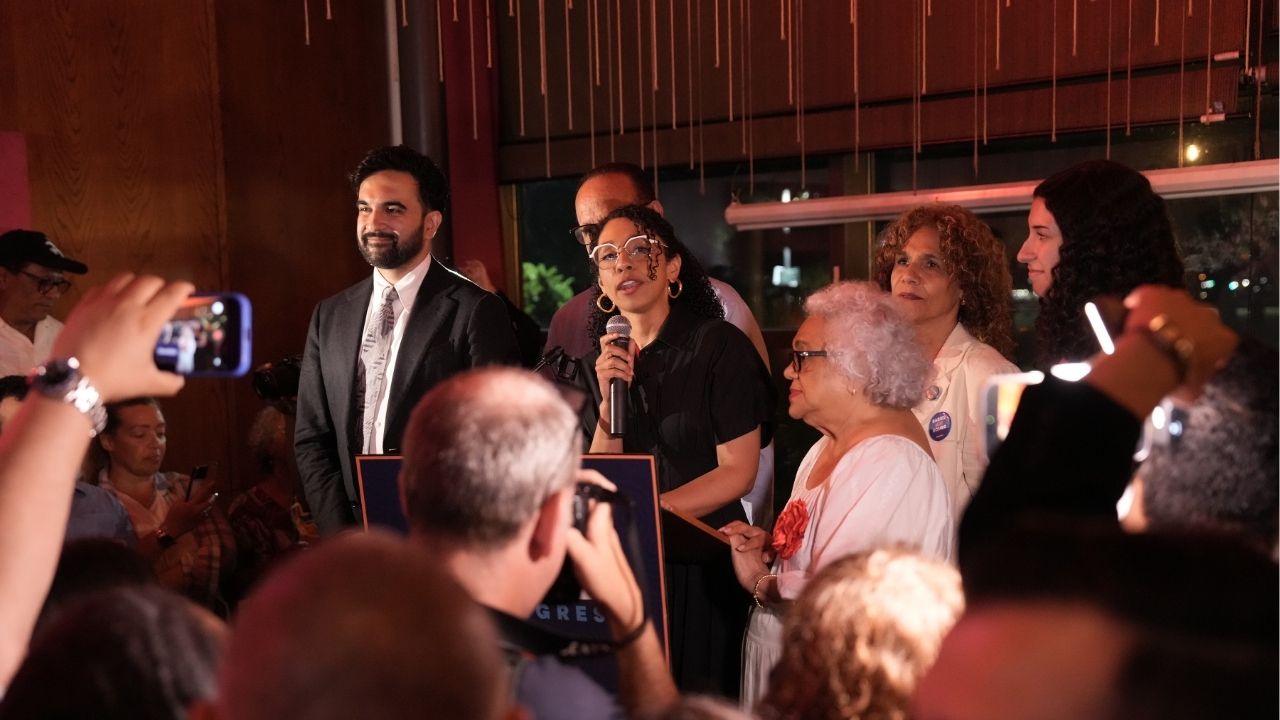
Then came Tuesday’s election results in New York City. Three pro-Palestinian candidates backed by Mayor Zohran Mamdani, a harsh critic of Israel, defeated moderates in hotly contested Democratic congressional primaries.

No one in Israel is suggesting a pivot to China or Russia quite yet. But those who have studied or steered the U.S.-Israel relationship say that the strains and tensions are fast becoming worrisome for Israel.
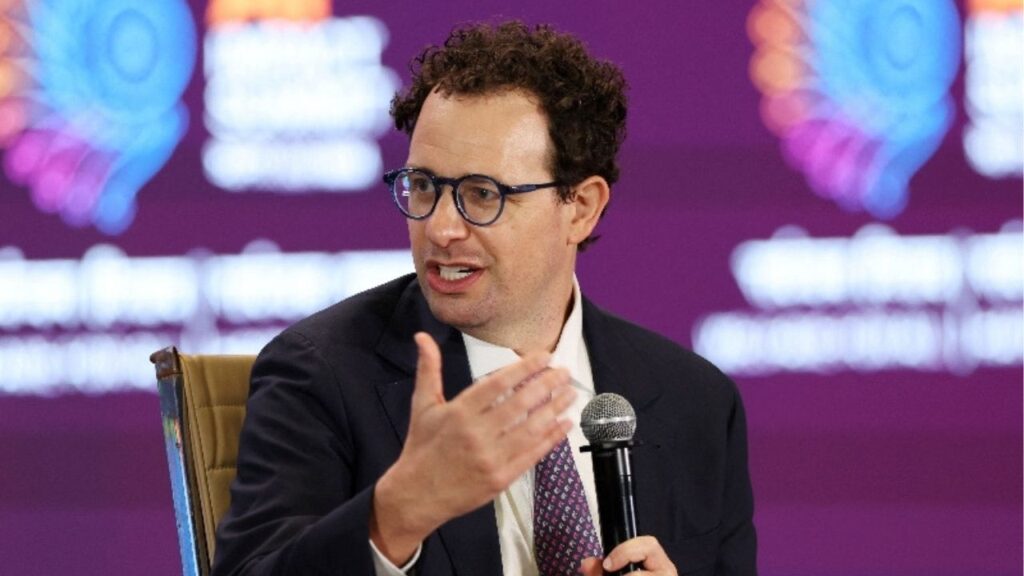
“I’m extremely concerned,” said Asaf Zamir, a deputy mayor of Tel Aviv who was Israel’s consul general in New York from 2021-23. All three candidates had made fierce criticism of Israel central to their campaigns and political identities. “And they say it out loud in the most Jewish city in the world, after Jerusalem,” Zamir said.
Experts on the relationship warn that Israel may not be able to count on solid support from Washington for much longer — whether in concrete assistance like billions of dollars in yearly military aid, in symbolic backing like reliable vetoes of anti-Israel resolutions at the United Nations or even in tax exemptions for U.S. charities benefiting Israeli causes.
“There’s a cliff, and we’re heading towards it,” said Daniel C. Kurtzer, a Princeton University professor who was ambassador to Israel under President George W. Bush.
Some pro-Israel moderates also won House primaries in New York on Tuesday. But the victories by the candidates Mamdani aided — Brad Lander and Claire Valdez, who accuse Israel of genocide in the Gaza Strip; and Darializa Avila Chevalier, who has questioned Israel’s right to exist and, like Valdez, calls it an apartheid state — landed like bold new dots on a scatter chart revealing a clear trend of rising American hostility to Israel.
Zamir said, “I’m waking up and hearing that we’re ‘genocidal’ and ‘apartheid.’”
“I’m a left wing, two-state, pro-peace Israeli, but I’m not blind or crazy,” he added. “I know what the situation in Israel is, and we’re not those things we’re being called. And yet, more and more Americans are buying into and voting on those grounds. That troubles me.”
Israel was already hemorrhaging popularity in the United States, and in both parties, largely over its prosecution of the two-year war in Gaza after the Hamas-led Oct. 7, 2023, attacks, in which about 1,200 people were killed and some 250 taken hostage. Tens of thousands of Palestinian civilians were killed in the ensuing war, food shortages caused widespread famine and the enclave has been largely destroyed by Israel’s campaign.
Americans’ sympathy for Palestinians exceeded their sympathy for Israel for the first time in a New York Times/Siena poll in September. And 60% of Americans said that they held unfavorable opinions of Israel in a Pew survey in April, up from 42% in 2022.
“If I were the Israelis, I wouldn’t necessarily be concerned with three or four members of Congress who are way out to the left,” Michael Koplow, an analyst at the Israel Policy Forum, a New York-based research group, said of Tuesday’s primary results.
But, he said, those new lawmakers signaled a broader Democratic turn against Israel. “Opposition to Israel is now the major foreign policy issue,” he noted. “It’s not on the fringe anymore, it’s not even relegated to the sidelines in terms of its importance. It’s front and center in campaigns and in worldviews.”
Israel’s claim to being the “only democracy in the Middle East” has been tarnished in American eyes both by its oppressive treatment of the Palestinians and by its right-wing government’s efforts to overhaul Israeli institutions and consolidate its power.
That claim is also arguably less important to the United States at a time when the Trump administration is emphasizing the exertion of raw power and geopolitical transactionalism over America’s traditional self-image as the leader of the free world.
For Republican critics, many of whom accuse Israel of dragging the United States into fighting its wars — most recently in Iran — the argument centers on how much U.S. and Israeli national interests really still overlap.
“After 40 years of Israel calling itself a strategic asset to the U.S., there’s a legitimate question: Is Israel an asset or is it becoming a liability?” said Alon Pinkas, Israel’s consul general in New York in the early 2000s.
The more American voters feel they are paying for the Iran war in higher prices at the gas pump, he said, the more their elected officials will wonder, “What does America get from this relationship with Israel?”
Even so, the United States has a long way to go before support of Israel could fairly be called into question. The Trump administration has accelerated billions in arms sales and emergency military aid to Israel, backed Israel in peace talks with Hamas, eased some pressure on West Bank settlement expansion and taken a host of actions to curb anti-Israel protests on U.S. college campuses.
Should the alliance fray further, however, there is a lot that Israel could lose.
Already, because of the talks with Iran, the Trump administration is trying to constrain Israeli actions against its enemies in the region — most noticeably in Lebanon — in ways that Israelis say they never anticipated.
Israelis also can no longer count on receiving billions of dollars a year in U.S. military aid, something that Netanyahu effectively acknowledged this year when he proposed that Israel gradually wean itself from that assistance.
Other measures that an increasingly frosty Congress, White House or both could take to express displeasure with Israel include stripping charities supporting West Bank settlement of federal tax-exempt status. Valdez, one of the House primary winners in New York, had tried to do that at the state level in Albany, the state capital.
“These are all things that Israel has assumed would never come from the U.S.,” Koplow, the analyst, said.
The strained relationship is starting to enter the Israeli political conversation in the prelude to elections this fall. Naftali Bennett, who toppled Netanyahu in 2021 and is trying to repeat that feat, said this past week that the U.S.-Israeli alliance was at an all-time low and that repairing it would be a huge undertaking.
“For the first time since the establishment of Israel,” he said, “Israel is a net negative in the United States.”
“That’s a disaster,” he added.
Other candidates have suggested that Israel should crack down on settler violence against Palestinians or give diplomacy a chance rather than trying to solve every problem militarily.
For now, as Israelis watch their support in the United States continue to bleed, there is little to do but wait.
Zamir said the worst part was psychological.
“I don’t fear the loss of military aid,” he said. “We can live without it. I fear the loss of backing toward the rest of the world — the feeling that you have our back.”
–
This article originally appeared in The New York Times.
By David M. Halbfinger/Lexi Parra
c.2026 The New York Times Company