
|
Getting your Trinity Audio player ready...
|
When a candidate invests their personal fortune in running for public office, does it represent a rich person trying to buy a seat or does it grant them independence from powerful special interests? Voters will decide on Tuesday in an election that has seen candidates spend more of their own money than any previous election.
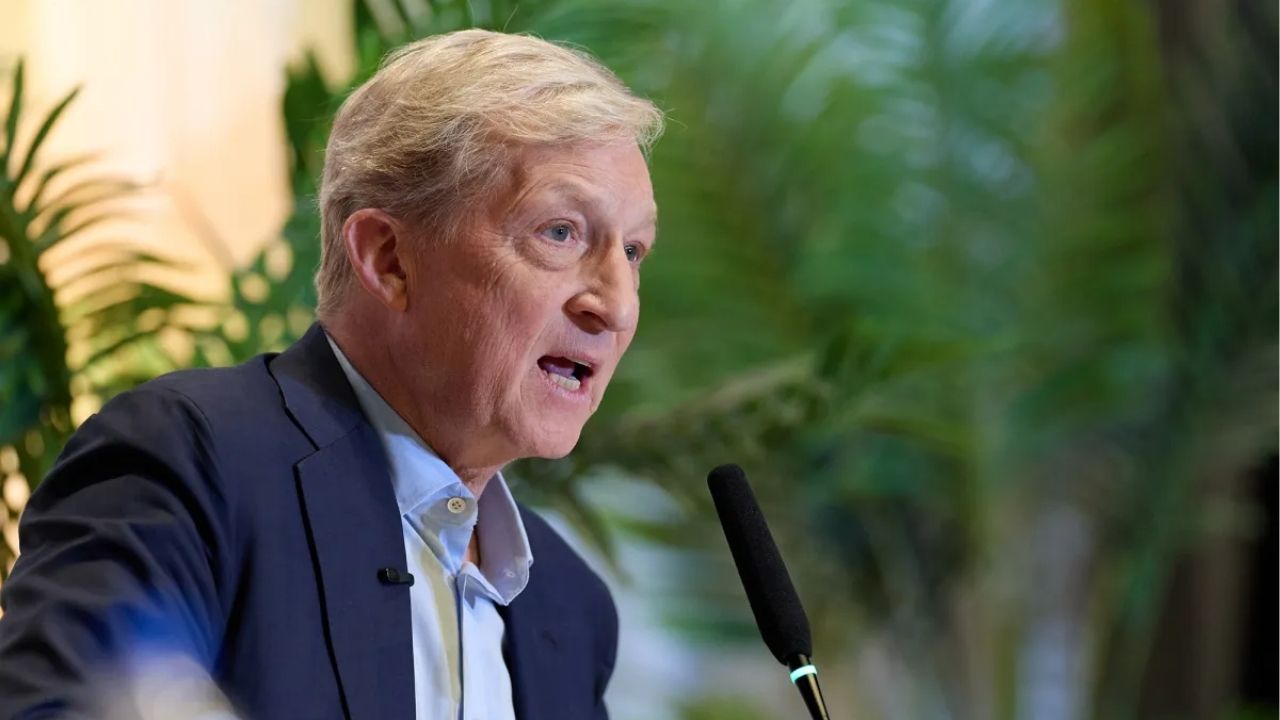
Liberal billionaire Tom Steyer put up $213 million to fund his campaign for governor. All together, more than 200 candidates have contributed about a quarter billion dollars of their own money this year. That’s an eight-fold increase since the last time Californians voted for governor in 2022 and the most since California started keeping digital campaign finance records in 1999.
The last time a candidate spent anything close to Steyer was in 2010 when Meg Whitman gave over $140 million to her own unsuccessful campaign for governor, setting a record at the time.

Previous statewide races also saw big spenders: Steve Poizner gave $14 million to his campaign in 2006 running for insurance commissioner; Eleni Kounalakis shelled out upwards of $8 million when she ran for lieutenant governor in 2018; Yvonne Yiu dropped nearly $6 million on her campaign for controller four years ago.

Jeremia Kimelman

Kate Li
CalMatters
Candidates running for state Senate this cycle have given nearly $4 million to their campaigns – the highest amount recorded for the chamber and more than double the $1.7 million candidates put up 20 years ago. Likewise, current congressional candidates have contributed more than $29 million to their campaigns, the most of any cycle in the past two decades.
And this year, some congressional candidates have set records for self-funding their campaigns.
Two of the five congressional candidates who contributed the most money to their campaigns over the last 20 years are running this election. In the competitive contest to succeed Nancy Pelosi in her San Francisco-based congressional district, Democrat Saikat Chakrabati gave nearly $9 million to his campaign, the most of any congressional primary candidate in state history. Eric Jones, who wants to oust fellow Democrat Mike Thompson from his district representing the North Bay, transferred over $5 million of his personal fortune.
Chakrabarti said the money he’s putting up is to counter the millions being spent against him by opponents and that self-funding his campaign is his best choice in a bad system.
“To go up against that kind of money I have two options,” he said. “I could either spend my time calling big donors for money and then I can go to DC and owe a million people a million favors…so I chose to put in my own resources.”
The increase in self-funding may reflect the need for more money to compete after the Supreme Court in a 2010 decision known as Citizens United lifted restrictions on campaign spending by wealthy people and corporations, said Jeremy Mack, executive director of the nonprofit advocacy group The Phoenix Project.
In other words: more money in politics begets more money in politics.
“In California,” he said, “it’s often been corporations, real estate and police unions that have often worked together to [fund] similar candidates.”
Maria Colon, a voter in Sacramento who attended a Steyer rally last week said she views corporate donations as implicit corruption, and while self-funding might be a reason to warrant further scrutiny of a candidate, she understands why some like Steyer are pouring money into their own campaigns.
“Frankly, I think there needs to be caps on how much money needs to be raised,” Colon said. “[Corporations] are not giving you their money for free, bro.”
Money is critical for political campaigns and so candidates who can contribute their own cash might have an advantage, said Dr. Wesley Hussey, a professor of political science at Sacramento State University. “A candidate who’s able to put in enough of their own money to start off is a great way to be a viable candidate.”
Andrew Coolidge, a Republican running for Assembly District 3 in the northern part of the state who is the biggest donor to his campaign, said voters should be skeptical of candidates who can fund their own campaign but chose not to.
“I think a candidate who doesn’t have some skin in the game is a candidate you have to worry about,” he said. “I can feel very comfortable making every decision based on my conscience rather than based upon the opinion of someone else.”
Chris Anderson, a candidate for Lodi City Council who has contributed to his own campaign and attended the Steyer rally, said he likes candidates who can self-fund while raising some questions at the same time.
“There is a part of me that likes the fact that a person is funding their own campaign because they’re less likely to be beholden to a special interest,” he said. “But on the other hand, what special interests got them to where they are?”
Money doesn’t buy everything. Hussey said voters will look at other factors in deciding how to view candidates who spend their own fortunes on their campaigns.
Take Steyer and Whitman. Both had different degrees of involvement in politics before they ran for office. Whitman was involved in both Mitt Romney’s and John McCain’s 2008 presidential runs, while Steyer has been active in environmental causes for over a decade.
Voters might get more suspicious when a rich candidate shows up without a political track record, Hussey said. “Tom Steyer gave a lot of money to politicians for a long time and tried to kind of enter the political world himself for a while.”
When asked if voters should view his hundreds of millions of dollars as a rich person trying to buy a political office, Steyer said at last week’s rally that he believes voters should judge him by the amount of money being spent against him and not as much by the hundreds of millions of dollars he’s put into his campaign.
“In this race there is only one person who isn’t conflicted by taking money from corporations,” he said. “That’s me.”
At a recent public event at Stanford University, Democratic gubernatorial candidate Katie Porter said she doesn’t think being rich means you’re immune to lobbying.
“That is the same argument that Donald Trump made,” she said. “’You can trust me not to take special interest money because I’m so rich’–I find that unsettling in a democracy.”
—
This story was originally published by CalMatters. Sign up for their newsletters.
This article was originally published on CalMatters and was republished under the Creative Commons Attribution-NonCommercial-NoDerivatives license.