
|
Getting your Trinity Audio player ready...
|
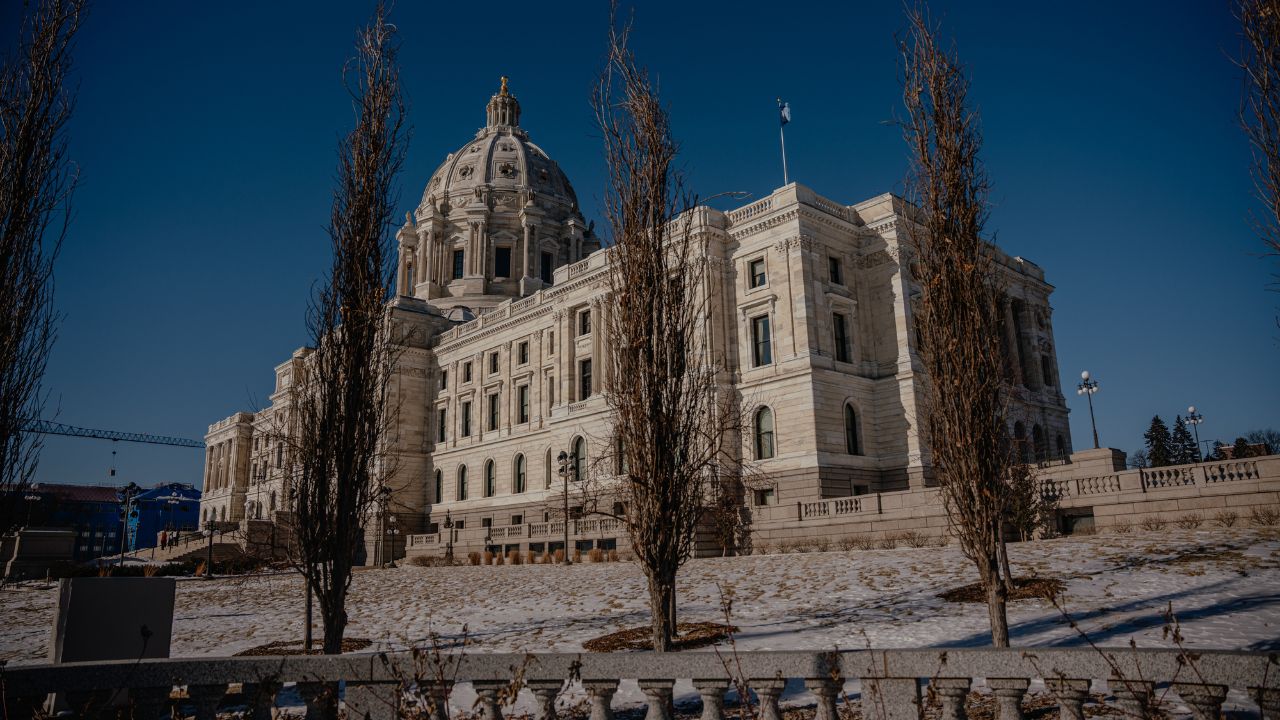
A day after Minnesota Gov. Tim Walz signed into law the first state law explicitly barring prediction markets, the Trump administration sued the state on Tuesday, seeking to block it from going into effect this summer.
The law, which had the backing of a bipartisan group of state legislators, would make it illegal to host or advertise a prediction market site in Minnesota. Under the law, a person who creates, operates or advertises a prediction market that allows users to place bets on future events could be charged with a felony punishable by up to five years in prison and a $10,000 fine. The law would not subject Minnesotans who bet on the sites to criminal penalties.
“We are really concerned about the self-dealing,” said state Rep. Emma Greenman, a Democrat who advocated for the new law limiting sites that let people put wagers on future outcomes of sports games, elections and more. “To me this is a clear place that the state of Minnesota should be acting on behalf of our citizens.”

At least 14 other states have introduced legislation seeking to regulate prediction markets, according to the National Conference of State Legislators, but Minnesota was believed to be the first this month to pass as sweeping a measure into law. The legal battle comes as states have struggled to police prediction markets, which have surged in popularity over the past year.
On Tuesday, the Commodity Futures Trading Commission, a federal agency that regulates certain markets, filed a federal lawsuit against Minnesota, arguing that the state does not have the authority to put guardrails around prediction markets, such as popular betting websites Kalshi and Polymarket.
In a news release, the commission called the law “the most aggressive move by a state” to “undermine the federal regulatory regime set up by Congress more than 50 years ago.”
Michael Selig, chair of the commission, said in a statement that the law turned “lawful operators and participants in prediction markets into felons overnight.”
Minnesota Attorney General Keith Ellison said that his office was reviewing the lawsuit and would respond in court. “I’m very concerned about the harms of prediction markets on Minnesotans,” Ellison, a Democrat, said in a statement. “Prediction markets are designed to be addictive and prey especially on young people and low-income folks.”
Jack Such, a spokesperson for Kalshi, said that prediction markets were under federal, not state, regulation. “Minnesota banning prediction markets is like trying to ban the New York Stock Exchange,” he said. “States can’t ban federally regulated exchanges.”
Millions of Americans bet billions of dollars each month on markets ranging from the price of oil to who will win the reality show “Survivor.” The markets have come under heightened scrutiny as suspicious trades have come to light and fueled concerns about insider trading.
Last month, a U.S. Army soldier was charged with using classified information to bet on the mission to capture Nicolás Maduro of Venezuela. The soldier, Master Sgt. Gannon Ken Van Dyke, was accused of making more than $400,000 on Polymarket by betting on different outcomes related to Venezuela after learning of the operation, federal prosecutors and the FBI said. The sergeant has pleaded not guilty to the federal charges.
Hundreds of other unusual bets have also raised eyebrows. A New York Times analysis of Polymarket data showed hundreds of bets placed one day before the United States launched an attack on Iran, suggesting some bettors may have known the strike was coming. In April, Kalshi said it had discovered three examples of congressional candidates placing bets on their own races.
Prediction markets have surged even in states that outlaw sports betting, because they operate outside of state regulation. The trading activity is considered similar to commodity markets that speculate on the future and are under federal regulation.
Several state gambling commissions have filed lawsuits against prediction market sites, accusing them of operating unlicensed sports gambling platforms. In Nevada, a judge banned Kalshi from offering bets on sports without the company obtaining a gaming license.
–
This article originally appeared in The New York Times.
By Pooja Salhotra/Jamie Kelter Davis
c. 2026 The New York Times Company