

|
Getting your Trinity Audio player ready...
|
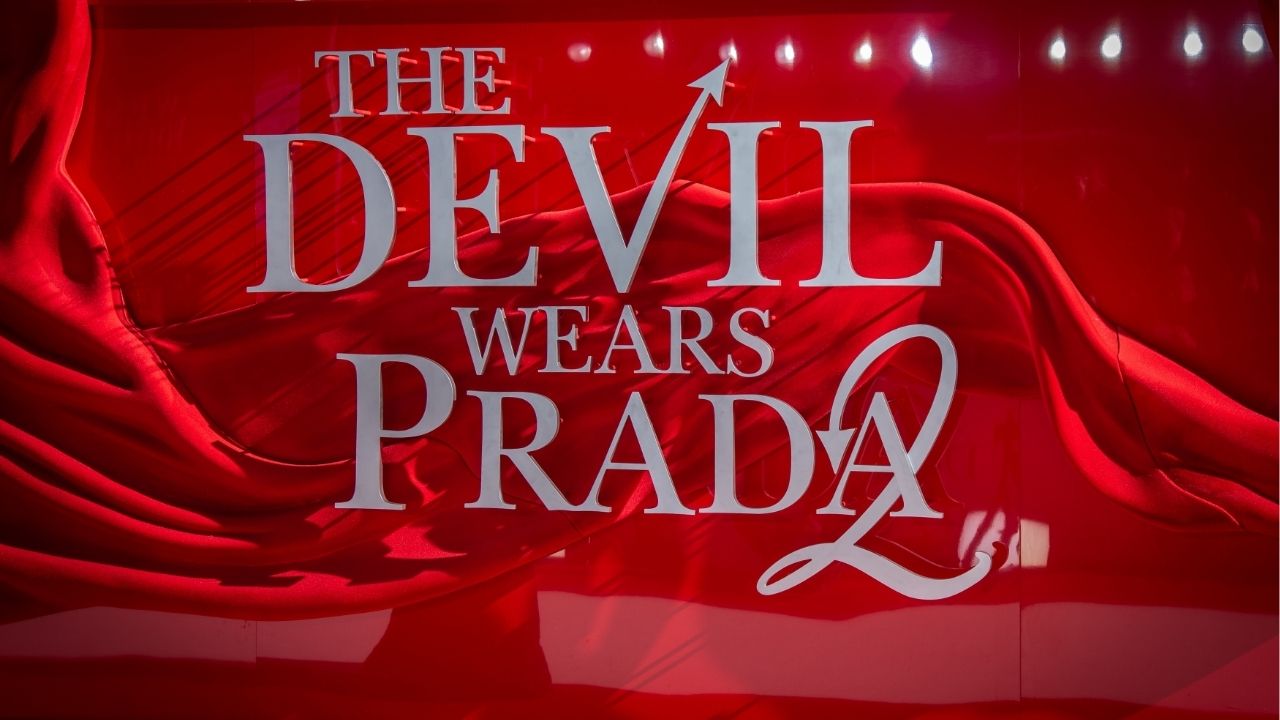
There is a moment early in The Devil Wears Prada 2 that feels less like a plot point and more like a quiet acknowledgment of the times.
Spoilers Ahead
Andy Sachs (Anne Hathaway), once the eager assistant, now an established journalist, is seated at an awards table, her career seemingly intact, even enviable. Then, almost without warning, every phone at the table lights up. A layoff notice. Not just hers — everyone’s. As a former Fresno Bitwise employee who was laid off due to the co-CEOs’ fraud, this hurt to watch.

It is abrupt, impersonal, and oddly synchronized. It is also one of the film’s more effective observations: success, particularly in media, has become increasingly fragile.

Anthony W. Haddad
The Millennial Re-View
From there, the film moves quickly, perhaps too quickly, to reassemble the world that audiences remember. Andy, newly untethered, finds herself drawn back into Runway magazine within days.
Within the first portion of the movie, our original team is already on screen, which gained cheers from the audience I was with.
The mechanics of that return stretch plausibility, even as the script later gestures toward behind-the-scenes orchestration. But plausibility is not the film’s primary concern.
Recognition is.
Nostalgia, as Strategy
Much like the fashion industry it depicts, The Devil Wears Prada 2 is acutely aware of cycles: what returns, what gets rebranded, what still sells.
The film leans heavily into nostalgia, but not lazily. It recreates rhythms, dynamics, and even visual echoes from the original, inviting the audience to participate in a kind of cultural memory exercise. Scenes feel familiar on purpose. Dialogue occasionally skirts the edge of self-reference.
Some critics have described this as overreliance — a sequel too invested in reminding viewers of what they loved before. But there is also a case to be made that this repetition is intentional, even thematic. In an era when media, fashion, and entertainment are all engaged in constant revival, the film mirrors the very system it critiques.
It asks, quietly: what does originality look like now?
The Collapse of Gatekeeping
If the first Devil Wears Prada was about access (who gets in, who decides) the sequel is about diffusion.
Miranda Priestly (Meryl Streep), still commanding but no longer untouchable, now operates within an industry that has lost its singular centers of power. Runway is no longer just a magazine; it is a brand competing for attention in a landscape dominated by influencers, algorithms, and shifting loyalties. This hits close to home as a journalist.
The film gestures toward this through passing references — digital metrics, advertiser anxiety, the looming presence of brands like Dior not just as partners, but as power brokers in their own right. The old hierarchy has flattened.
And Miranda, for perhaps the first time, is negotiating from a position that is not entirely secure. We’ve seen her position threatened before, but here she appears to enter the situation with far less control from the outset.
This is where the film becomes unexpectedly reflective. It is not simply about whether Miranda can maintain control, but whether control itself still exists in the same way.
A Generational Tension
Layered beneath the industry shifts is something more subtle: a generational recalibration.
Andy, as a millennial figure, sits between worlds. She came up in the era of gatekeepers, paid her dues in a system that demanded personal sacrifice, and emerged into a professional landscape that no longer guarantees stability. Her return to Runway reads less like ambition and more like recalculation — a recognition that even success can be temporary.
Around her, younger characters operate differently. Boundaries are clearer. Language is more cautious. There is an awareness, sometimes played for humor, of what can and cannot be said, of how power is perceived as much as exercised.
Miranda’s “filter,” embodied in a younger assistant, Amari (Simone Ashley), tasked with softening her edges, is emblematic of this shift. It is a small but telling addition, suggesting that authority now requires translation.
Performance as Continuity
If the film’s structure occasionally feels crowded, the performances help steady it, even if they are not the primary focus.
Hathaway plays Andy with a confidence that signals growth without fully resolving the character’s underlying restlessness. She feels more settled, but not entirely removed from the uncertainty that defined her earlier self.
At times, though, the film slips back into an older version of Andy. There are moments where she seems to be seeking validation more than asserting herself. In one scene, after landing a major interview, she rushes to find Miranda to share the news. It is a significant professional win, but the urgency reads as performative, almost like she is looking for approval.
In the original film, Andy likely would have folded that achievement into a conversation rather than chasing recognition for it.
Streep leans further into Miranda’s vulnerability than before. It is a noticeable shift, and the sequel makes that tension more visible, suggesting her authority is no longer entirely unquestioned.
It’s also worth noting that Streep rarely returns for sequels. Her more limited role in Mamma Mia! Here We Go Again makes her full presence here feel intentional, suggesting a level of belief in the story.
Stanley Tucci’s Nigel remains largely unchanged, serving as a familiar anchor in a film otherwise concerned with evolution.
Emily Blunt’s return as Emily offers some of the more dynamic moments, with Emily operating more independently within the industry. Her presence carries the same sharpness, though the arc itself follows a rhythm that we have seen before.
For viewers expecting exact continuity with the original performances, Nigel comes closest. The others feel intentionally adjusted, not reinvented but subtly recalibrated for a different moment. This film does take place 20 years after the first, in our world and theirs.
The Cameo Economy
The film’s use of cameos — designers, public figures, recognizable faces like influencers — operates as texture and commentary.
In an earlier era, such appearances might have served as insider validation. Here, they feel more aligned with the logic of contemporary visibility: to be seen is to remain relevant. The film does not entirely distinguish between narrative necessity and cultural signaling.
That ambiguity is not necessarily a flaw. It reflects a broader condition in which presence itself carries value.
I am not going to name the cameos. For the true fans of this industry, it is just too good at times to ruin.
Excess, and Its Appeal
There is a sense, throughout, that the film is aware of its excess.
Plotlines converge with convenient timing. Conflicts resolve with surprising efficiency. Emotional beats occasionally yield to spectacle. It is, by many conventional measures, overextended.
And yet, it remains engaging.
Part of that engagement comes from its pacing. The film moves with a confidence that discourages scrutiny. But part of it also comes from its understanding of audience investment.
This is not simply a story being told; it is a world being revisited.
Rewatchability, Reconsidered
The original Devil Wears Prada endures because of its precision. It is contained, quotable, structurally sound — a film that invites repetition because it reveals something new each time.
The sequel operates differently. It is broader, less disciplined, more interested in accumulation than refinement.
It may not lend itself to the same kind of habitual rewatching.
But it offers something else: a snapshot of how both its characters and its audience have aged into a different kind of uncertainty. Careers are less linear. Power is less centralized. Identity, particularly professional identity, is more fluid.
In that sense, the film’s messiness feels less accidental.
It feels, at times, reflective.
Final Thought
The Devil Wears Prada 2 does not fully resolve the tension between nostalgia and evolution. It moves between them, sometimes gracefully, sometimes not.
But it understands that the appeal of returning to this world is not just about what it was. It is about seeing what remains, and what has quietly shifted in the background.
That may be why, even at its most improbable, it is difficult to look away.
—
Connect with Anthony W. Haddad on social media. Got a tip? Send an email.