

|
Getting your Trinity Audio player ready...
|
Elon Musk, who once wrote that he loved Donald Trump “as much as a straight man can love another man,” has some regrets.

By Michelle Goldberg
The New York Times
Opinion
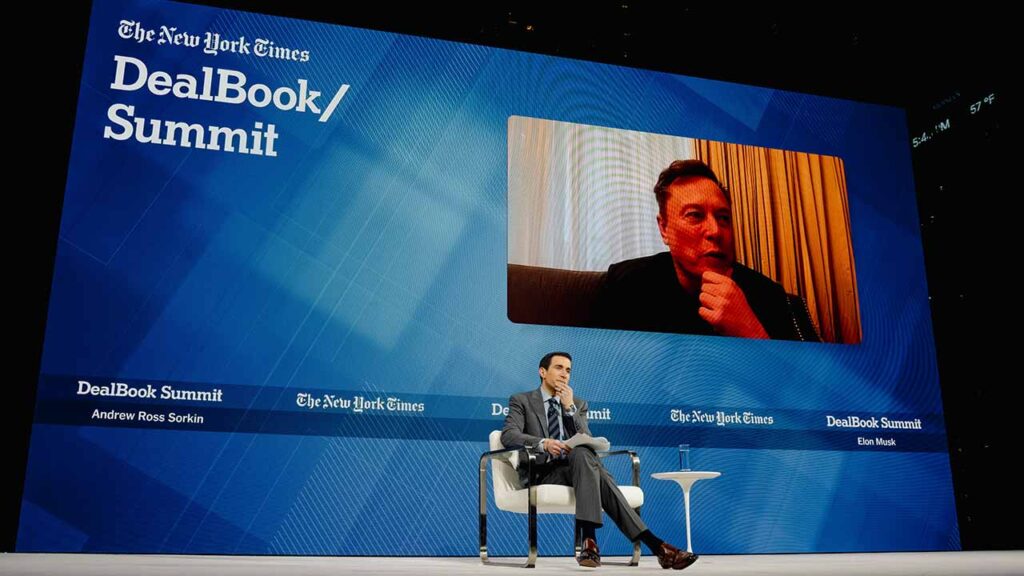
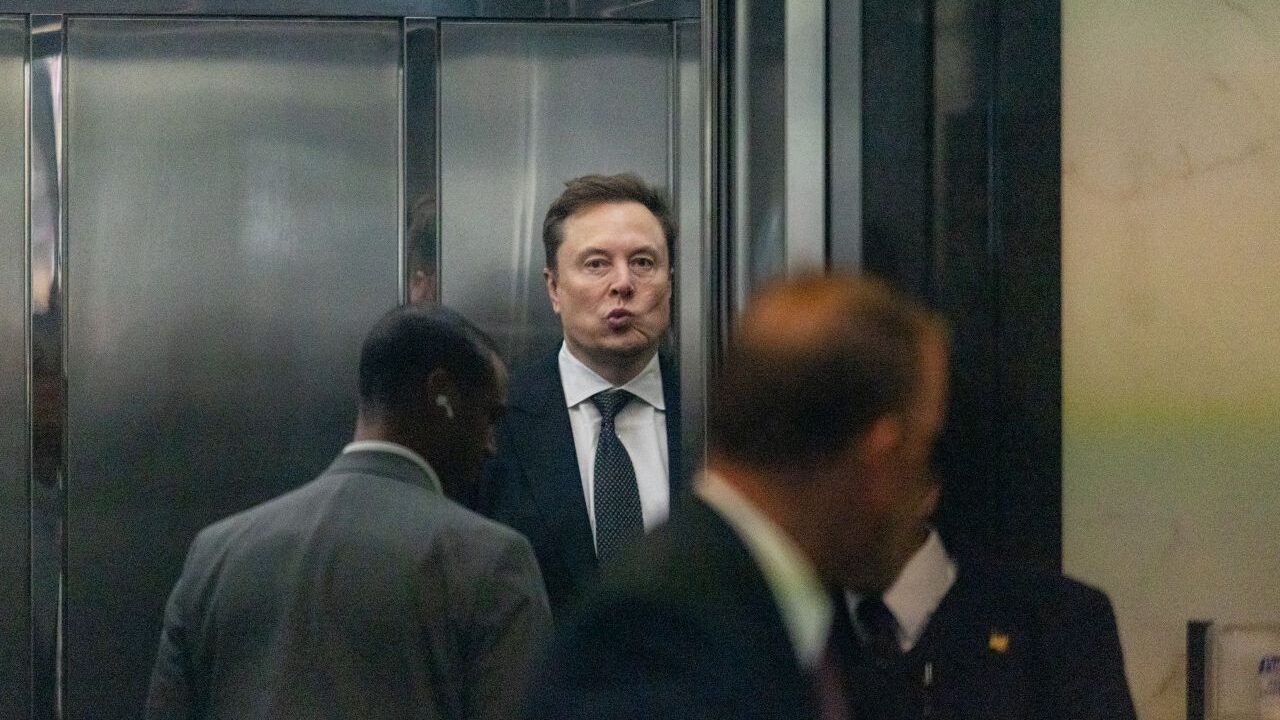
On Wednesday, Musk appeared remotely at The New York Times’ DealBook summit, where he was interviewed by my colleague Andrew Ross Sorkin. After calling himself “dark gothic MAGA” during the presidential campaign, Musk now insists he’s “not MAGA” after all, and isn’t even sure what the term means.
He extolled the virtues of divided government and said he thought Texas — where much of his empire is based — would be “fine” under Gina Hinojosa, the Democrat just elected governor. Affecting a kind of sheepishness, he said he felt “pretty foolish” about spending nearly half a billion dollars in the last election. “Probably if I could rewind the clock, I would have spent less money,” he said.

It’s easy enough to believe he’d like his money back — trivial as the amount might be to him — but his attempt to rebrand is ludicrous. Just last month, Musk changed the name of his company SpaceXAI to SpaceXSI in deference to Trump’s demand that people refer to artificial intelligence as “superintelligence.” He appeared at DealBook on a screen because he was in China with Trump.
Still, the fact that Musk apparently feels the need to create some distance between his public image and the Republican Party is a positive development, because it suggests that the midterms rattled him. This election, after all, wasn’t just a rebuke of Trump — it was a rejection of Musk, with Democrats all over the country acting as if he were on the ballot.
Tech Billionaires Now Seen as Villains
In both politics and entertainment, tech billionaires are increasingly seen as villains, and Musk seems to want to retreat into his companies and perhaps rebuild his reputation as an apolitical savant. He told Sorkin that he hadn’t paid much attention to the midterms because he was so busy with his various businesses. “I think I’m ideologically quite moderate,” he said. (In July, he posted, “Anyone who opposes remigration is a traitor,” using a term that refers to the forcible removal of nonwhite immigrants.)
But Musk can’t simply escape politics, and not just because his about-face is so transparently self-serving. He will always be a political figure because his companies are deeply intertwined with the government. The Trump years didn’t only reveal Musk’s racist political inclinations. They’ve also shown that he’s a quasi-state actor, one whose Brobdingnagian wealth owes a lot to American taxpayers and gives him unwarranted power over them. With Democrats in charge, we have a chance to find out what exactly he’s been extracting from us all, and he seems worried.
Film Deconstructs Musk’s Legend
“It’s kind of staggering, but you can see how quickly he’s reversing because he understands how the fortunes of his company are so tied in with state and federal government goodies,” said Alex Gibney, director of the new four-hour documentary “Musk.”
To watch “Musk,” which is available for rent now and will be on HBO early next year, is to understand how much the tech oligarch could have to lose from sustained public scrutiny. The film deconstructs the legend around Musk, while showing how much of his titanic success is owed to the government he so recently took a chain saw to.
Gibney’s film reminds us that Musk didn’t start Tesla — he bought it. (“He’s actually accomplished some amazing things in his own right,” one of the real founders told CNBC. “I’m not sure why he also has to say that he was a founder when he wasn’t.”) Gibney shows how Musk sometimes resorted to chicanery to make his products seem more impressive. In a wrongful death deposition, a former Tesla employee admitted to staging a video purporting to show a car’s self-driving capabilities. An engineer hid in the back, where he made the car stop and start.
“Musk” also punctures the idea that engineering is Musk’s primary talent. At one point, Jim Cantrell, the former vice president of business development at Musk’s company SpaceX, laughs when he hears that Musk wanted to be called SpaceX’s “chief engineer.” “Elon’s a damn good engineer, but he’s not an educated engineer,” he says.
But Musk is not a fraud like Elizabeth Holmes. His companies build tangible and sometimes remarkable things — cars, rockets and satellites. He has a genius of a certain sort. It’s just that his genius is primarily for the interrelated tasks of attracting investors and securing government money.
Musk’s Gift Is Ability to Get Government Contracts
Gibney says Musk has mastered what he calls “reward hacking.” His foremost skill, Gibney told me, is “both harnessing government contracts and also government subsidies. That’s his genius. His whole career is built on that.”
This is not an entirely novel observation. Last year Politico reported that a third of Tesla’s profits in the previous decade came from selling credits created by government climate programs. The Washington Post found that Musk’s fortune is built on at least $38 billion that he’s gotten from the government, often at critical moments. In Texas alone, state Republicans have given him at least $1.7 billion in grants, tax breaks and incentives.
Last year, when Texas journalists requested communications between the state government and Musk and his companies, the governor refused and claimed they could reveal “intimate and embarrassing” details. Hinojosa, who sued to make the emails public, will soon have access to them. In an interview with Texas Monthly, the state’s incoming Democratic attorney general, Nathan Johnson, said of Musk, “I don’t respect his attempts to control the future of the world by controlling governmental power. And to the extent enforcement of the law prevents him from doing that, I will be doing that.”
So, presumably, will Democrats in Washington. Last month, when the Musk-owned satellite service that Ukraine uses to operate drones was slowed, it was unclear whether he or Trump had given the order. That alone is a demonstration of the intolerable authority he’s arrogated to himself.
At the end of Musk’s DealBook summit interview, Sorkin reminded him that he once said his mind was like a storm. Musk said that it hasn’t been like that lately. “I feel relatively at peace,” he said. Hopefully not for long.
—
This article originally appeared in The New York Times.
By Michelle Goldberg/Jason Henry
c.2026 The New York Times Company