
|
Getting your Trinity Audio player ready...
|
Hospitals across the country are mobilizing an expansive outreach effort in an attempt to ensure that roughly 19 million patients do not lose their insurance coverage under new Medicaid work rules that begin in January.
Saying the requirements are generating widespread anxiety and confusion, healthcare executives are using a variety of methods to help guide the Americans who will be affected. They are deploying staff and volunteers to contact patients with text messages, phone calls and offers of help.
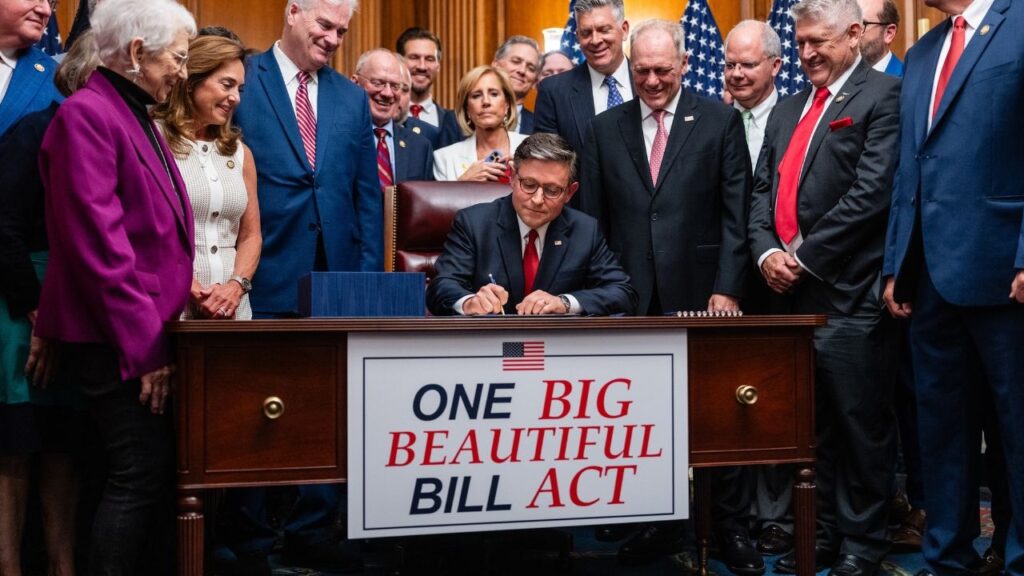
The rules dictate that able-bodied adults without young children either work, volunteer, or attend school or job training for at least 80 hours a month. Republicans included the rules last year as part of President Donald Trump’s package of tax cuts and reductions in safety net spending, including nearly $1 trillion in Medicaid cuts.

Hospitals and other health centers are detailing what evidence people in many cases must provide — pay stubs or other proof of work or school attendance — to maintain coverage.
“There’s going to be people who fall through the cracks,” said Nicole Harper, chief financial officer at Eskenazi Health, a safety-net hospital in Indianapolis. “We’re bracing for impact.”
Because hospitals are heavily reliant on Medicaid funding, keeping a stable patient population is critical for them to maintain government reimbursements.
And now that Democrats will assume control of Congress on Jan. 3, some health systems are also preparing lobbying efforts to restore Medicaid cutbacks.
But even with their sizable new majorities, Democrats do not have the votes to override a presidential veto. Unless they strike a deal with Republicans, a rollback of the Medicaid rules and funding cutbacks is uncertain.
Many Republican members of Congress have long supported work requirements for Medicaid recipients, contending that the system was riddled with fraud and that health insurance should be earned. The government estimates the mandates will save $317 billion in taxpayer spending over 10 years.
By 2034, more than 5 million low-income people in 44 states and the District of Columbia will lose Medicaid coverage because of the work rules, according to the Congressional Budget Office. Many will fall off by missing filing deadlines and failing to navigate red tape, even if they meet the rules’ criteria, officials and experts said.
Last month, a federal judge in Boston blocked a requirement that would have made it harder for people too sick to work to seek an exemption. Dr. Mehmet Oz, administrator of the Centers for Medicare and Medicaid Services, said on CNBC recently that the ruling would be appealed.
But state and health officials must still review hundreds of serious illnesses and disabilities to decide which patients might qualify.
Complicating matters, the lists of ailments differ from state to state. Nebraska, for instance, has an exemption for rheumatoid arthritis, while Montana does not.
Effects Will Be Far-Reaching
For health systems, the price of patients losing Medicaid coverage is high. Emergency rooms could swell with uninsured patients and hospitals would take a significant financial hit from the loss of reimbursements. More than a third of the nearly $1 trillion in annual Medicaid spending goes to hospitals, paid for with federal and state taxpayer money.
Safety-net hospitals with large numbers of Medicaid patients warn the financial losses will result in increases in charitable care and uncollected bills, which will shift higher costs to employers and patients with commercial insurance.
Small rural hospitals, which already are operating on thin margins, could be forced to shed jobs and services like maternity wards.
The requirements apply to states that expanded their Medicaid populations under the Affordable Care Act, which allowed childless adults with incomes up to 138% of the poverty line to get coverage.
Nebraska and Montana imposed work rules earlier this year, providing a glimpse of what to expect in other states.
After Nebraska imposed mandates in May, wait times on its Medicaid call center rose to as much as two hours from under 30 minutes, according to executives and advocates.
Nebraska’s monthly Medicaid approvals fell 25%, or nearly 1,400 people, in May, June and July, according to an analysis of publicly available data by The Hilltop Institute, a nonpartisan research group at the University of Maryland, Baltimore County.
The state’s health centers also reported an increase in uninsured patients.
State officials said in an email that Nebraska denied Medicaid coverage to 1,773 people through September based on work rules alone. They said that additional denials across other categories were caused by “seasonal fluctuations” and that it would be premature to attribute them to policy changes.
“Nebraska prepared carefully before launching work requirements on May 1, including training eligibility staff; communicating with community partners; and sending more than 75,000 notices, 38,000 text messages and 10,000 emails,” said Collin Spilinek, a spokesperson for the state’s Department of Health and Human Services.
In Montana, which started applying the rules in October, experts said confusion is widespread. They cited state notification letters with conflicting deadlines and a website they found difficult to navigate.
To qualify for a medical exemption in Montana, people must select an ailment from a list of hundreds of permissible diagnoses.
Montana’s list includes kuru, a neurodegenerative disease originating in the South Pacific that is virtually extinct, according to a scientific paper, which notes: “The end of cannibalism has put an end to this disease.”
Nebraska’s diagnoses list also includes kuru but is more encompassing.
“Nebraska has a very exhaustive list that we feel is overly inclusive,” said Rebecca de Camara, Montana’s Medicaid director, said at a legislative hearing in June. “We are trying to have a fairly narrow list that we believe really constitutes medical frailty.”
Montana Medicaid officials did not respond to requests for comment.
Officials and community leaders from Pennsylvania to California say they are moving quickly to prepare for a deadline crush at year’s end.
“It’s going to be a big train wreck,” said Sara Singer, a Stanford University health policy professor and member of a Northern California coalition using artificial intelligence to identify patients at risk of losing coverage.
Community health executives are worried that state Medicaid managers are not fully prepared as the clock ticks down. States have scrambled to issue new contracts to vendors and build systems to scoop up data from multiple government sources, said Matthew Salo, a consultant and past president of the National Association of Medicaid Administrators.
“There really wasn’t enough time to roll out something that was this complex,” he said.
In 2018, Arkansas was the first state to try work mandates under Medicaid, resulting in the loss of insurance for 18,000 people before a federal judge suspended the program.
A survey published in The New England Journal of Medicine found that the program was “plagued by confusion,” noting that 92% of those who lost insurance had actually met the work requirement or should have been exempt.
Many of the 19 million adults who are subject to the work requirements can be automatically requalified using state income-tax data systems and other digital sources, according to state Medicaid directors. Others can expect a twice-yearly check-in.
“This is a little like having a DMV appointment to try to prove you’re meeting your work requirements every month,” said Shelly Schlenker, executive vice president for CommonSpirit Health, a system with hospitals in 24 states. “If you’re already struggling to make ends meet, it’s one more burden in your life.”
—
This article originally appeared in The New York Times.
By Christopher Rowland/Eric Lee
c. 2026 The New York Times Company