



|
Getting your Trinity Audio player ready...
|
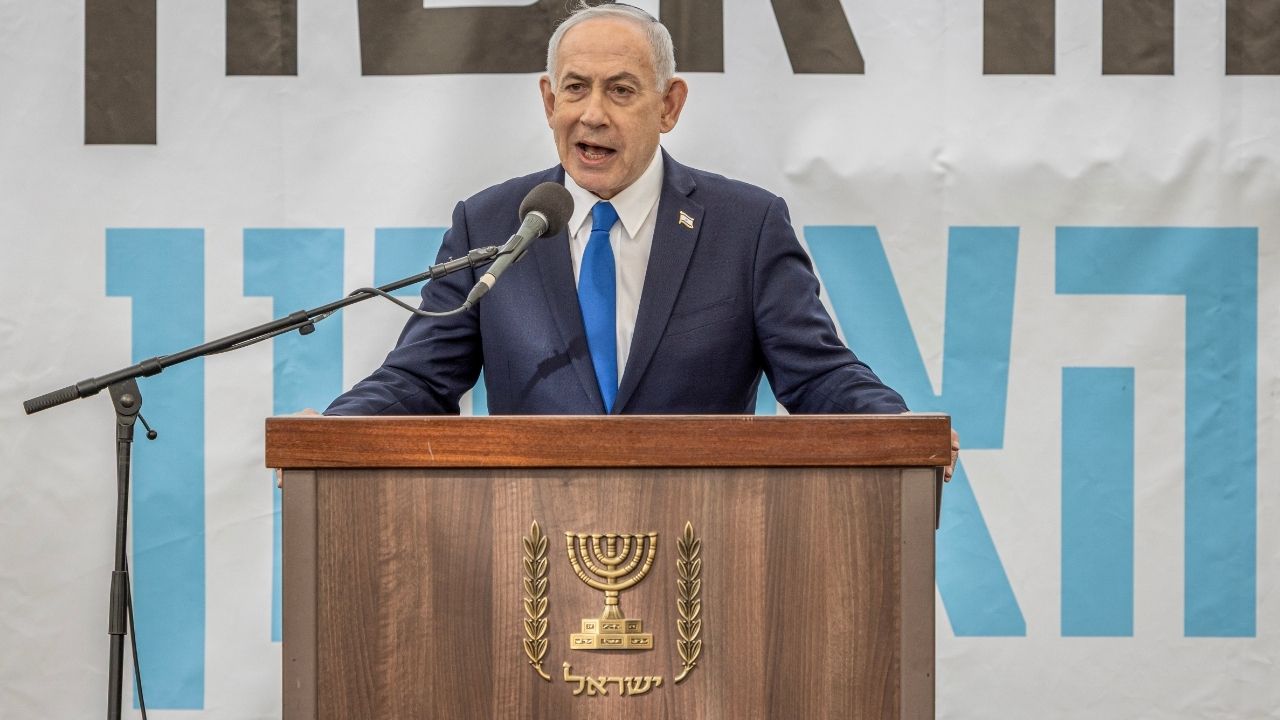
Israelis voted Tuesday in the country’s first national election since the Oct. 7, 2023, Hamas attack, with Prime Minister Benjamin Netanyahu seeking another term while former military chief Gadi Eisenkot leads the main challenge to Netanyahu’s government.
The election follows three years of war and political turmoil, and the Associated Press reported that the campaign has centered heavily on Netanyahu’s leadership, responsibility for the security failures surrounding the Oct. 7 attack, exemptions from military service for ultra-Orthodox men, and the government’s effort to overhaul the judiciary.
Voter participation was running well ahead of the previous national election.

Israel’s Central Elections Committee reported that 55.7% of eligible voters had cast ballots by 4 p.m. Tuesday, up from 47.5% at the same point in the 2022 election, according to The Times of Israel. More than 4 million people had voted, making it the highest turnout recorded at that hour since comparable figures began being tracked in 1973.
Polling stations were scheduled to close at 10 p.m. local time, although election officials said locations would remain open if voters were still waiting in line. Israeli television networks traditionally release exit polls once voting ends, while official results follow as ballots are counted. Exit polling should be available at 1 p.m. PT.
But even the final vote count may not immediately answer the election’s biggest question: Who will govern Israel?
The Race Is About 61 Seats
Israelis vote for political parties rather than directly electing a prime minister. The parties compete for 120 seats in the Knesset, and forming a majority government generally requires the support of at least 61 lawmakers.
That makes the election less a direct contest between Netanyahu and Eisenkot than a fight over which collection of parties can assemble a workable coalition.
Reuters’ polling tracker showed throughout the campaign that neither political camp had a simple path to governing. Its polling average grouped parties according to whether they supported or opposed another Netanyahu-led government, while also showing parties that did not fit firmly within either camp.
Individual final polls showed similar uncertainty.
A Channel 12 poll released Friday projected Eisenkot’s Yashar at 23 seats and Netanyahu’s Likud at 21. It projected 56 seats for the bloc of parties seeking to replace Netanyahu and 50 for Netanyahu’s coalition partners, with the Joint List and Ra’am, both Arab-majority parties, receiving another 14 seats combined.
Channel 13 projected Yashar at 22 seats and Likud at 19, while giving the anti-Netanyahu bloc 54 seats and Netanyahu’s bloc 50, The Times of Israel reported.
A final Zman Yisrael poll produced an even tighter result, putting Netanyahu’s bloc and the main Zionist opposition parties at 51 seats each. The poll projected the Joint List at nine seats, Ra’am at five, and the unaligned Reservists party at four.
The polls therefore agreed on one central point: Neither of the two principal blocs entered Election Day with a clear 61-seat majority.
Netanyahu’s Bloc
Netanyahu’s traditional governing bloc is made up largely of right-wing, far-right and ultra-Orthodox parties.
Likud is the largest party in the grouping. Its principal allies include Shas and United Torah Judaism, which represent ultra-Orthodox constituencies, along with Itamar Ben-Gvir’s Otzma Yehudit, and Bezalel Smotrich’s Religious Zionism.
In the final Zman Yisrael poll, Likud received 21 projected seats, Shas eight, United Torah Judaism eight, Otzma Yehudit eight, and Religious Zionism six. Together, those parties totaled 51 seats, 10 short of a majority.
Final television polls showed a similar ceiling. Channel 12, Channel 13, and public broadcaster Kan each projected Netanyahu’s current coalition parties at about 50 seats.
One additional right-wing party, Ofer Winter’s People of Israel, had aligned itself with Netanyahu’s camp but was projected below Israel’s 3.25% electoral threshold in the final Zman Yisrael poll and several television surveys.
The threshold is important because parties receiving less than 3.25% of the national vote receive no Knesset seats, meaning relatively small movements in support can change the distribution of seats across parliament.
Eisenkot Leads a Politically Diverse Opposition
Eisenkot’s opposition camp is much less ideologically uniform.
His centrist Yashar party was projected as Israel’s largest party in several final polls. The broader bloc also includes former Prime Minister Naftali Bennett’s B’Yachad, Avigdor Liberman’s Yisrael Beytenu, and Yair Golan’s Democrats.
Those parties range from the political right to the center-left, but share opposition to another Netanyahu-led government.
The final Zman Yisrael poll projected Yashar at 23 seats, B’Yachad at 11, Yisrael Beytenu at nine, and the Democrats at eight. Together, those four parties totaled 51 seats.
Channel 12 was somewhat more favorable to the opposition, projecting Yashar at 23 seats, B’Yachad at 15, and the Democrats at 10, while putting the broader anti-Netanyahu bloc at 56 seats. Channel 13 put the same bloc at 54.
Those figures illustrate a key complication in the election: Parties opposed to Netanyahu can collectively win more seats than his traditional allies without necessarily having enough lawmakers willing to govern together.
Arab Parties Could Be Crucial to the Math
The Joint List and Ra’am could therefore become important in determining whether an alternative government can be formed.
The final Zman Yisrael poll projected the Joint List at nine seats and Ra’am at five, giving the two Arab-majority parties 14 seats combined. Channel 12 and Kan also projected the two parties at a combined 14 seats.
But their seats cannot automatically be added to Eisenkot’s coalition total.
The Times of Israel reported that Ra’am leader Mansour Abbas has said he is open to joining a coalition seeking to replace Netanyahu, while several parties in the opposition bloc have ruled out serving in a government with Ra’am.
The Associated Press similarly reported that both Netanyahu and Eisenkot have ruled out forming a government with Arab-led parties, though Arab lawmakers could still become important in negotiations or potentially support a government from outside the coalition.
That disagreement helps explain why a mathematical majority of parties opposed to Netanyahu does not necessarily equal a functioning government.
A Potential Swing Party
Another party to watch is the Reservists alliance led by Yoaz Hendel.
The final Zman Yisrael poll projected the party at four seats, just above the electoral threshold, while Channel 12 and Channel 13 projected it below the threshold. Kan also projected it at four seats.
The Times of Israel reported that Hendel had not publicly committed his party to either of the main political blocs before the election.
If the party enters the Knesset while the larger blocs remain closely divided, its lawmakers could become significant during coalition negotiations.
Oct. 7 Looms Over the Election
The Associated Press reported that questions surrounding responsibility for the Oct. 7, 2023, attack and Netanyahu’s leadership have become central to the campaign, with critics accusing the prime minister of avoiding accountability for security failures. Netanyahu’s supporters have emphasized his experience and record on national security.
Military service has also emerged as a major issue.
The Associated Press reported that anger over exemptions allowing many ultra-Orthodox men to avoid military service has intensified after years of fighting and repeated reserve mobilizations. Netanyahu’s ultra-Orthodox allies have sought to preserve exemptions, while Eisenkot has called for broader military service.
The campaign has also included disputes over the judiciary and the cost of living, according to AP.
Election Night May Not Produce a Government
Even after all ballots are counted, Israel may not immediately know who will become prime minister.
The Associated Press reported that once results are finalized, President Isaac Herzog will consult with the parties elected to the Knesset and select the lawmaker he believes has the best chance of forming a government. That candidate can receive up to six weeks to assemble a coalition.
If the first candidate fails, another lawmaker can be given an opportunity to form a government.
That means the party finishing first in Tuesday’s election will not necessarily control the government.
Instead, the decisive question will be whether Netanyahu, Eisenkot, or another political leader can find 61 lawmakers willing to govern together.