
|
Getting your Trinity Audio player ready...
|
BATH, Maine — As the Senate race in Maine heats up, the state is getting cold.
And for many Maine voters, chilly weather could present a particular challenge this year: New England’s northernmost state is singularly reliant on heating oil, and the price of the product is surging because of President Donald Trump’s war with Iran, which has clogged a vital oil shipping corridor.
The issue has started to move to the center of the race between Sen. Susan Collins, a vulnerable fifth-term Republican, and her Democratic challenger, Troy Jackson, who has blamed Collins for the rising fuel oil costs. Their contest could be critical to determining which party controls the Senate.

For Collins, who initially supported the war but has opposed it for months, the rising fuel costs pose a significant headwind as she works to fend off Jackson, voters and strategists in both parties say.
“It’s a huge issue up here,” Lance Dutson, a Republican strategist in Maine, said Tuesday night as temperatures in parts of the state dipped into the 40s. Collins can point to her work to bring federal heating assistance funds to the state, he added, but that might go only so far in assuaging an “emotional electorate” facing deep financial strain because of the price increases.
In Maine, the cost to fill a standard heating-oil tank as of Wednesday was $1,650, up roughly 80% from a year earlier, according to the National Energy Assistance Directors Association, which represents state governments in securing federal money for heating bills.
Although sticker-shocked consumers across the country are feeling the economic impact of the Iran war — when they fill up their car’s gas tank, grab a six-pack of beer at a liquor store or buy some tomatoes at the supermarket — the spiking costs of heating oil are felt uniquely in the frosty Northeast.
Just 3% of U.S. households use heating oil to warm their homes. But 50% of homes do in Maine, according to the state. (The price of natural gas, used to warm most American homes, has remained relatively flat.)
Speaking in the lodgelike hall of the Maine Maritime Museum in coastal Bath one night this week, Jackson told voters gathered for a town hall-style event that he did “not know how people are going to heat their homes” this winter.
He scoffed at the efforts of Collins to lobby the Trump administration for the emergency release of oil from strategic reserves, arguing that she was too close to Trump and had “turned her back” on working-class Mainers.
“No one’s going to just sit there and freeze to death — they’ll do things to try and heat their home,” Jackson said. Referring to the pride Collins has expressed in her efforts to secure federal funds for fire stations, Jackson added, “It’s a good thing that Susan Collins got all those fire stations, because we’re going to have a lot of fires.”
Some in the crowd laughed. One woman in the back muttered that the line was not funny.
Collins has tried to get ahead of the issue.
Last month, she joined Sen. Angus King of Maine, an independent who caucuses with Democrats, in writing a letter to Trump urging the administration to secure the emergency release of heating oil. And she has pushed the federal government to increase its funding for heating assistance, joining a bipartisan letter from senators and backing a call by Gov. Janet Mills of Maine, a Democrat, for more federal support.
“I have repeatedly urged the administration to use every tool available to increase supply and bring down energy costs,” Collins said in a statement last week.
But in recent years, federal heating assistance programs have not kept up with rising prices. Earlier this year, Trump tried to eliminate a federal program to help poor Americans cover their heating and cooling bills, arguing that the United States needed to prioritize military needs.
Debbe Kelley, 70, an engineer in Windham, Maine, said she thought fuel oil costs, layered on top of broader inflation, had become the most pressing issue in the Senate race.
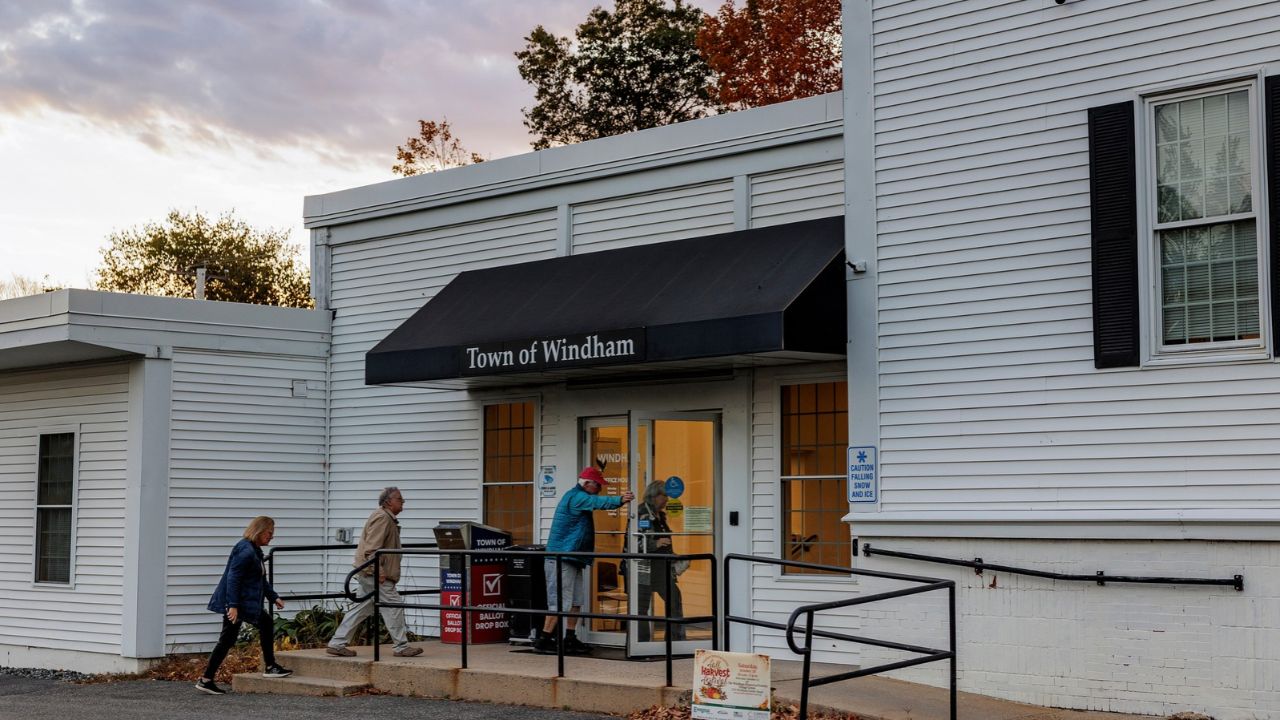
“The issue that’s going to affect most Mainers is how they’re going to afford to get by this winter,” Kelley, wearing a long coat, a woven teal alpaca scarf and a dark hat, said as she braced herself against the fall wind outside the town hall in Windham, the sort of politically divided town that could be critical to determining the Senate race.
Kelley, a Democrat, said that she planned to vote for Jackson and that she knew political independents who had voted Republican in the past but were being drawn toward Democrats by the economic conditions. She said it had cost her $1,982 to fill the tank of her house with fuel oil.
“A lot of people are struggling,” Kelley said. “It’s going to be a very tough year for Maine.”
—
This article originally appeared in The New York Times.
By Tim Balk/Ryan David Brown
c. 2026 The New York Times Company