
|
Getting your Trinity Audio player ready...
|
For years, Porsche’s profits generated glowing headlines and powered its parent company, Volkswagen. But weakening demand in China, President Donald Trump’s tariffs and a costly reversal of its electric vehicle strategy have ended the company’s hot streak.
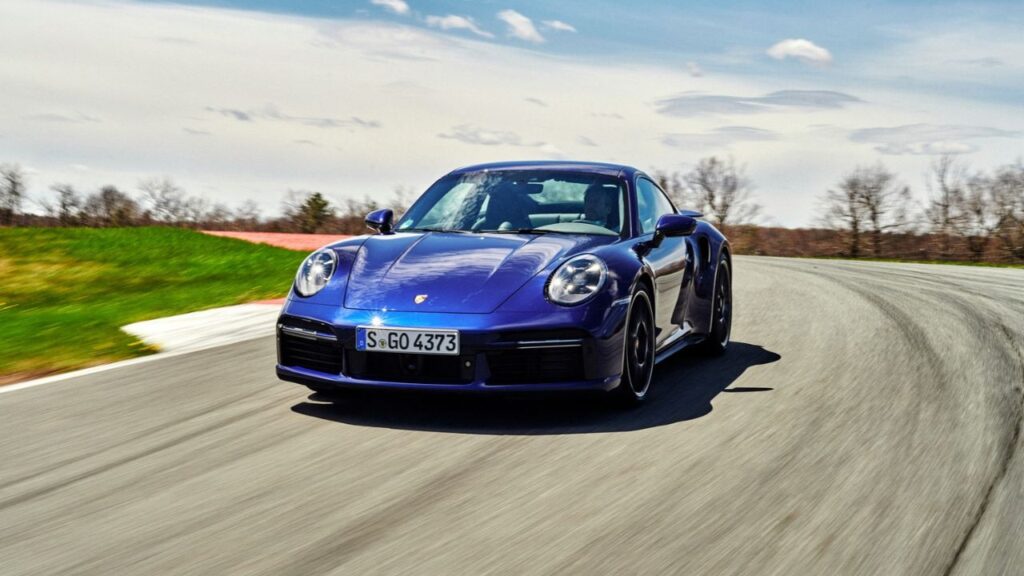
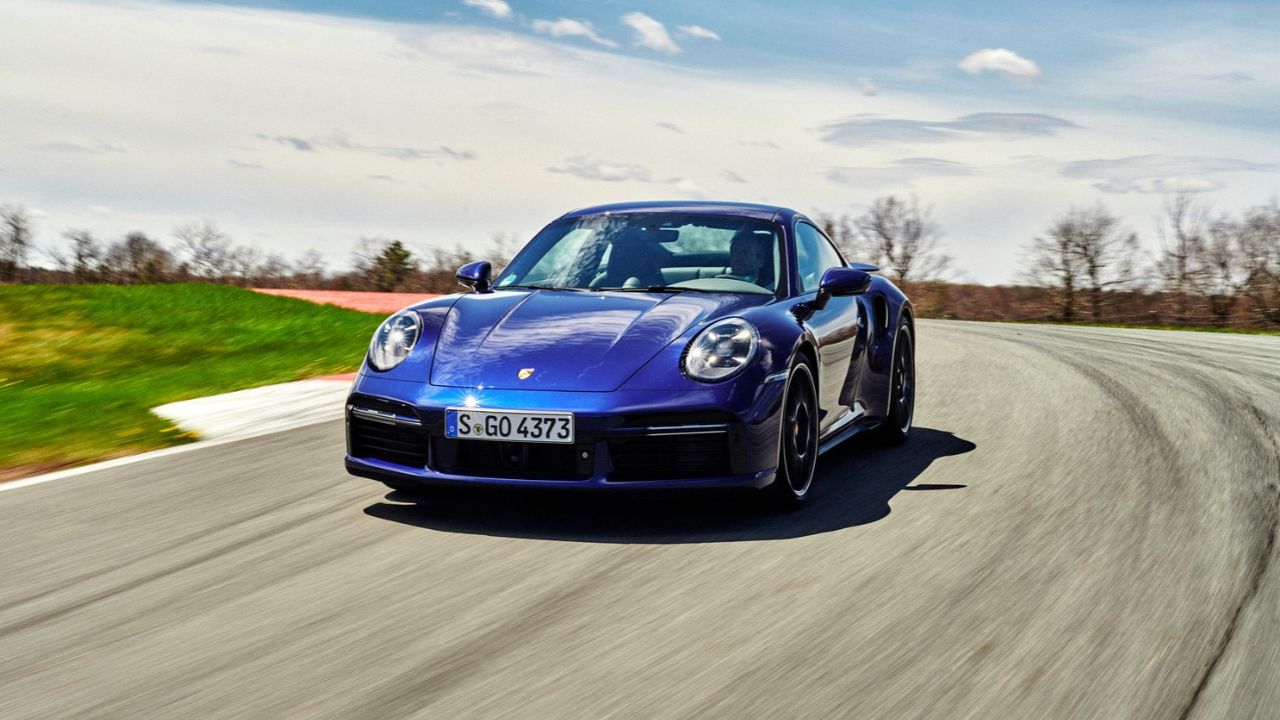
Porsche is now trying to reinvent itself as a smaller company with a sharper focus on higher-priced sports cars. The company, famous for the iconic 911, said Wednesday that it would slash a quarter of its workforce and rein in ambitions in China after its profit margin plummeted to 1.1% last year from 18% two years earlier.
“Without those profits, it’s causing huge headaches in Wolfsburg,” the German city that’s home to Volkswagen, said Matthias Schmidt, a European auto industry analyst.

In fact, reviving Porsche, once regarded as the world’s most profitable automaker, is one of the keys to turning around Volkswagen, which owns 75% of the company. Porsche, led by Michael Leiters, a former chief at supercar maker McLaren and an executive at Ferrari, is betting on “value over volume.”
Porsche’s problems are in many ways the problems of the German auto industry as it struggles to respond to mounting Chinese competition. After a successful decades-long run in China, Porsche and its parent fell behind homegrown rivals amid the transition to electric cars. Porsche once relied on China for more than a third of its sales volume. By 2030, China is expected to account for 1 in 10 deliveries.
“Competition has intensified, markets have become more volatile and in some regions — especially in China — conditions have changed fundamentally compared with just a few years ago,” Leiters told reporters at the company’s development hub near Stuttgart. “I don’t expect this environment to become significantly easier over the next few years.”
By about 2030, Porsche plans to slash 25% of its workforce, or 9,000 jobs. But the cuts, some of which have already been announced, could reach as much as 30%. The company also aims to reduce development costs by as much as a fifth, while raising the average price of its top-end models by about 20% to 330,000 euros, or about $370,000.
Unlike its German rival BMW, Porsche can “afford to shrink while leveraging Volkswagen economies of scale,” Stuart Pearson, an analyst at Oxcap Analytics, wrote in a report.
However, similar efforts at companies such as Mercedes-Benz have exposed problems with the strategy, underscoring the risks for Porsche, said Ferdinand Dudenhöffer, a German auto analyst and former industry executive. Lower sales could diminish Porsche’s ability to compete with rapidly-innovating Chinese carmakers.
“That is part of the future, and part of the future which could be difficult for Porsche if they earn less money that they need for development,” he said.
Just four years ago, Porsche was riding high, valued at about 77 billion euros after being spun off by Volkswagen. Now Porsche is exacerbating its parent’s problems, accounting for a 6 billion euro write-down announced by Volkswagen last month. Volkswagen cut its profit forecast and said it expected an operating margin of no more than 1%.
Trump’s tariffs have hammered Porsche, which doesn’t produce cars in the United States, imposing a cost of about 700 million euros last year.
But at the top of Porsche’s list of worries is China, where fierce competition in the industry and a crunch in consumer spending have dented demand for high-end cars. The company’s deliveries in China fell by almost a third in the first half of the year.
In China, “market dynamics have changed significantly,” Leiters said. “We do not believe it would be realistic or beneficial for the brand to pursue a return to those levels at any cost. Instead our objective is to take a conservative side on the market and build a more resilient business in China.”
Leiters plans to undergird his turnaround plan on Porsche’s brand, which he called one the world’s most valuable alongside companies such as Ferrari and Louis Vuitton. The company also said that it plans to develop a supercar platform that will “sit above” the 911 and is betting on a new version of the Macan sport utility vehicle with a combustion engine, expected in 2028.
Porsche is putting an increasing emphasis on trying to market its cars as exclusive, said Schmidt, the auto analyst. “It’s kind of like haute couture, taking what the fashion industry does and adapting it to the passenger car market,” he said.
The company, which once aimed to get 80% of its sales from electric vehicles by 2030, has scaled back its electric vehicle ambitions amid slower-than-expected demand. Last year, Porsche said it was halting development of several new EVs and would spend heavily to add more gasoline-powered models.
Leiters is targeting an operating profit margin of 10% to 15% by about 2030 and 15% over a longer term. He asked for patience.
“We have to be honest — none of this will happen overnight,” he said. “What I have described today is our medium-term ambition and achieving it will require a great deal of hard work.”
–
This article originally appeared in The New York Times.
By James Paton/Bryan Derballa
c. 2026 The New York Times Company