
|
Getting your Trinity Audio player ready...
|
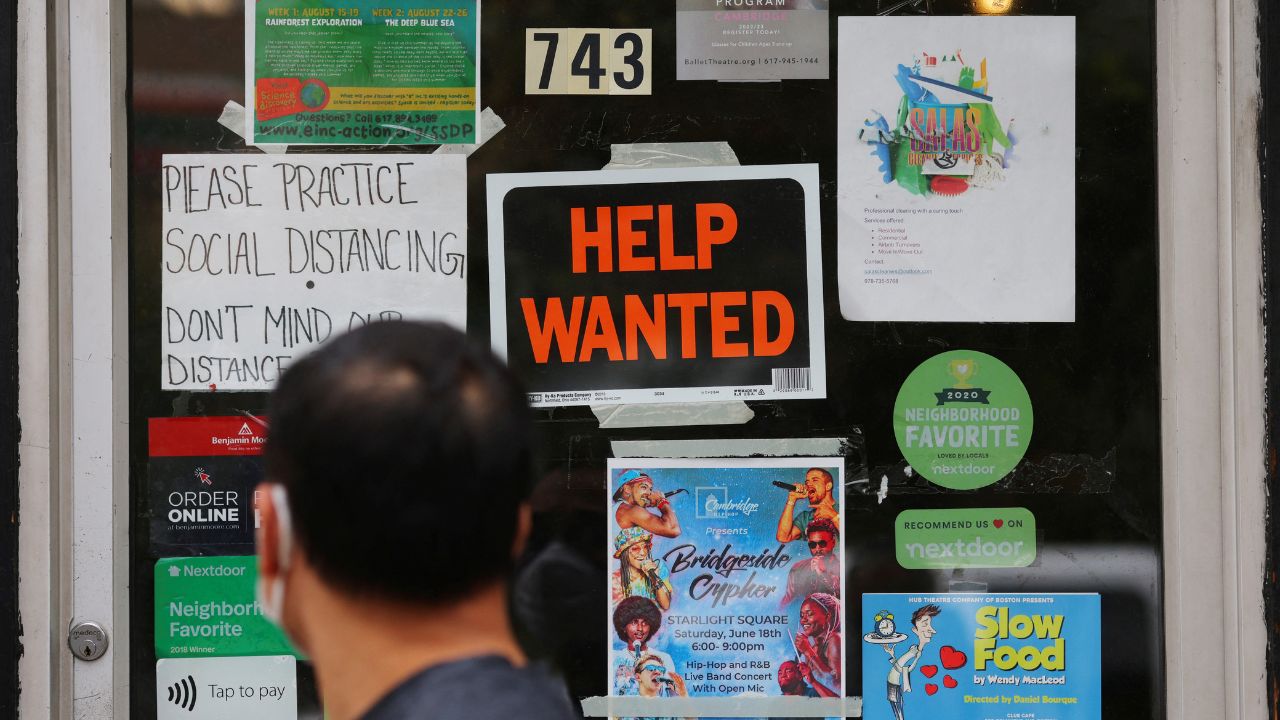
The number of Americans seeking unemployment benefits for the first time unexpectedly fell last week to the lowest since the 1960s, indicating the U.S. job market continues on an even keel and leaving Federal Reserve officials to keep their focus on containing inflation.
Initial claims for state jobless benefits dropped by 22,000 — the largest decline in three months — to a seasonally adjusted 187,000 for the week ended July 18, the Labor Department said on Thursday. That was the lowest level of new applications since September 1969 and came as economists polled by Reuters had forecast new claims would edge up to 212,000 in the latest week.
Covering the survey week for the national employment report for July that will be issued in about two weeks, Thursday’s report was the latest to signal continued stability in the labor market. Meanwhile, the number of people on jobless benefit rolls for more than a week, a proxy for hiring, fell to a six-week low of 1.796 million in the week ended July 11.

The unemployment rate dipped unexpectedly in June to a one-year low of 4.2%, although that was more the result of a decline in the workforce than a boom in hiring.
Economists noted the drop was partly due to seasonal quirks associated with the annual summertime temporary shutdowns of auto plants to retool for production of next year’s models, and new claims could well snap back next week to their recent trend level in the low 200,000s.
“There may be some seasonal noise in the data, given summer months tend to be noisy, but the extremely low level of claims is hard to ignore and the trend in continued claims remains encouraging,” Matthew Martin, senior U.S. economist at Oxford Economics, said. “Low layoff rates, warmer payroll gains, and weak labor supply growth will keep a lid on the unemployment rate in the months ahead and potentially push it lower from its current level of 4.2%.”
The U.S. job market has been characterized by an unusual balance between a restrained supply of available workers, a low-key pace of job creation and limited layoffs that has allowed the jobless rate to remain at a historically low level. That dynamic has driven a growing cadre of Fed policymakers to become more vocally concerned about inflation that remains well above their 2% target than about a resilient job market.
The Fed meets next week, and, following the claims data and another jump in oil prices due to escalating hostilities in the U.S.-Israeli-led war with Iran, interest rate futures prices reflect a nearly 40% probability that the central bank will lift rates at the two-day policy gathering from the current range of 3.50% to 3.75%.
Moreover, rate futures markets reflect near certainty that the Fed will deliver at least one quarter-percentage-point rate hike as soon as September.
(Reporting by Dan Burns; Editing by Chizu Nomiyama and Andrea Ricci)