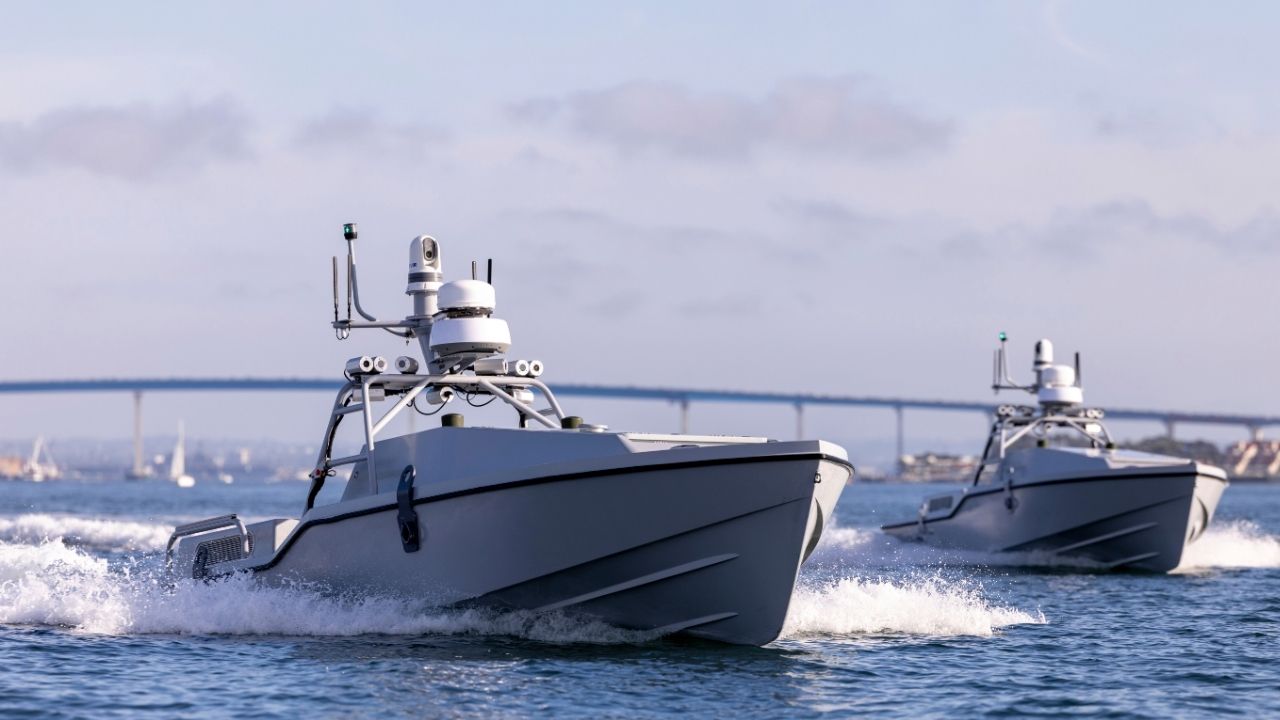

After its unmanned vessels recently drew attention in the Iran war, Saronic Technologies, a shipbuilding startup, announced Thursday that it would open a new facility in the United States to make both naval and commercial ships.
Saronic CEO Dino Mavrookas said the company would break ground this year on an 850-acre shipyard in Brownsville, Texas, and begin building vessels there by 2028.
Last month, the U.S. military used a Saronic drone boat to rescue the two-person crew of a downed Apache attack helicopter off the coast of Oman. This week, three of its vessels were used to attack an Iranian naval installation, which U.S. Central Command said was the first time the military had employed drone boats in a combat operation.

Saronic has sought to emphasize its ability to bring products to market quickly, in contrast to large, established defense contractors. But building a major shipbuilding operation in the United States could prove tough.
The U.S. commercial shipbuilding industry has declined so much over the past several decades that reviving it would require billions of dollars in private capital and government support.
Most large commercial ships are built in China, Japan and South Korea. President Donald Trump and a bipartisan group of lawmakers in Congress want to resurrect commercial shipbuilding with subsidies and other measures, but their efforts have made little progress.
“We have full conviction in our ability to go and build ships at scale,” Mavrookas said on a call with reporters, adding that he hoped to employ manufacturing methods that would keep costs down. U.S. ships cost up to five times as much as those built in Asia.
Saronic was founded in 2022 and has more than 1,300 employees. The company produces the Corsair, a 24-foot unmanned vessel that runs on diesel fuel and can travel at speeds of up to 35 knots. Saronic has a $392 million production contract with the U.S. Navy.
In March, Saronic announced a $1.75 billion funding round, which valued the company at $9.25 billion. Saronic has shipbuilding facilities in Austin, Texas, and Franklin, Louisiana.
Large U.S. shipyards focus on building naval vessels, for which they are well paid. But because there is little demand for expensive U.S.-made commercial ships, very few are produced. Lawmakers introduced legislation last year that would provide subsidies to help shipping companies afford the pricey vessels, but it has barely advanced in Congress.
Still, the desire in Washington to support shipbuilding has drawn investment. Hanwha, a South Korean shipbuilder, is expanding a shipyard in Philadelphia.
“To get to massive scale and to rebuild the workforce and to invest in the supply chain and all of those things, you do need government support, and we are seeing that level of support from the government,” Mavrookas said.
The Brownsville site will be called Port Alpha, and Saronic said it hoped to produce ships up to 1,200 feet in length. On the call with reporters, Mavrookas, a former member of the Navy SEALs, said Saronic was exploring what type of commercial ships it might build.
“From a commercial perspective, we’re looking at how do we build, how do you build container ships again? How do you build roll-on, roll-off vessels? How do you build tankers?” he said. Roll-on, roll-off ships carry cars and other vehicles.
Mavrookas said the timing of the Port Alpha announcement was a coincidence and not in some way an effort to capitalize on publicity from the war with Iran. “Very well timed, I will admit,” he said, “but not intentional.”
In May, the Navy announced that Saronic was among seven companies under consideration to build a larger sibling of the Corsair. Some jilted bidders complained about the process, telling contacts at the Pentagon or in Congress that they believed the Navy gave Saronic preferential treatment. Investors in Saronic have ties to Trump, his family and his administration.
A Saronic spokesperson pointed to the company’s focus on innovation and support of the Navy’s mission as reasons for its success. The Defense Department has rejected suggestions that it favored politically connected companies in the competitions.
—
This article originally appeared in The New York Times.
By Peter Eavis and Nicholas Kulish/Saronic Technologies
c. 2026 The New York Times Company