
|
Getting your Trinity Audio player ready...
|
A year ago, the Trump administration withdrew from a global effort to curb offshore tax-dodging by multinational companies. That decision has been a huge gift to corporate America, enabling companies to avoid at least $40 billion in income taxes since the beginning of 2025.
A New York Times review of securities filings from nearly 500 companies showed that they avoided taxes by attributing hundreds of billions of dollars in earnings to low- or no-tax foreign locales like Cyprus, Bermuda, Switzerland and the Cayman Islands. Often, corporations funneled the profits through subsidiaries in places where they had no employees, offices or customers.
Tax havens became more appealing after President Donald Trump signed an order on his first day back in office withdrawing the United States from a 13-year international effort to end such schemes. The effort led to dozens of countries imposing a minimum corporate tax and rules for pursuing companies using tax havens. After House Republicans passed legislation last year targeting some of those countries with a new tax, international officials agreed to exempt U.S. companies from much of the crackdown.

American Express avoided paying $423 million in taxes last year using the island of Jersey. PayPal trimmed its taxes by nearly half during 2025 thanks to its units in Singapore. Stanley Black & Decker cut its bill by $27 million — nearly one-third — using the island of Cyprus.
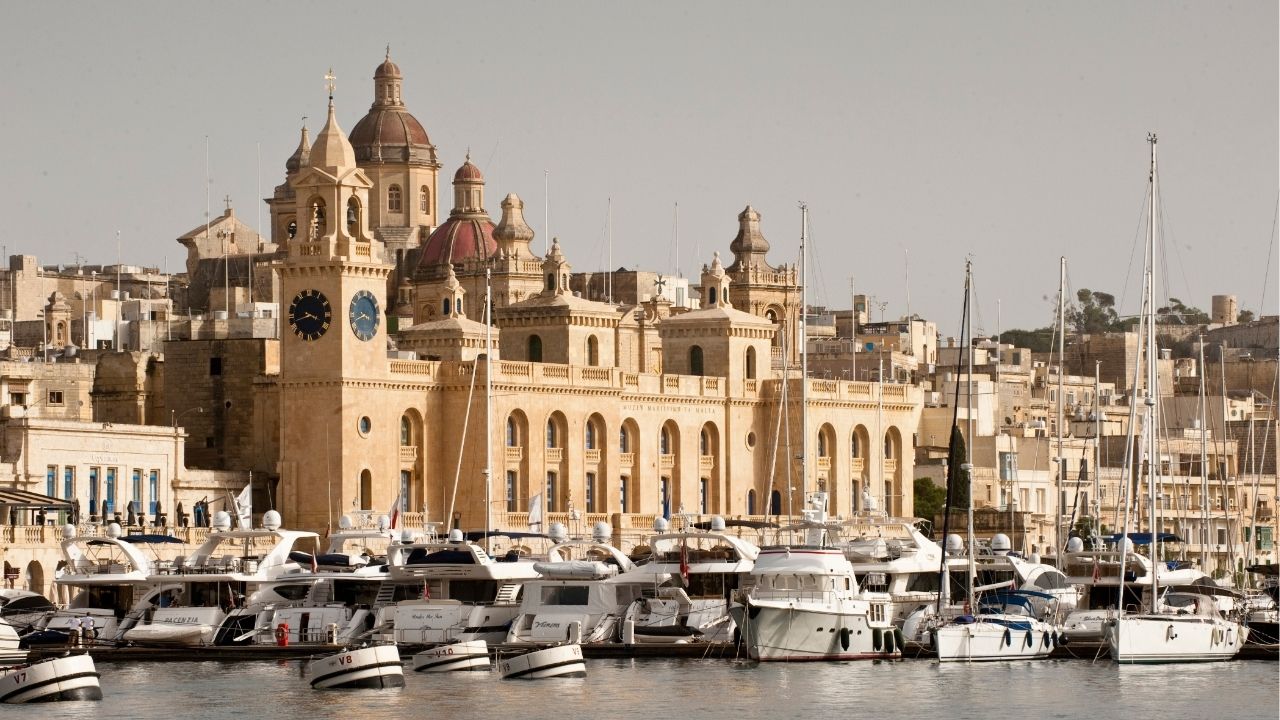
A favorite destination was the tiny Mediterranean island of Malta, where Abbott Laboratories, the pharmaceutical giant, has claimed all its global profits were earned by a subsidiary with no employees. Malta helped the company cut its tax bill by $336 million last year, the filings show.
Companies making similar moves spanned nearly every sector of the economy: Walmart and Uber; Mastercard and Pepsi; Crocs and Merck; Honeywell and Cigna. To put the $40 billion in taxes they avoided in perspective, it would be enough to triple the annual budget of the Federal Aviation Administration or U.S. Customs and Border Protection.
On the face of it, the offshore tax strategies don’t necessarily violate any laws. But the IRS says some of the companies have gone too far, and tax advisers say the Trump administration’s actions will make it easier to pursue even more aggressive dodges.
“Accommodating the U.S.’s refusal to participate in the global reforms opens up the door to abuse,” said Philip Marcovici, the former chair of the European tax practice at the law firm Baker McKenzie.
The Times’ analysis relied on a new disclosure required by federal accounting rules. For the first time, in annual 10-K reports filed with the Securities and Exchange Commission, public companies are required to include footnotes reporting the precise amount of tax avoided through each foreign jurisdiction.
Some companies using tax havens to avoid U.S. income tax rely on federal funding for their profits. Thermo Fisher Scientific, the scientific equipment maker, cut its taxes by $3.5 billion last year via Malta. Honeywell, which received over $30 billion in Defense Department contracts over the past decade, used Swiss units to cut its tax rate by more than a quarter — or $301 million — last year.
The widespread tax sheltering comes despite a law passed during the first Trump administration that was billed as a crackdown.
In 2017, Trump signed a $5.5 trillion package of tax cuts that overwhelmingly benefited corporations and the wealthiest Americans. To keep down its overall cost, the package included a few new levies, including one on profits that companies moved into tax havens.
But the provision contained an escape hatch: it permitted companies to blend the profits and taxes reported in places like Germany, France or Japan with earnings reported in tax havens like Grand Cayman. That, in turn, helps many companies avoid the new offshore tax.
The 2017 law “doesn’t solve the profit-shifting problem,” said Elizabeth Stevens, a lawyer at Caplin & Drysdale.
In 2021, the Biden administration said it would join an effort coordinated by the Organization for Economic Cooperation and Development to impose a minimum corporate income tax of 15%. That levy applies country by country, avoiding the blending loophole and reducing the incentive to shift income into tax havens.
Dozens of nations signed on, including most European Union members, Japan, the United Kingdom and Australia. But the Biden administration failed to muster the votes in Congress to pass the legislation. Trump’s executive order last year withdrew the United States from the global effort, known as Pillar 2.
“We will not get to the golden age of America unless we start removing some of the barriers,” Rebecca Burch, the Treasury Department’s top international tax official, said a few months later, and “until we get Pillar 2 off our backs.” Burch is a former lobbyist for EY, the accounting and advisory firm better known as Ernst & Young.
The Trump administration’s agreement with the Organization for Economic Cooperation and Development this year frees U.S. companies to park profits in favorable locations — often in conflict with IRS enforcement efforts.
In 2022, the EU issued a directive permitting a handful of countries including Malta to delay carrying out the 15% minimum tax. That tax in Malta will not kick in until the end of 2029.
Profits allocated by U.S. companies to Malta soared to $5.6 billion in 2022 from $134 million in 2017, according to the International Tax Observatory, a research group at the Paris School of Economics. That figure is most likely far larger today, advisers say.
—
This article originally appeared in The New York Times.
By Jesse Drucker and Dylan Freedman/Susan Wright
c. 2026 The New York Times Company