
|
Getting your Trinity Audio player ready...
|
Saudi Arabia began oil output cuts, becoming the latest Gulf producer impacted by the U.S. and Israeli war on Iran that has halted ship traffic in the region, sending crude prices up nearly 30% on Monday to $119 a barrel and prompting G7 countries to consider releasing emergency oil stocks.
Saudi oil giant Aramco has begun cutting output at two of its oilfields, two sources said, adding to earlier reductions by Iraq, Kuwait, Qatar and the United Arab Emirates as shipments continue to be blocked and they run out of storage.
The sources did not provide further details and the company declined to comment.

G7 finance ministers discussed releasing emergency oil stocks and a final decision could be taken by the seven countries’ leaders later this week. The G7 groups the U.S., Japan, Germany, France, Britain, Italy and Canada.
The International Energy Agency, which coordinates energy policies of Western and some other industrialized nations, holds over 1.2 billion barrels of public emergency oil stocks and a further 600 million barrels of industry stocks.
The Iran war has already cut global oil supply by a combined 200 million barrels over the past 10 days, according to analysts’ estimates.
Adding to market jitters was Iran’s naming of hardliner Mojtaba Khamenei as the successor to his slain father as the country’s supreme leader, which cooled hopes of a quick end to hostilities.
Over the weekend Iraq cut output at its main southern oilfields by 70% to 1.3 million barrels per day (bpd), three industry sources said, while Kuwait Petroleum Corp began cutting output on Saturday and declared force majeure.
In Bahrain, Bapco Energies declared force majeure following an attack on its refinery complex, the company said.
Oil prices hit their highest since 2022 at more than $119 a barrel on Monday, although they later pared gains.
Saudi Arabia is diverting crude exports by pipeline to the Red Sea while Iranian threats of attack keep traffic into and out of the Gulf at an almost complete standstill.
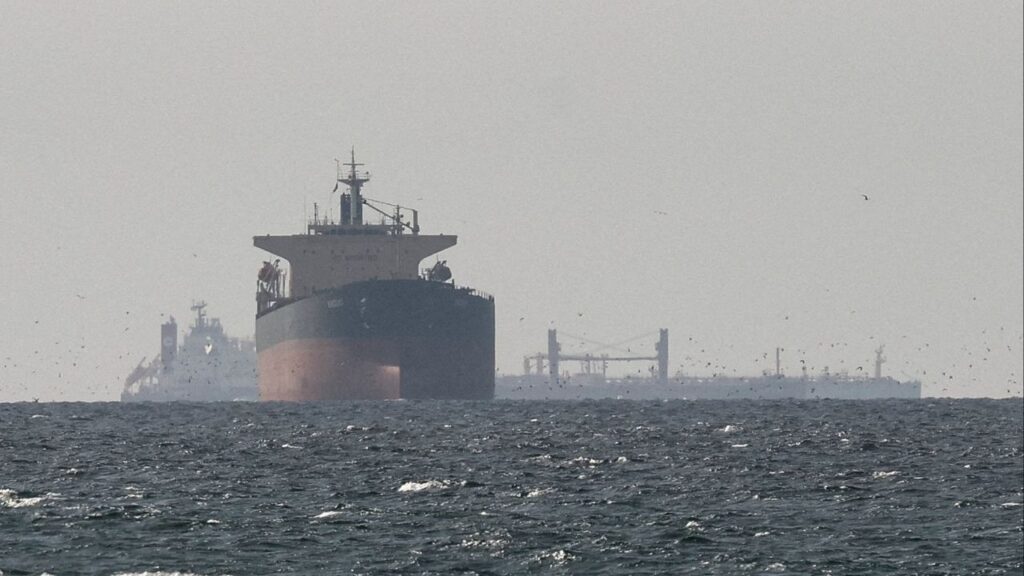
Hundreds of tankers sit idle inside the Gulf and just outside its southern Strait of Hormuz.
Emergency Oil Reserves Release
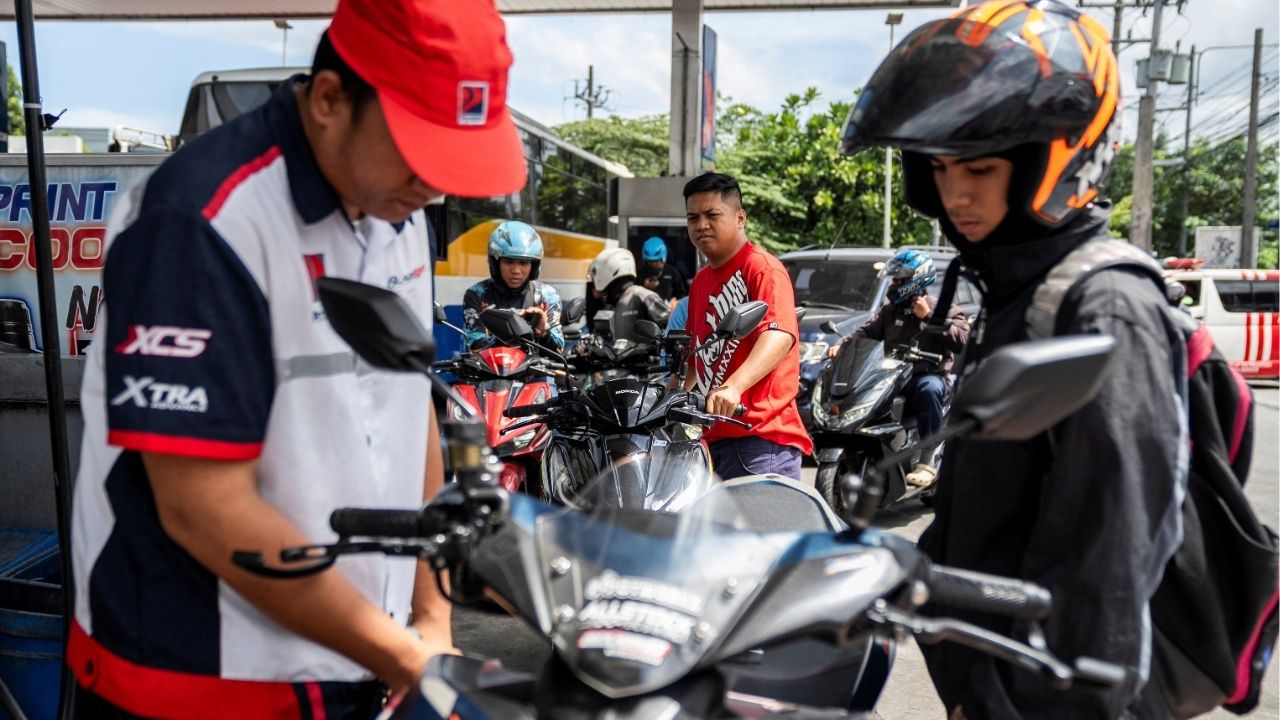
U.S. President Donald Trump, who returned to power last year pledging to deliver cheaper energy costs for Americans, sought to downplay concerns about rising U.S. gasoline prices, which were up 11% on the week on Friday.
Senate Minority Leader Chuck Schumer called on the president to sell oil from the Strategic Petroleum Reserve.
Japan, which imports around 95% of its oil from the Middle East, has instructed a national oil reserve storage site to prepare for a possible crude release.
Governments are wary of the inflationary impact of soaring energy costs, with President Lee Jae Myung announcing South Korea’s first price caps on fuel in nearly 30 years.
Elsewhere, Vietnam removed import tariffs on fuels and Bangladesh shut universities to conserve electricity and fuel.
China has asked refiners to halt fuel exports and to try to cancel shipments that were already committed.
Qatar, the world’s second-largest exporter of liquefied natural gas, has also halted exports.
Even if the U.S. places warships in the Strait of Hormuz to defend shipping, the route would remain “too dangerous”, Qatar’s Energy Minister Saad al-Kaabi told the Financial Times in an interview published on March 6.
President Emmanuel Macron, speaking in Cyprus on Monday, said France was deploying about a dozen naval vessels to the Mediterranean, the Red Sea and potentially the Strait of Hormuz as part of defensive support to allies threatened by the war.
—
(Reporting by Shadia Nasralla, Enes Tunagur, Yousef Saba, Shubham Kalia, America Hernandez Dominique Vidalon, Makini Brice, Joyce Lee, Kyu-seok Shim; writing by Tony Munroe and Nina Chestney; editing by Thomas Derpinghaus, Jason Neely and Gareth Jones)