

|
Getting your Trinity Audio player ready...
|
Lunchtime at Fort Miller Middle School in Fresno comes with a sense of urgency these days as dozens of students rush through their meals, eager to throw on jerseys and head outside to play basketball on the blacktop.

Three months in, the lunch sports program, with coaching from High Performance Academy, is actively engaging teens, teaching them teamwork and “giving them something to look forward to,” Principal Eugene Reinor said.
“For 30 minutes, they’re locked in and they’re playing. They’re not thinking about anything else but basketball in that moment,” he said.

The school will rotate between different team sports each quarter, keeping the teens focused and out of trouble. The program has “solved a lot of problems” for 14-year-old eighth grader Thaddeus Foreman, who got into a fight earlier this year. Now he and the other student get along after playing basketball together, he said.
The sports program is one of almost 30 initiatives funded by a $30 million Fresno Unified School District investment in students that was negotiated with the teachers union over two years ago. Teachers gained a say in how the district would provide student support and family services. Nearly $25 million later, their efforts have resulted in housing assistance for families, additional food pantries, expanded tutoring, buses for students with disabilities, and much more. The programs have provided essential resources, better engaged students, and addressed the socioeconomic, mental health and physical barriers that affect students’ ability to learn, educators say.
The three-year investment has given previously unhoused students “a fighting chance” to improve their education, Fresno Teachers Association President Manuel Bonilla said. “What needs need to be met,” he said, “so that when our students walk through those gates and into our classrooms, they’re ready to learn.”
Some initiatives are in the early stages, so Fresno Unified can’t yet quantify whether attendance, engagement and improved well-being — which the district will track — can be attributed to program implementation. However, educators see the potential to turn students’ lives around.
“The part that we won’t see,” Bonilla said, “is how does this change their trajectory?”
The investments, centered around students’ basic needs and guided by community input, have also created a model for district leaders and teachers to collaborate for student support. But there are still opportunities to include families and students in ways the district hasn’t.
Multimillion-Dollar Investments for the Whole Child
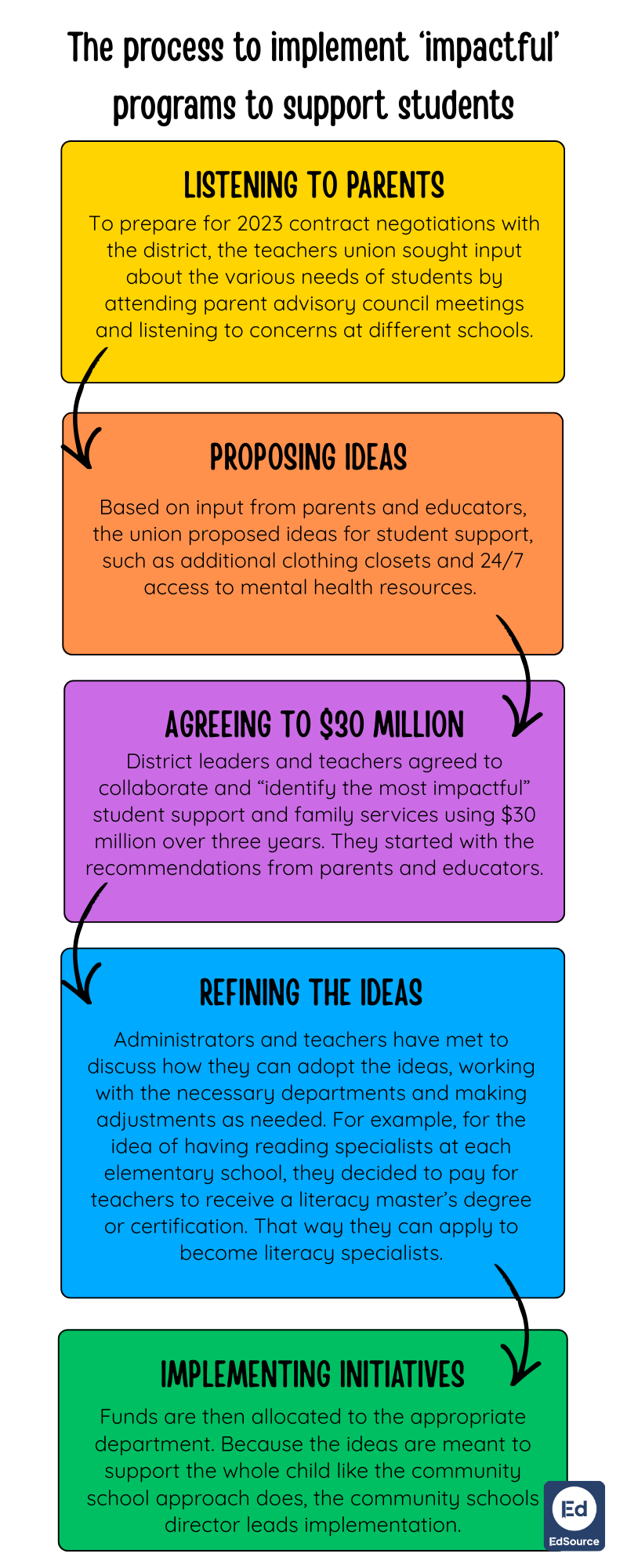
When Fresno Unified and the Fresno Teachers Association agreed to the $30 million investment in late 2023, they narrowly averted a strike.
Teachers Advocated for Investments
Teachers across the country had been leveraging contract negotiations to gain resources for students and their families through a process known as bargaining for the common good. “We only got here because teachers were willing to advocate for those things,” teachers union president Manuel Bonilla said. “They were willing to strike.”
The teachers’ proposal included ideas for academic support as well as “common good” practices that address housing and provide basic necessities for disadvantaged students, who make up about 88% of the district’s nearly 70,000 students. Those ideas were based on input from educators and community groups working with students and parents who are most aware of their children’s needs.
Teachers learned that many students missed school because they didn’t have clean clothes to wear.
Since early 2023, campus laundry rooms have been installed at every Fresno Unified middle school and at many of the district’s 29 community schools, which are resource hubs for students’ academic, physical, social-emotional and mental health needs.
Following the community school model, the district’s multimillion-dollar investment will place laundry rooms in half of its 100-plus schools this year, along with more clothing closets and food pantries.
“We’ve seen an uptick in attendance for those students that obviously are getting some of their basic needs met,” said Darrin Person, the district’s executive director of community schools, who is coordinating program development.
Innovate, Expand, Continue
Much of the funding went to expanding existing initiatives, allowing more students to participate in nutrition clubs and gardening, or in intramural sports like the Fort Miller lunchtime program, which provides positive, inclusive activities during school or on the weekends.
“If this is something that gets students excited to want to come to school, then that’s half the battle,” said Reinor, Fort Miller’s principal.
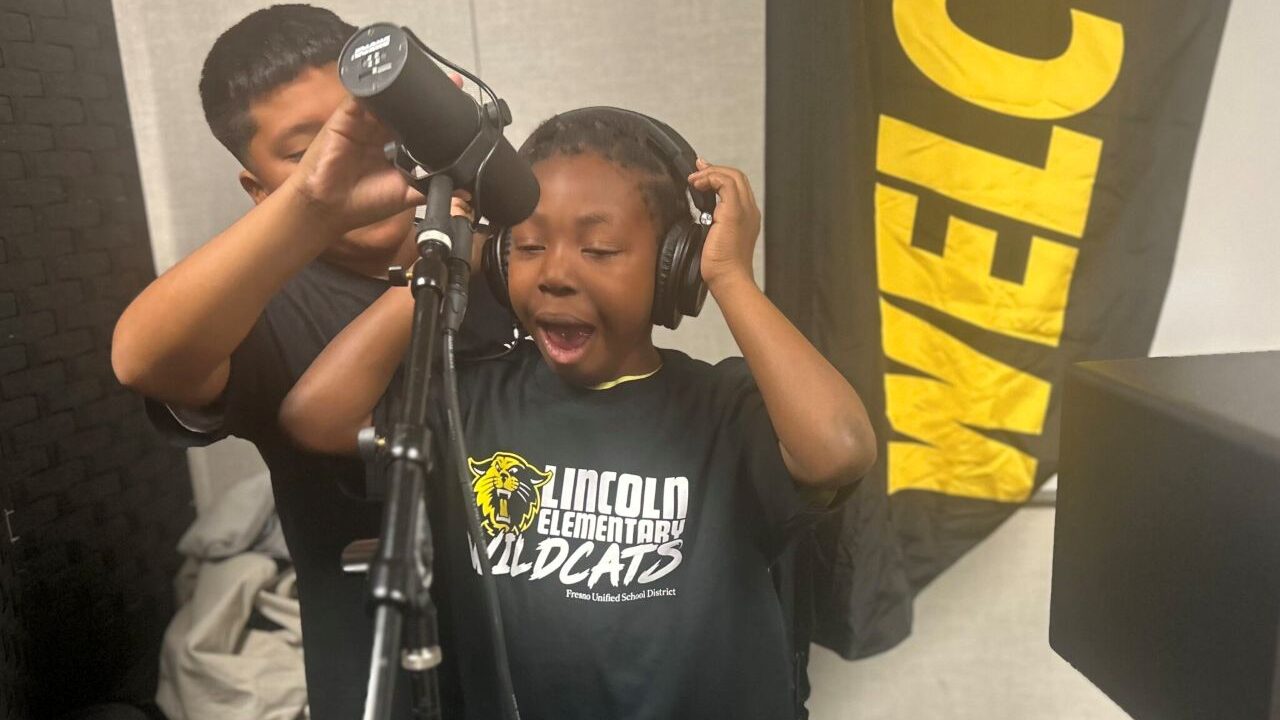
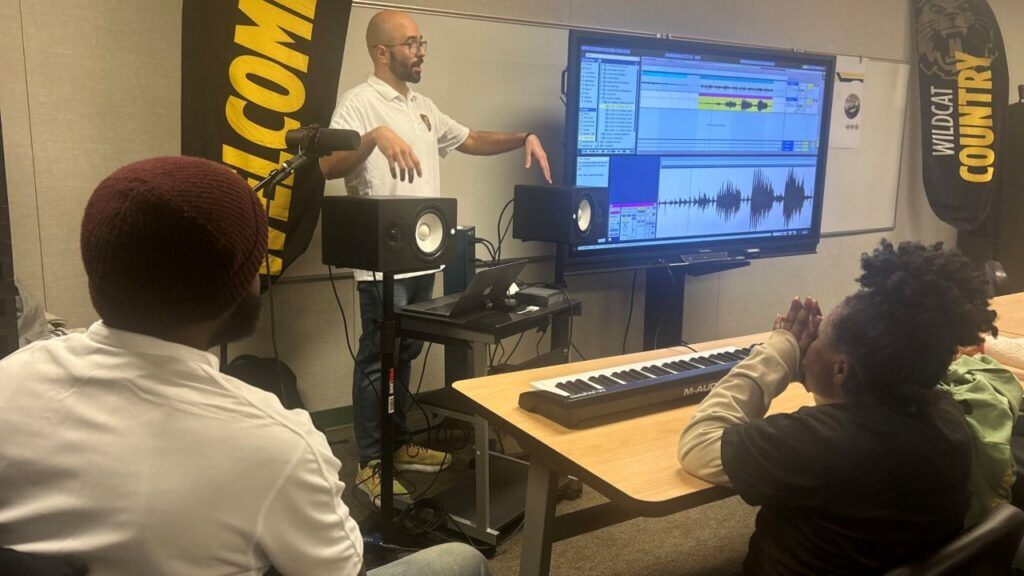
The district is also piloting innovative projects, such as a cosmetology and barbering pathway at McLane High School and a music production class at Lincoln Elementary School, where over 40 students in grades fourth through sixth learn from a music producer. Last semester, they sang and played musical instruments for a track, pinpointing sounds that were too low or too loud and determining what should be deleted or remixed.
Hector Giovanni Romero, affectionately known as Professor G, said the class is an outlet for students to discover and express their creativity. “A lot of kids don’t realize they’re musical because they just weren’t given a chance.”
Funds from the investment also cover senior fees, photos, prom, trips, and events for graduating seniors, ensuring all students have access.
Foster youth receive peer tutoring, life skills courses, more scholarships, and post-graduation assistance, including supplies for dorm rooms or apartments as they transition to college.
And the district has been able to continue employing counselors to help graduating students meet the state’s college admission standards — support that would’ve otherwise ended.
Supporting students, engaging families
Nydia Hernández said her daughter didn’t receive much social-emotional or mental health support as a kindergartner or first grader at Winchell Elementary School. She struggled to get her daughter to engage in class.
“I would have to sit in class with her,” she said.
Now in second grade, her daughter started seeing the school therapist and a social worker, but it isn’t enough, Hernández said.
Thanks to the investments, a free mental health app has been available since August, not just for students but for the entire household. The app gives families 24/7 access to mental health services, including licensed counselors, free sessions, resources for behavioral health needs, emotional support, crisis intervention, and personalized care to supplement what school counselors provide.
Based on initial app data as of September, 243 people had accessed the resources.
The district and teachers union are still negotiating how to spend the remaining $5 million, including programs to keep disruptive students in school rather than suspending them. How to do that could benefit from continued input from parents and students, some say.
Yolie Flores, the president of Families in Schools, a Los Angeles-based organization that works to better engage families in education across the state, said it’s important to continue involving parents, even during program implementation.
“The impact will be greater,” Flores said, “if families are at the table developing the solutions.”
How the Funding Has Been Used
After more than two years, Fresno Unified has spent or allocated $24.8 million on projects. The most-funded initiatives, spread over three years, are $6 million for mental health resources through an app called SimpleConnect, $4.8 million for counselors focused on college and career readiness, and $2.3 million to support reading, specifically training literacy specialists.
The costs of other programs include:
- Twenty additional clothing closets as well as food pantries: $950,000
- Nearly 30 additional washer and dryer sets: $600,000
- Music production programs at Lincoln Elementary School and Fort Miller Middle School: $600,000
- Foster youth supports: $550,000
- Senior fees and events: $250,000
- Cosmetology/barbering pathway at McLane High School: $100,000
- Lunchtime sports program at Fort Miller Middle School: $67,500
Since the $30 million came as a result of contract negotiations, the district anticipates ongoing funding for the programs coming up during negotiations later this year.
About the Reporter
Lasherica Thornton covers education in California’s Central Valley. Follow her on X @LashericaT