




|
Getting your Trinity Audio player ready...
|
California Gov. Gavin Newsom challenged President Donald Trump on Monday over his pardons of wealthy allies as the White House prepared to bring families of murder victims to the Justice Department to oppose Newsom’s plan to commute all 548 of California’s death sentences.
Trump was scheduled to highlight the families’ stories at an event with Attorney General Todd Blanche and FBI Director Kash Patel, according to a White House statement. The White House pointed to two California ballot measures in which voters rejected efforts to abolish the death penalty.
“Governor Newsom is failing these innocent victims and their families by refusing to carry out justice against these heinous murderers,” White House spokeswoman Lauren Bis said.

Newsom, who announced his decision Nov. 5, said everyone covered by the proposed commutations would serve life in prison without parole. Their convictions and any court orders requiring them to pay restitution to victims would stand.
“I won’t take lectures on accountability from a President who has used the pardon power to help wealthy friends and business associates avoid accountability while victims are left fighting to recover what was stolen from them,” Newsom said in a statement Monday.
Newsom cited an August report by Democrats on the House Judiciary Committee that put the financial impact of Trump’s pardons at nearly $1.7 billion. The committee Democrats’ estimate includes restitution owed to victims as well as fines and forfeitures owed to the government.
Polly Klaas’ Family Is Divided
Relatives of Polly Klaas, the 12-year-old kidnapped and killed in Petaluma in 1993, have come down on both sides of Newsom’s decision. Her father, Marc Klaas, told ABC7 that Newsom had disregarded the wishes of Californians. Two of Polly’s sisters, Jess and Annie Nichol, backed the commutations.
Jess Nichol said she initially wanted her sister’s killer executed. Annie Nichol said the death sentence had kept the family tied to court hearings and appeals for decades.
“Killing a person in our name does not undo what was done to Polly,” Jess Nichol said.
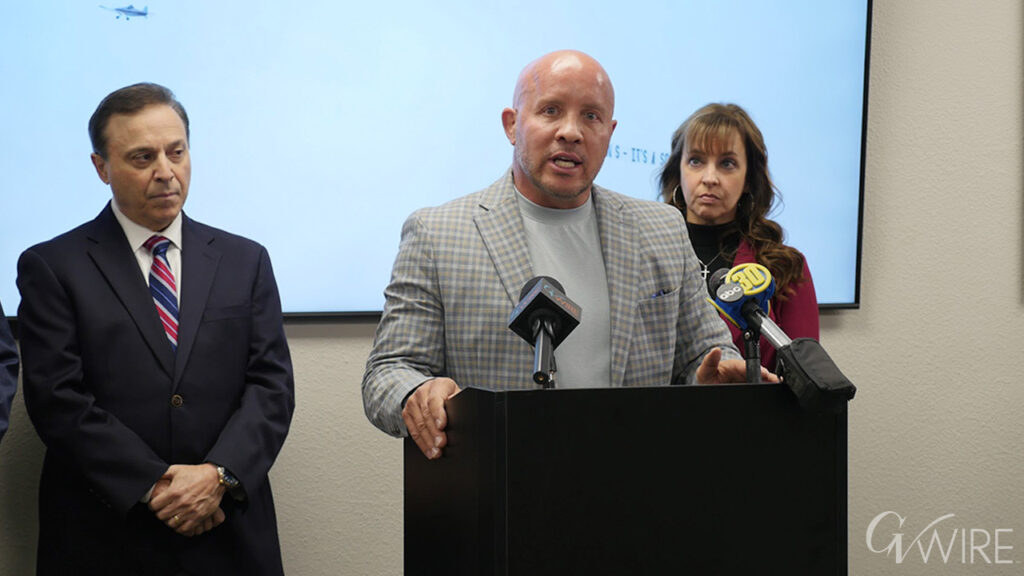
In the Central Valley, district attorneys in Fresno, Tulare, and Kern counties condemned the plan, GV Wire previously reported. Fresno County District Attorney Lisa Smittcamp criticized Newsom for making a blanket decision without weighing the circumstances of each case.
The next legal step for most of the prisoners rests with the California Supreme Court. Under the state Constitution, Newsom needs the court’s recommendation before he can commute the sentences of the 382 people on death row who have more than one felony conviction.
California’s Last Execution
California last carried out an execution, that of Clarence Ray Allen, of Fresno, in January 2006. Allen, 76, had spent more than 23 years on death row after being sentenced in 1982 for directing the murders of three people in 1980 at Fran’s Market in Fresno County.
Newsom imposed a moratorium on executions in 2019.
—
Connect with Anthony W. Haddad on social media. Got a tip? Send an email.