
|
Getting your Trinity Audio player ready...
|
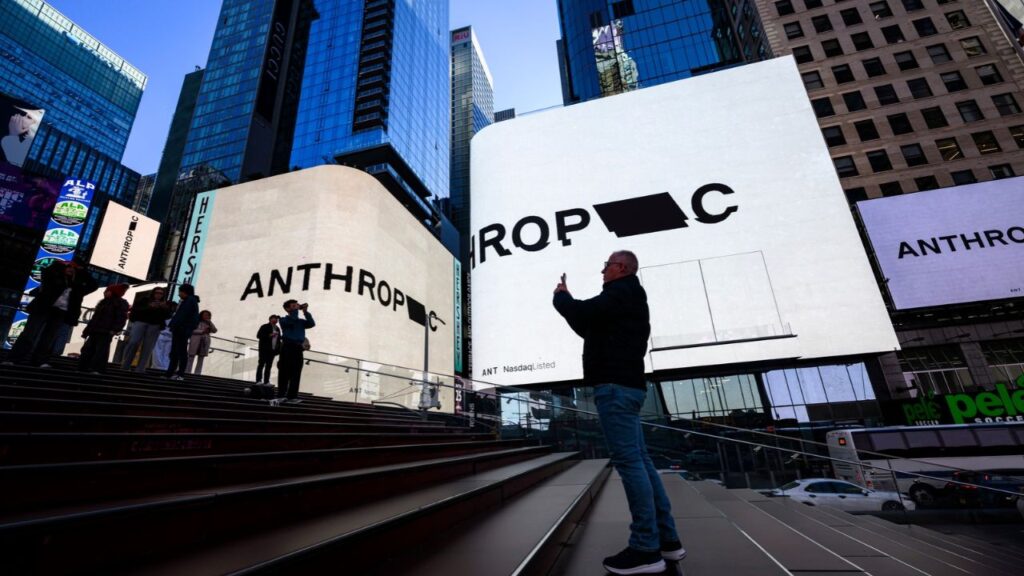
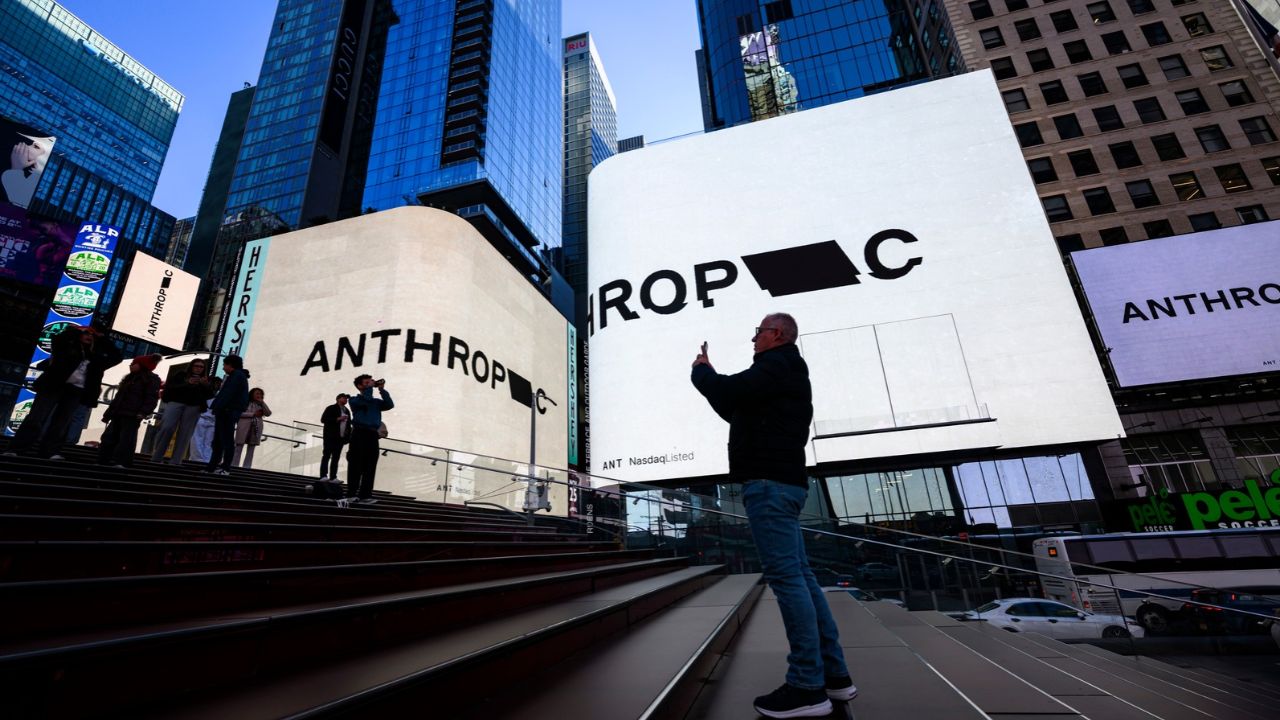
Anthropic joined the ranks of the world’s most valuable public companies Thursday, making its stock market debut with an initial market capitalization of about $2 trillion, marking a rapid ascent for a startup founded during the pandemic by artificial intelligence researchers who strongly believed in the potential of the technology.
Wall Street investors clamored for shares in the company, which many view as a bellwether for AI’s future. Anthropic’s share price opened on Nasdaq at $111.50, up 34% from its initial public offering, which made Anthropic by far the fastest company in history to surpass a trillion-dollar market cap. It traded down to about $100 a share within its first hour on the stock market.
The company’s soaring stock price contrasts with an anxious moment for investors, as they question whether the AI market is in a debt-fueled bubble, whether regulation will slow down the industry, the impact of Jensen Huang’s departure at chip supplier Nvidia and rising public sentiment against AI.

“We’ve been calm about it,” Dario Amodei, CEO of Anthropic, said in an interview on CNBC on Thursday morning. “We think we’re building something great, so the day-to-day, week-to-week, even month-to-month, it’s less important than the fundamentals.”
Corporate America’s rapid embrace of Anthropic’s AI tools drove investors’ interest in the stock. Anthropic had no revenue at the start of 2023, before the commercial debut of its chatbot Claude, before growing to more than $33 billion in sales in the first nine months of this year.
Anthropic, founded in 2021 by seven former OpenAI employees who left that AI lab before it released ChatGPT, wasn’t initially as synonymous with the AI boom as its older rival. But Anthropic’s focus on building technology for business customers, rather than consumers, paid off as its revenue ballooned over the past two years.
Tech investors said they had seen nothing like Anthropic’s ascent from fledgling startup to corporate behemoth.
“Anthropic has speed-run the entire process faster than probably any other company in the history of capitalism,” said Lillian Li, an investor in Scottish fund manager Baillie Gifford, which first invested privately in Anthropic last year and sought to invest in its IPO. She added, “The explosion of revenue surprised quite a lot of folks, perhaps even themselves.”
Li said she first met with Anthropic leaders in 2023, when it was barely a business. Their pitch — that its AI would quickly be capable of handling a variety of work tasks on its own — “seemed slightly like science fiction,” she added.
The listing will spray cash around Silicon Valley. Anthropic had raised $130 billion from roughly 300 investors as a private company, according to PitchBook, which tracks investment activity. Many of the company’s investors made their biggest bet ever as the company gobbled up cash.
One firm, Iconiq, passed on the opportunity to invest until it saw Anthropic’s adoption by customers and the progress its AI models were making. In late 2025, the firm decided to “lean in with everything we have,” said Matthew Jacobson, a partner at the firm. Iconiq invested $6 billion and became one of Anthropic’s largest shareholders.
The IPO mints at least eight billionaires among Anthropic’s founders and executives, who were relative unknowns until the last few years.
Each of Anthropic’s seven founders — including Amodei, former Bloomberg journalist Jack Clark and Johns Hopkins University physics professor Jared Kaplan — is worth about $25 billion, the company’s offering prospectus indicated. They have each pledged to give away 80% of their personal equity in Anthropic.
Many Anthropic employees are in line for enormous paydays as well. Anthropic employees who joined between 2021 and 2023, for instance, could buy shares for about 50 cents each, on average, the prospectus said. They would be able to sell those shares for more than 160 times what they paid after the IPO.
Employees could begin to sell a portion of their stakes Thursday, a shift from the customary practice of companies forcing workers and other existing shareholders to wait months before they can sell stock.
“I cannot think of any significant IPO that has ever had an immediate release of some of the shares,” said Jay Ritter, a University of Florida professor who studies IPOs. “Anthropic has the bargaining power to demand that” from the investment banks working on the deal, he added.
The IPO gives Anthropic more cash to buy chips, energy and other infrastructure it needs to train new AI models and serve customers in its business, which is expensive to operate.
The company has already committed to spend about $900 billion on data center infrastructure over the next two decades, and Wall Street is expecting more bills to pile up. That makes Anthropic one of the most important companies driving a data-center build-out that makes up a growing portion of U.S. economic growth.
Stijn Van Nieuwerburgh, a Columbia business school finance professor, said Anthropic’s IPO is a “watershed moment for this build-out.” He has forecast that companies were committing more money to AI infrastructure over the next several years, relative to the U.S. economy, than they did in past investment booms that built railways, highways and telecommunications infrastructure.
Stock analysts at Goldman Sachs, the investment bank running the IPO, told investors in recent weeks they expected Anthropic to burn cash aggressively in the coming years. They said they expected Anthropic to surpass $440 billion in annual revenue by 2029, more sales than Apple generated last year.
Anthropic executives spent the last two weeks selling investors on their vision for what’s to come, including the company’s nascent efforts to use its AI models to discover new pharmaceuticals and build robotic systems. It is also starting to sell its own software applications to automate portions of white-collar work, like design, finance and legal tasks.
“For me, that revenue trajectory only begins to make sense if they branch out to all kinds of new products,” Van Nieuwerburgh said. He added that competition to sell AI products could intensify.
“They have a huge target on their back,” he said.
—
This article originally appeared in The New York Times.
By Cory Weinberg and Erin Griffith/Karsten Moran
c. 2026 The New York Times Company