
|
Getting your Trinity Audio player ready...
|
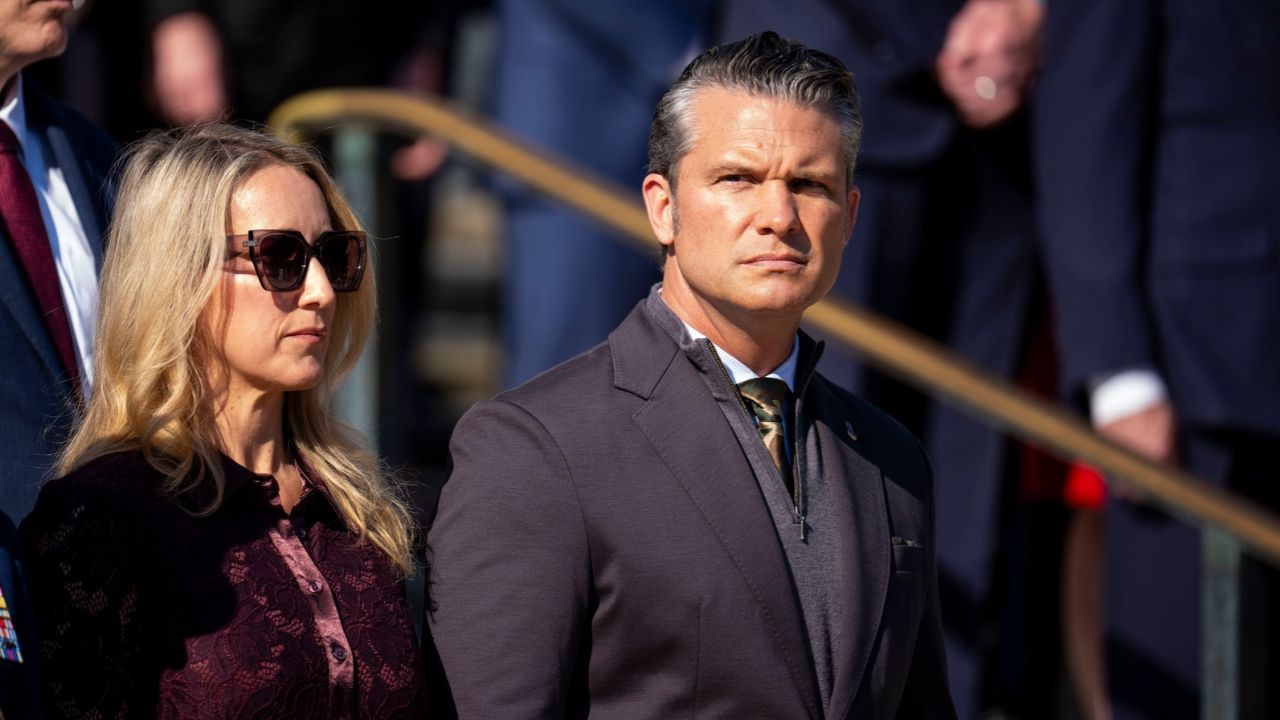
A federal appeals court in Washington on Monday heard arguments in litigation about a set of media restrictions put in place by Defense Secretary Pete Hegseth, including a rule that all reporters who visit the Pentagon must be accompanied by an escort.
The New York Times had sued to overturn the policy on First Amendment grounds. The three-judge panel pressed both sides with tough questions.
Under Hegseth, the Defense Department has moved repeatedly to curtail journalists’ access to the military complex, often arguing that the restrictions are necessary to protect national security. Beginning in October 2025, the agency said it could strip reporters of their press passes for soliciting or publishing classified information and some unclassified information. Instead of complying with the rules, journalists from mainstream outlets surrendered their press credentials.

The Times sued over the initial policy in December 2025, arguing that the policy violated journalists’ First Amendment rights to gather newsworthy information without the prospect of punishment. In March, Judge Paul Friedman of the U.S. District Court for the District of Columbia ruled in favor of the Times.
Days later, however, the Pentagon released a new set of rules, including the escort requirement. The Times challenged the revised policy in a second lawsuit, and, again, Friedman ruled in its favor, scolding the Pentagon for “such a blatant attempt to circumvent a lawful order of the court.”
The Pentagon appealed both of the judge’s rulings.
At Monday’s hearing, the appeals court panel considered the escort requirement and other elements of the Pentagon’s revised media policies from March, which sought to clarify the October 2025 rules.
Judge Judith W. Rogers, a member of the panel who was nominated by President Bill Clinton, questioned the government’s approach to the Pentagon press corps.
“It’s as though you didn’t like violin music, so the orchestra leader said, ‘Get out of my orchestra.’” And then after the court ordered the violinist back to work, said Rogers, “you tie his hands.”
The more “apt” analogy, argued Jack Starcher, who represented the Defense Department, is where “the violinist is put back in the orchestra in a different seat or in a seat that he considers less favorable to him.”
“He’s in the practice room,” Rogers said.
Judge Patricia Millett, who was nominated by President Barack Obama, asked the government about a rule that said that the Pentagon could bar a reporter if it had “any doubt” about whether a journalist might pose a security risk. She said that standard would be hard to challenge.
Starcher said that it’s “hard to answer questions about what these provisions will actually look like in effect because these provisions have never been allowed to go into effect.”
“So they’re not clear,” Millett responded.
Millett also grilled Theodore J. Boutrous, a First Amendment lawyer representing the Times. Does the First Amendment, asked Millett, really protect a reporter who goes into the Pentagon and seeks to pry classified information from an employee that the journalist knows is not authorized to share it?
“You’re saying the First Amendment allows you to do that?” asked the judge.
“I am saying that, your honor. That is our system,” Boutrous said.
Millett also asked whether the Times could demonstrate adverse consequences from the escort rule, which has been in place for several months. Boutrous responded that declarations from numerous journalists show that the Pentagon’s rules pose a “significant burden” on reporters.
The other judge on the panel is Karen LeCraft Henderson, a nominee of George H.W. Bush. It is unclear when the panel will issue a ruling in the case.
The Times’ suit is one of several pieces of litigation between media companies and the federal government or President Donald Trump in recent years. In September, CNN, MS NOW and Politico sued over their expulsion from the White House grounds; though they secured a judge’s order restoring their press credentials, they remain barred from rotations in the pool that covers Trump in confined spaces.
The Associated Press, furthermore, sued the White House after it was barred from pool coverage. That case is also before the federal appeals court in Washington. Trump has sued major news outlets — including the Times, The Wall Street Journal and television news networks — over their coverage.
—
This article originally appeared in The New York Times.
By Erik Wemple/Doug Mills
c. 2026 The New York Times Company