
|
Getting your Trinity Audio player ready...
|
Three months ago, federal health officials announced that the government planned to ban a potent opioid that Health Secretary Robert F. Kennedy Jr. said “put American lives at risk.”
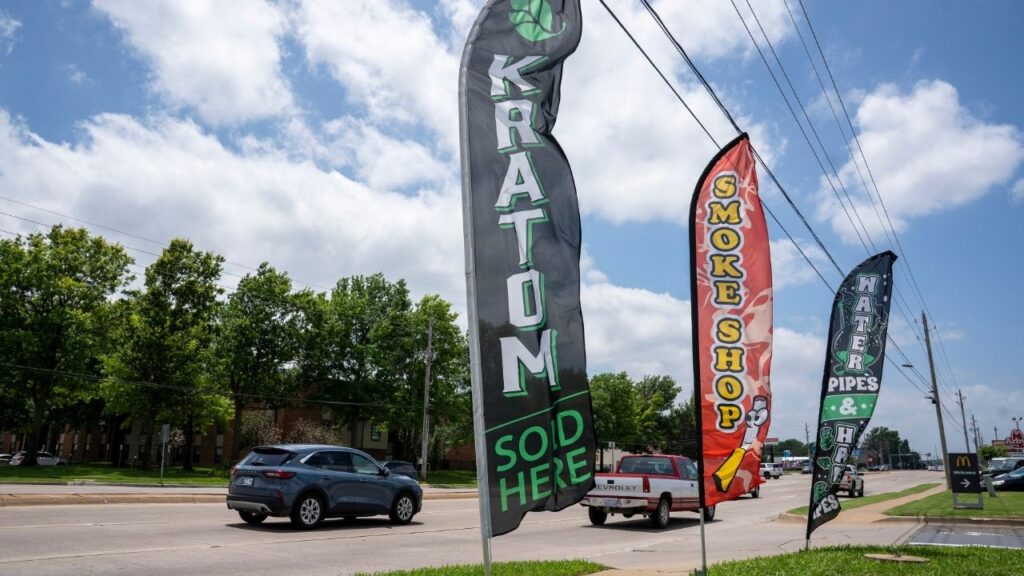
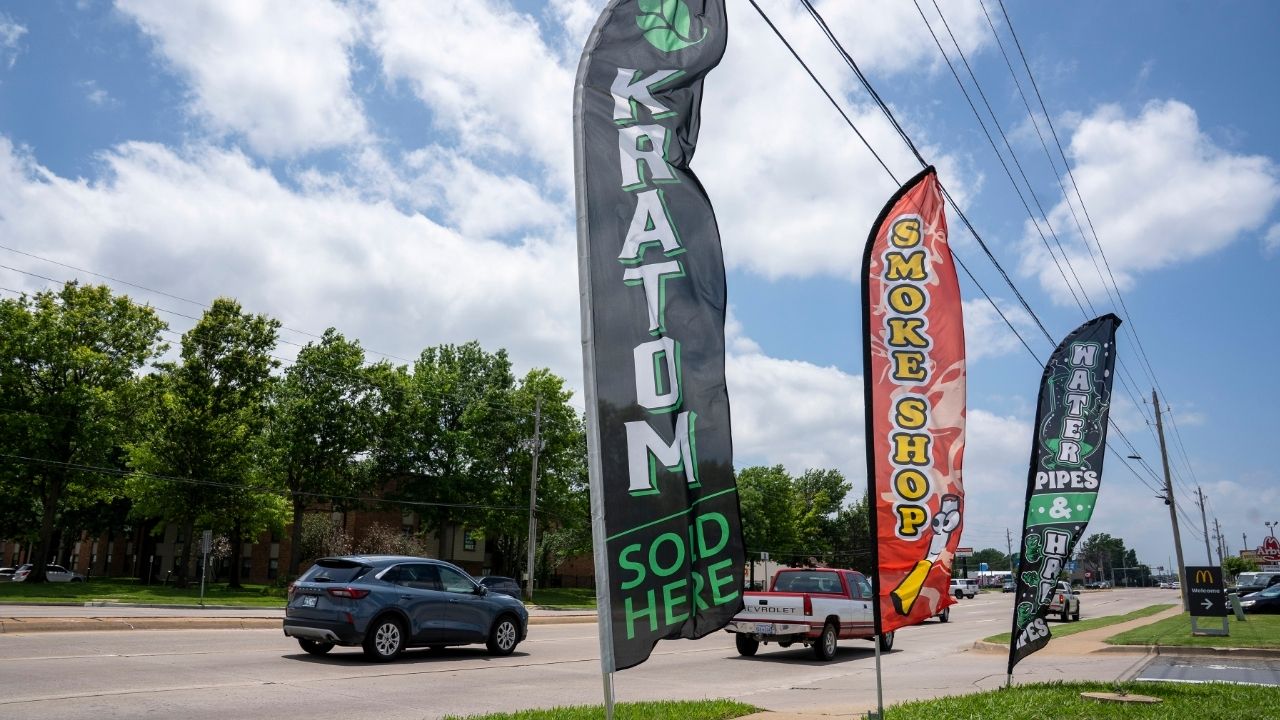
The substance was a highly addictive compound derived from the kratom leaf, a plant from Southeast Asia that is in powders and tinctures sold as energy boosters and pain relievers in convenience stores and vape shops across the United States. The ban was crucial, the officials said, “to avoid an imminent hazard to public safety.”
This month, the government reversed course.

Kennedy announced Oct. 9 that his department had “followed the science” and decided to allow some levels of the compound.
The policy U-turn came after a number of kratom companies discovered the substance in products marketed as “natural” in recent months. The manager of a large kratom distribution company, faced with evidence of the compound in products at the center of several wrongful death lawsuits against him, mounted a concerted lobbying push.
The executive, David Gabbay, and his wife, Maya, had been giving steadily to Republican candidates and campaign committees this year, reaching about $2.9 million on Oct. 12. Mac Haddow, the leader of an advocacy group funded heavily by the company Gabbay manages, said he went to the White House to plead his case.
Then Kennedy and officials from the Drug Enforcement Administration announced that the opioid, called mitragynine pseudoindoxyl, or MGPI, would be allowed at certain levels, reasoning that “trace” amounts appear in otherwise natural products.
The new policy still bans the most concentrated and dangerous levels, but the allowable amounts are hardly traces: They are 25 to 500 times the levels currently found on the market, the senior author of a study cited by the Trump administration said in an interview.
Emily Hilliard, a spokesperson for Kennedy and the Department of Health and Human Services, said the decision was based on science. “Neither litigation nor political contributions influenced HHS’ recommendation,” she said.
The Federal Register notice on the latest proposal acknowledged that “neither HHS nor DEA has made a finding that these substances are safe to use” at the levels the new policy allows.
Although the MGPI has only been recognized since 2024, data from the Drug Enforcement Administration showed that it had been identified in at least 56 overdose cases, 48 of which were fatal, from February last year to this May.
“They’re not doing this because the science supports it,” said Dr. Andrew Kolodny, the medical director for the Opioid Policy Research Collaborative at Brandeis University, who reviewed the HHS justification for eschewing the ban. “They’re doing this because the industry and the lobbyists are basically writing the policy.”
MGPI is a semisynthetic opioid that has been found in lab tests to be far more powerful than morphine. Scientists are still exploring how it emerges in otherwise natural products. The Trump administration says it is targeting items that are manufactured and formulated to be highly potent.
They include items like the pills discovered near two University of Mississippi students found dead in September. Court records said agents seized “Smax Pseudo DHM” pill packets that listed MGPI as an ingredient. The authorities are continuing to investigate the products and the deaths, which may have involved other substances as well.
The federal policy activity around kratom comes as many states are debating bans of the powdered products and the more potent derivatives. Surrogates for the kratom industry, including a scientist who worked on behalf of prescription opioid maker Purdue Pharma, have downplayed the risks, contradicting the Food and Drug Administration and reports of thousands of deaths of people with kratom in their systems over recent years.
While medical regulatory decisions have traditionally been led by career federal scientists, the White House in the second Trump administration has been hands-on in a number of health-related areas, including tobacco policy and nursing home staffing when campaign contributions were at play.
In this case, the White House has said it was acting to target the fully synthetic and highly potent products, which began to dominate the kratom market in recent years.
“The administration is taking decisive action to get dangerous synthetic and concentrated products off the shelf to protect Americans,” a White House spokesperson, Allison Schuster, said in a statement responding to detailed questions. “These actions were subject to rigorous scientific review, and any assertion that they may be based in anything other than scientific evidence is completely false.”
The Gabbays did not respond to requests for comment.
Gwendolyn Payton, a lawyer for the company he manages, said the Gabbays donate to political candidates because they are advocates for kratom safety and for combating antisemitism. She said that MGPI appeared in natural products in “very, very minor amounts.”
Haddow of the American Kratom Association, which is funded by companies related to David Gabbay and others, said he was “very satisfied” with the new proposed order, which is expected to be finalized in the coming weeks. He dismissed the idea of Gabbay’s campaign contributions as a major factor, saying others in the industry donated and met with government officials.
In the summer of 2025, Kennedy and others announced a plan to crack down on the kratom compound called 7-hydroxymitragynine, or 7-OH, which they described as an addictive opioid. The plan banned highly concentrated 7-OH items but allowed it to remain in natural kratom at low levels.
For Gabbay, who is associated with a network of companies selling OPMS, a brand also marketed as natural kratom, the formal move to ban 7-OH this summer was a short-lived victory. The DEA said July 1 that it planned to ban MGPI and two other compounds.
“The misuse of these semisynthetic opioids poses a high risk for overdose and life-threatening events,” the agency said in a regulatory filing at the time.
Around two weeks later, the company Gabbay manages was confronted in court with findings that its products contained MGPI.
In mid-July, Talis Abolins, a Washington lawyer representing families of who had brought wrongful death lawsuits against Gabbay and others, learned that MGPI had appeared in lab tests of products used by loved ones who had died in Tennessee, Washington and Texas.
Abolins took a closer look at his wrongful death cases and found lab reports showing MGPI in other OPMS extracts from companies tied to Gabbay’s distribution business, including one that had prompted an FDA warning after a death and many reports of harm.
That product, OPMS Black Liquid, was used by Josiah Berg, a guitar enthusiast from Vancouver, Washington, who died in 2023 at age 20 after using kratom for an energy boost after sleepless nights due to insomnia. Amandus Harrison, 46, a mother of six in Tennessee, used the same drink before a kratom overdose in 2024, court records say.
The breakthrough for the plaintiff lawyers became a problem for Gabbay and a lobbying group that represents his business interests in Washington, the American Kratom Association. Expert witnesses who earned $850 per hour working for Gabbay’s legal team sent letters urging policymakers to allow some MGPI in otherwise botanical kratom.
Letters were also sent by Dr. Rahul Gupta, the head of the White House drug policy office under President Joe Biden, and Jack Henningfield, who previously worked for Purdue Pharma.
Gupta, who suggested the level of MGPI that health officials adopted, said in an email that he sent the letter “in my own capacity” and was not paid to do so by “any litigant, the American Kratom Association or any other industry organization.” Henningfield did not respond to a request for comment.
The federal position on MGPI began to shift Aug. 25, the day David and Maya Gabbay donated nearly $160,000 to the Republican National Committee, bringing their total for the year to $2.2 million.
That same day, a Department of Justice news release announced the emergency temporary scheduling of MGPI and the two other compounds — placing them in the same federal category as heroin. But the Justice Department said it would not press charges if “incidental trace amounts” of MGPI were found.
The next day, the American Kratom Association sued the DEA, calling on it to allow some level of MGPI in what it described as otherwise natural kratom products, including OPMS products. In the days that followed, two other companies, New Hope Botanicals and Martian Sales, which license OPMS products, filed similar lawsuits in California and Wyoming, also acknowledging that MGPI was in their products.
The Drug Enforcement Administration and the Justice Department referred questions to the health department, which they said made the scientific recommendation on the new policy. That 10-page memo from Kennedy’s department to the DEA cited a study on MGPI by Amar Chittiboyina, a natural products chemist at the University of Mississippi.
Chittiboyina said in an interview that his team measured MGPI in currently marketed kratom products and found it in tiny amounts of about 2 parts per million in tests of eight liquid products.
He said that the new threshold announced by HHS was as much as 500 times as high for those products and “too permissive.” He noted that his recent study reported that MGPI had been identified but did not list the amounts.
Dean Francis, president of the nonprofit End Kratom Addiction, said the revelation that powerful compounds were in natural kratom should force a reckoning akin to when cocaine was removed from Coca-Cola in 1929.
“It’s just hard to believe that in America we would knowingly permit what we know to be a highly potent opioid to exist in any product,” he said.
—
This article originally appeared in The New York Times.
By Christina Jewett/Nick Oxford
c. 2026 The New York Times Company