

|
Getting your Trinity Audio player ready...
|
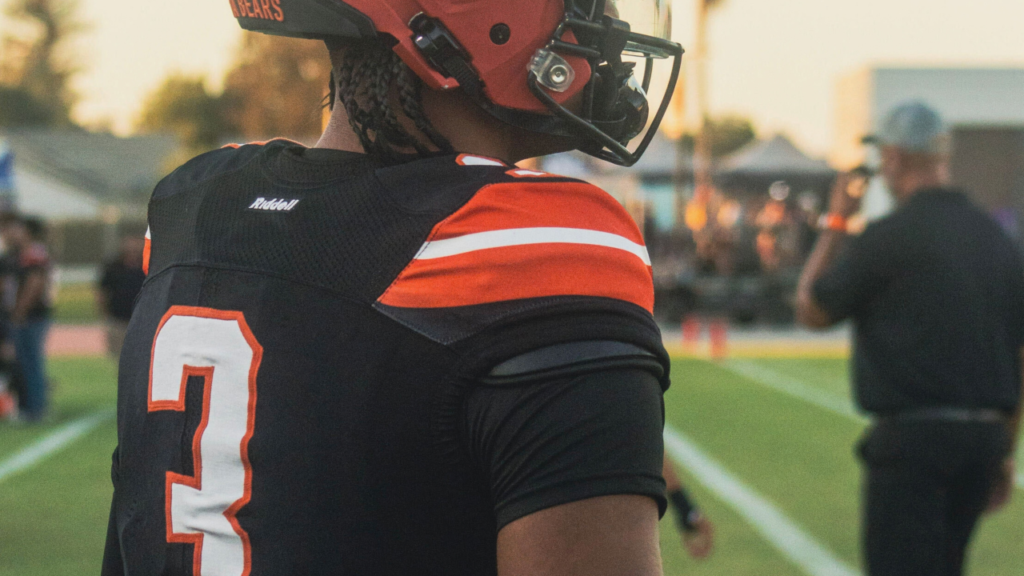
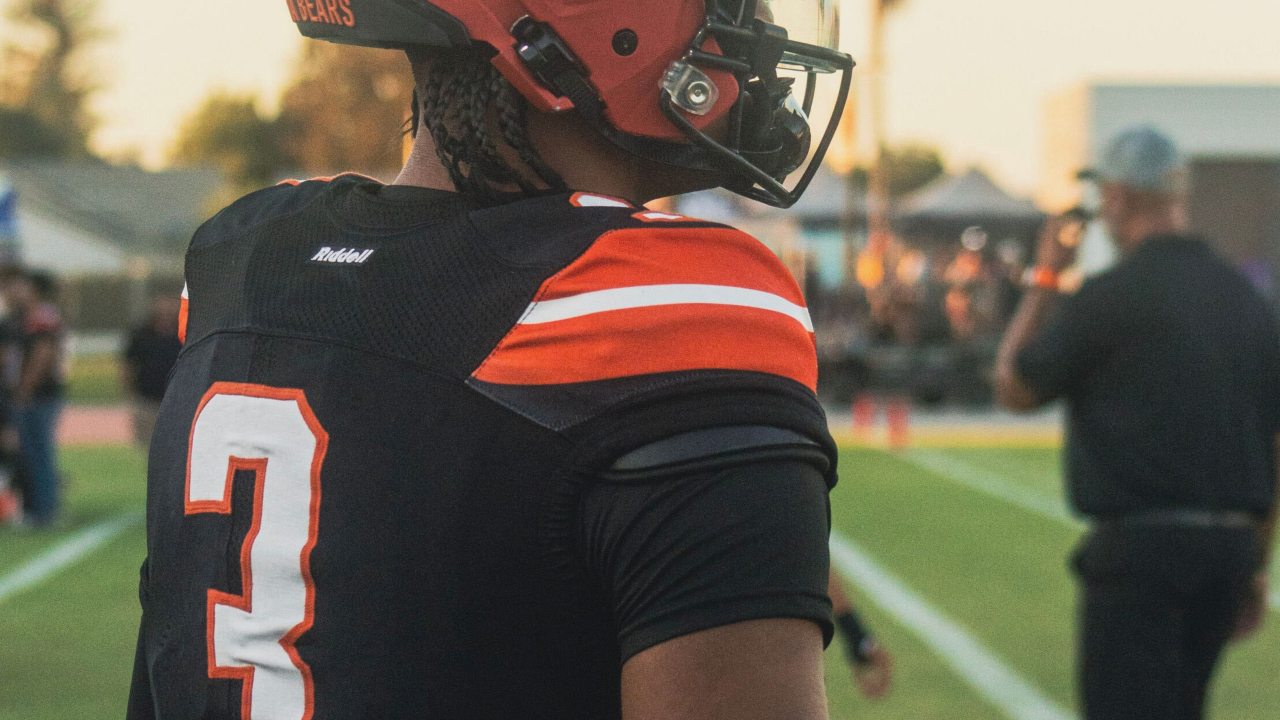
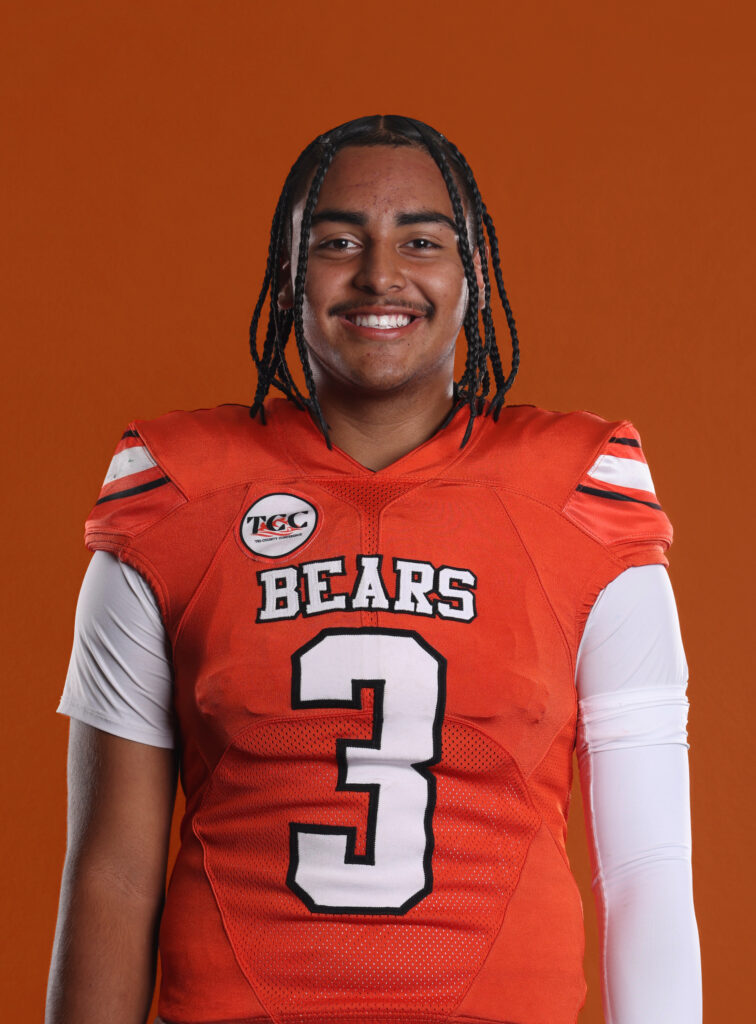
During warm-ups at Selma High School football games, players lift their jerseys to show equipment with religious messages or pictures in tribute to loved ones. This past month, 17-year-old starting quarterback Adam Soria had his own message.

By Lasherica Thornton
EdSource
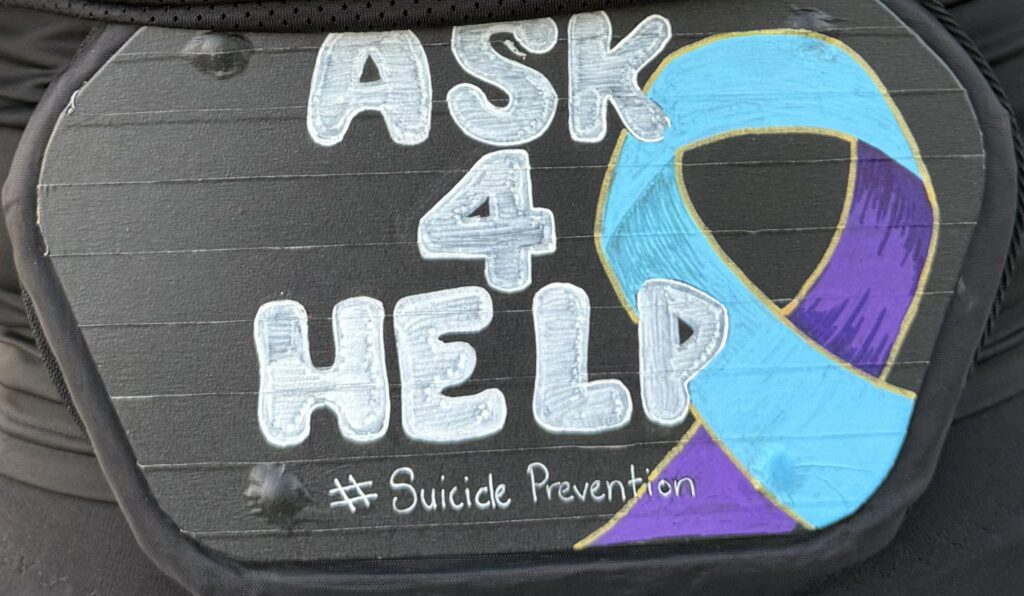
In large white letters painted atop a purple and teal ribbon on his lower back pad were three short words: “Ask 4 Help.” Beneath that was a small hashtag, #SuicidePrevention.
As a graduating senior who has struggled with his mental health, Adam knows what it means to have to ask for help. And, through the message, he wants to encourage other teens to do the same.

“I know it was hard for me,” Adam said. “There’s a lot of people going through their own battles, dealing with them on their own.”
Adam Soria, a 17-year-old senior at Selma High School, has been wearing a message that means a lot to him: “Ask for Help.”
This story was originally published by EdSource. Sign up for their daily newsletter.
‘It’s OK to Struggle’
Across California, students are struggling with anxiety, depression, family stressors and trauma. Last year, many California youths who reported experiencing mental health challenges felt too embarrassed to seek professional help, according to a survey by Blue Shield of California and Children Now.
So for Adam to decide to send a message to his peers encouraging them to seek help was significant, said Cesar Gonzalez, a district mental health clinician.
“I’m hoping that this is a way for them, for our student athletes, to know that it’s OK to struggle, and there is support,” Gonzalez said.
District officials say Adam’s message is helping destigmatize mental health in Selma Unified.
“There’s a shift there in the culture and climate,” Kristy Rangel, the district’s lead mental health clinician, said. “Students (are) taking that initiative on and off the field, wanting to share that it’s OK to ask for help.”
Adam Had His Reasons
On the field, as the starting quarterback, Adam said he feels as if each mistake — a dropped pass, a missed handoff, a run that didn’t get the first down — is seen as his. And he doesn’t want to let his teammates or school down.
But teens are carrying a lot of weight, Adam said, whether they play sports or not.
Outside of football and basketball, Adam holds himself to high expectations. He wants to graduate with a good GPA and go to college to play football.
His parents are split up, and he’s had a rocky relationship with his mom over the last few years, especially since moving in with his dad in eighth grade. He’s the oldest of three — an added pressure, he said, as his siblings look up to him.
Over time, that weight — that pressure — led to loneliness, sadness, and defeat.
Adam said he has thought about suicide. During his sophomore year at Reedley High in Kings Canyon Unified, a school psychologist, Nikkie Milton, taught him it was OK to reach out and “spill my feelings,” he said. That’s when he first found the courage to ask for help with those internal battles.
After coming to Selma High as a junior, he continued talking with mental health professionals.
Adam said, “Asking for help has really helped me release all that pressure that I had on my shoulders.”
So when September — Suicide Prevention Awareness Month — came around, Adam went to the art teacher, who is also the football team’s cornerback coach, with the idea for the “Ask for Help” message.
“I’m a student just like them,” Adam said, adding that he hopes the message will hit harder coming from him.
He also wants to challenge the stigma around mental health, especially among men, who he said are often told to “man up.”
“It’s OK as a man, or as a young adult, to talk about your feelings and seek help,” Adam said. He now wants to enter the mental health field to help challenge those stereotypes.
With Help Comes Support
In Selma Unified, barriers exist for students and their families to acknowledge mental health challenges, including cultural and religious beliefs and an “old-school mindset,” said Gonzalez, one of 14 clinicians and social workers.
“There’s still a few parents in the community that struggle to understand the severity of mental health, oftentimes because they have their own issues,” Gonzalez said. “They don’t even acknowledge them because they’ve been taught to ‘suck it up’ and ‘keep doing what you’re doing’ and ‘keep pushing.’ ”
Selma Unified has introduced several measures over the last decade to destigmatize and improve students’ mental health. Therapy dogs have worked with the district’s mental health team since 2016 to provide social and emotional learning lessons and individual therapy sessions and respond to crises. As the team’s “co-therapists,” the dogs have helped identify students in need of support and eliminate barriers to students opening up.
The district has also created a social-emotional support group for newcomer students, students who are immigrants in their first year of schooling in the United States, and a mentorship program that pairs high schoolers with elementary students.
For suicide prevention, the mental health team has provided Signs of Suicide training to all freshmen for the past five years, and offered it to parents. The district also implements suicide awareness lessons at other schools.
Over the years, the mental health team has seen more students reaching out for support. The district had 32 referrals in the 2014-15 school year when the mental health team was created. That number has steadily grown, reaching 1,553 in 2024-25.
Adam’s Message Is Being Heard
Adam’s message didn’t go unnoticed.
Students and teachers have been talking about it. After his first game wearing the message, students started asking for ribbons and bracelets to support suicide prevention. Even though September has come to an end, Adam said he plans to display the message for the rest of the year.
His teammates, some of whom are going through similar battles, tell him they have his back, making their bond about more than football. Adam feels supported off the field, too; his family has reassured and encouraged him since finding out about his feelings.
It’s like “filling a void,” Adam said. “That loneliness — that feeling went away.”