


|
Getting your Trinity Audio player ready...
|
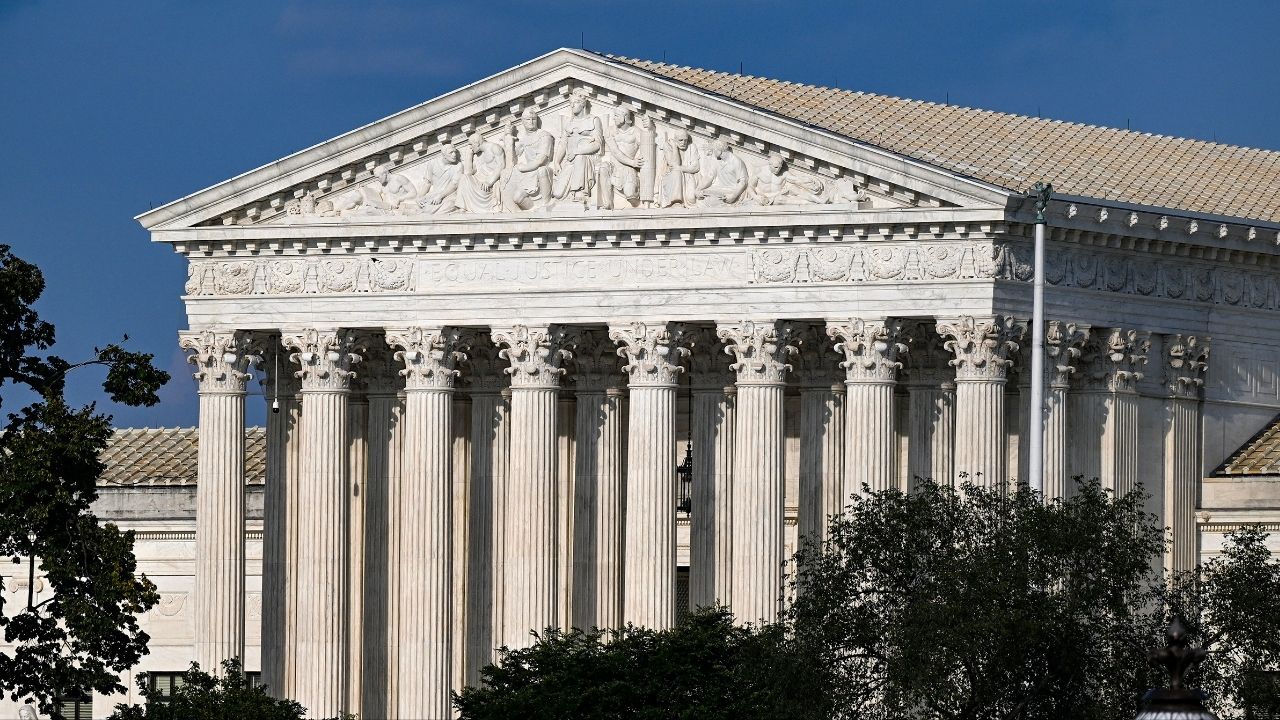
The US Supreme Court agreed on Thursday to hear a dispute over a policy by President Donald Trump’s administration that subjects millions of immigrants who entered the United States illegally to mandatory detention during their deportation proceedings.
In this latest legal battle over Trump’s hardline immigration agenda to reach the top US judicial body, the justices face an issue that has divided lower courts as numerous lawsuits by migrants and advocacy groups challenging the policy have played out. The policy is one of a number of measures his administration has taken in its pursuit of Trump’s goal of mass deportation.
The justices took up the administration’s appeal of a ruling against the policy by the New York-based 2nd US Circuit Court of Appeals in a case involving a Brazilian national. The Supreme Court will hear the case in its new term that begins on Monday.

The US Department of Homeland Security in July 2025 issued new guidance to federal immigration officials announcing that immigrants in the United States illegally are subject to mandatory detention without a bond hearing for the duration of their deportation proceedings, which can take months or even years to conclude.
The guidance represented a departure from a nearly three-decade-old interpretation of federal law that immigrants already living in the United States could be released on bond while they pursue their cases in immigration court.
The Republican president has enforced a sweeping crackdown on immigration — among his top priorities — since returning to office last year. The Supreme Court, which has a 6-3 conservative majority, has allowed a number of Trump’s hardline immigration policies to go into effect.
The administration’s detention policy produced an avalanche of lawsuits from immigrants seeking to be released. Immigrants have filed more than 73,000 such cases in federal court so far this year, about a quarter of all civil lawsuits brought in federal court.
A Reuters analysis in February found that hundreds of judges around the country had ruled more than 4,400 times that Trump’s administration had detained such immigrants unlawfully.
The 2nd Circuit decision arose from a legal challenge brought by Ricardo Aparecido Barbosa da Cunha, who entered the United States illegally around 2004 or 2005 and has remained since then.
He was arrested by immigration officers in September 2025 while driving to work in Norwood, Massachusetts, and initially was denied a bond hearing under the disputed policy. He was subsequently released on bond at a later stage of his case, according to court papers.
Michael K.T. Tan, deputy director of the ACLU’s Immigrants’ Rights Project and a lawyer for Barbosa da Cunha, said his legal team looks forward to making their case to the Supreme Court.
“The courts have repeatedly and resoundingly rejected the Trump administration’s radical misinterpretation of the law. Try as it might, the government cannot twist the law to detain immigrants for months or even years on end without a bond hearing,” Tan said. “Not only is it cruel and inhumane; it is unlawful.”
Bucking a long-standing interpretation of immigration law, the Department of Homeland Security last year took the position that non-citizens already residing in the United States, and not just people arriving at the border, qualify as “applicants for admission” subject to mandatory detention.
Under federal immigration law, “applicants for admission” to the United States are subject to mandatory detention while their cases proceed in immigration courts and are ineligible for bond hearings.
Most federal appellate courts to review the Trump administration’s policy have ruled against it. Decisions against the policy by the 2nd Circuit and Cincinnati-based 6th US Circuit Court of Appeals prompted the administration to appeal to the Supreme Court.
In the 2nd Circuit ruling, US Circuit Judge Joseph Bianco, a Trump appointee, wrote that the administration’s “newfound interpretation” of federal law was an implausible basis for implementing what he described as “the broadest mass detention-without-bond mandate in our nation’s history for millions of noncitizens.”
But the New Orleans-based 5th US Circuit Court of Appeals in a 2-1 decision in February backed the policy. In a decision reversing rulings that had led to the release of two Mexican men, US Circuit Judge Edith Jones wrote that decisions by prior administrations not to use mandatory detention, as Trump is doing, do not mean “they lacked the authority to do more.”
The Supreme Court already is set to hear arguments in another major immigration-related case during its upcoming term.
The court on Tuesday let the administration resume, for now, swiftly deporting migrants to countries other than their own without offering them the chance to show the harms they may face. The justices scheduled arguments in that case for December.
(Reporting by John Kruzel with additional reporting by Brad Heath; Additional reporting by Nate Raymond in Boston; Editing by Will Dunham)