


|
Getting your Trinity Audio player ready...
|
U.S. health regulators on Thursday called for more data on testosterone therapies for women, with FDA officials urging manufacturers to conduct studies that could support future approvals of female-specific products.
U.S. Food and Drug Administration officials said companies could potentially use data from testosterone products approved overseas but would still need to satisfy U.S. standards.
“The regulatory standard for approval in the United States is the same for every drug,” FDA’s Anandi Kotak said, adding that foreign data would have to be considered on a case-by-case basis. “We stand ready to review these applications” and discuss them with sponsors, she said.

There is no FDA-approved testosterone therapy for women, despite years of off-label use to treat low sexual desire, known as hypoactive sexual desire disorder, or HSDD.
The UK, Australia, New Zealand, and South Africa have approved or licensed testosterone products specifically for women.
Assistant Secretary for Health Admiral Brian Christine in his opening remarks said it was unacceptable that U.S. women lack a testosterone therapy approved specifically for them while such treatments are available in Australia.
“Something’s wrong with that,” he said, urging the FDA to “listen to the women who need an approved testosterone product” and “get this done.”
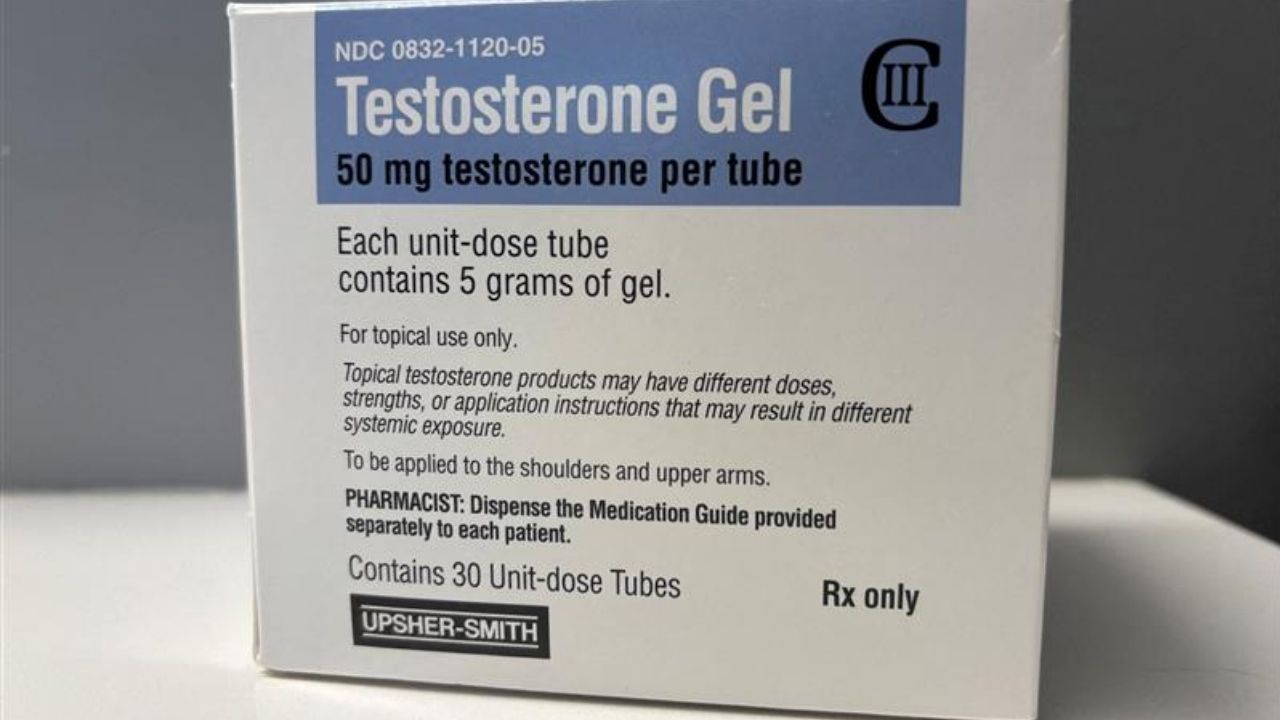
Physicians who prescribe testosterone to women typically rely on low doses of products approved for men, often dividing existing products such as AbbVie’s AndroGel and Keenova Therapeutics’ Testim, or on compounded formulations.
Dorothy Fink, deputy director of the Eunice Kennedy Shriver National Institute of Child Health and Human Development, said women deserved testosterone options “formulated and dosed specifically for them.”
But some experts said the need for a female-specific product does not resolve questions about how broadly testosterone should be used.
Rajita Patil, director of the UCLA Comprehensive Menopause Care Program, said evidence supports testosterone only for postmenopausal women with HSDD, with insufficient data to recommend it for mood, cognition, or general well-being. Oral testosterone is not recommended because of unfavorable effects on cholesterol levels, she said.
Patil called for “generating the evidence necessary to fully and more comprehensively characterize the benefit and the risk.”
Testosterone has been reviewed by the FDA multiple times for use in women but has never been approved because of a lack of long-term safety data and concerns about cardiovascular and breast cancer risks.
“We don’t have unlimited data on GLP-1s for decades and decades and decades of what happens to people who take these medicines, and yet they get FDA approved with many indications very quickly,” said Rachel Rubin, a sexual medicine specialist at Georgetown University School of Medicine, referring to the wildly popular weight-loss drugs.
The FDA’s request for public comments ahead of the meeting attracted hundreds of submissions, many from women describing improved libido, energy, and quality of life while using testosterone. The public comment period following the FDA testosterone workshop closes on Oct. 19.
Evidence and Safety Gaps
Interest in testosterone among menopausal women has grown alongside claims on social media that it can improve energy, muscle mass, bone health, and cognition, though specialists say the evidence is only strong for HSDD.
The FDA has approved non-testosterone options like Sprout Pharmaceuticals’ Addyi and Cosette Pharmaceuticals’ Vyleesi for certain patients with HSDD.
“We believe postmenopausal women deserve access to additional treatment options to address concerns related to sexual function,” Cosette Pharmaceuticals said in an email.
Testosterone is generally not recommended for women with a history of breast cancer because it can be converted to estrogen in the body that can fuel some cancers.
Excessive testosterone exposure can cause acne and increased hair growth, physicians said, while rarer effects such as voice deepening and hair loss may be irreversible.
Studies show that testosterone therapy is generally considered safe for men with medically diagnosed low levels of the hormone when prescribed and monitored by a doctor.
Last year, the FDA removed the boxed warning about increased cardiovascular risk from testosterone products for men after reviewing post-marketing studies, though the products still carry warnings about increased blood pressure.
(Reporting by Siddhi Mahatole and Padmanabhan Ananthan in Bengaluru; Editing by Mrinalika Roy and Bill Berkrot)