


|
Getting your Trinity Audio player ready...
|
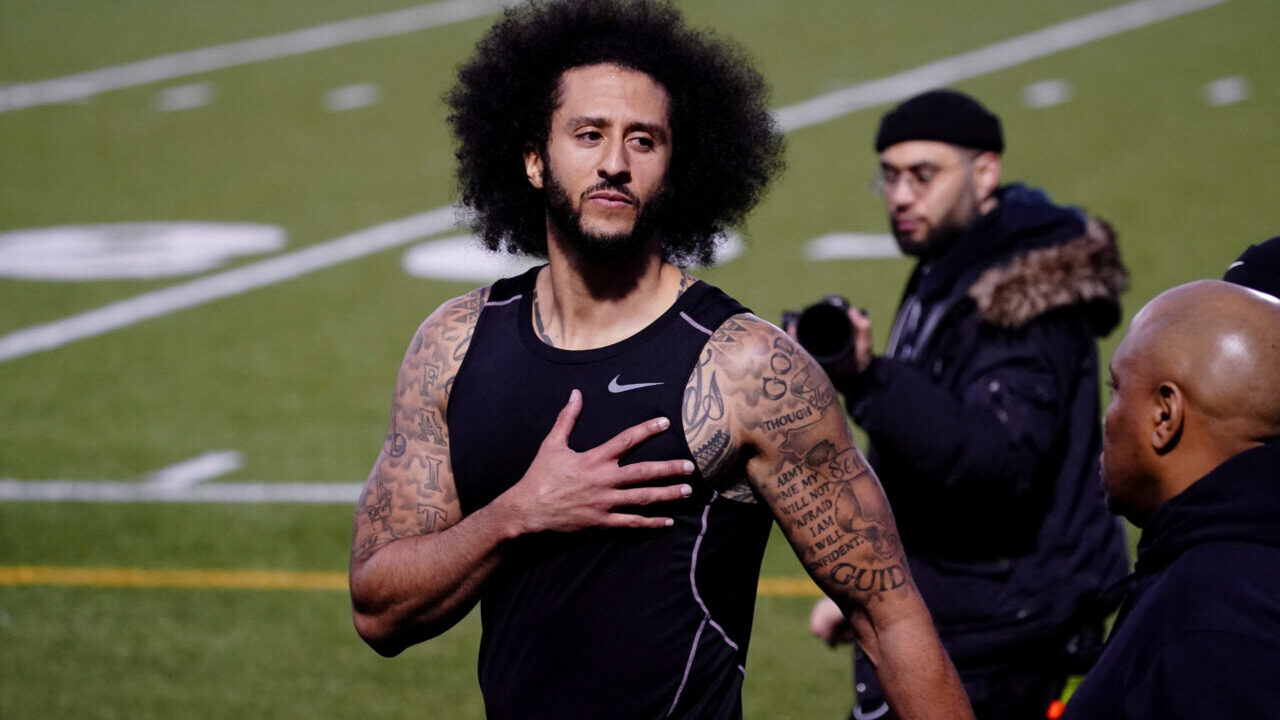
A decade after quarterback Colin Kaepernick protested racial injustice by sitting or kneeling during the national anthem before NFL games, he has written a memoir, “The Perilous Fight.”
The nearly 300-page book, which was released Tuesday, revisits the saga from Kaepernick’s perspective. His protest spread across the league and became a political lightning rod that forced fans to grapple with the meanings of patriotism and free speech.
Here is what to know about the controversy and the memoir:

When did Kaepernick’s protest begin?
Several years after Kaepernick led the San Francisco 49ers to a Super Bowl appearance, he was spotted sitting on the bench while the national anthem played before a preseason game in August 2016.
After the game, Kaepernick told Steve Wyche, a reporter from NFL Network, that he would not “stand up to show pride in a flag for a country that oppresses Black people and people of color.” The comments immediately drew backlash, particularly from those who considered his actions disrespectful to military veterans.
Kaepernick began kneeling instead of sitting, and was joined in protest by his teammate Eric Reid and other NFL players. High school, college and professional athletes across other sports also began protesting, including soccer player Megan Rapinoe.
In September 2017, President Donald Trump used an expletive to describe Kaepernick during a rally and suggested that NFL owners should fire players who did not stand for the anthem.
What happened to Kaepernick?
When Kaepernick became a free agent after the 2016 season, no team signed him. He filed a grievance through the players union that argued that the 32 NFL owners had colluded to blackball him because of his protests.
After an independent arbitrator ruled that the case could go forward, the NFL reached a confidential settlement with Kaepernick and Reid. The league did not publicly admit collusion.
In the years since Kaepernick’s playing career stalled, he has worked as a civil rights activist and started media projects. He cocreated the Netflix series “Colin in Black & White,” which explored his high school years, and also released a children’s book and a graphic novel.
ESPN greenlit a documentary centered on Kaepernick that was to be produced by Spike Lee, but the project was canceled after Kaepernick and Lee disagreed over the creative approach.
What was the fallout in the NFL?
After high-profile musicians said that in solidarity with Kaepernick, they would not participate in the Super Bowl halftime show, the NFL signed a partnership with Roc Nation, the entertainment company founded by Jay-Z, to help produce the show and work on social justice initiatives. The deal, signed in 2019, drew backlash. Some said it was hypocritical of Jay-Z, who had worn Kaepernick’s jersey during a “Saturday Night Live” performance in 2017.
In announcing the deal, Jay-Z said he felt the public needed to move past kneeling to enact more concrete changes. Headliners of the seven Super Bowl shows Roc Nation has helped produce include Bad Bunny, Kendrick Lamar and Rihanna. In 2022, as part of a hip-hop medley that included Snoop Dogg and Dr. Dre, Eminem took a knee during the performance, an act that was widely interpreted as a nod to Kaepernick.
After the police killing of George Floyd in 2020, several Black NFL players posted a video on social media that urged the league to take a definitive stance against systemic racism. NFL Commissioner Roger Goodell responded in a video, saying the league was “wrong for not listening to NFL players earlier” and encouraging all to “speak out and peacefully protest.” Kaepernick’s name was not mentioned.
Teams now have the option to paint slogans such as “End Racism” and “Stop Hate” on portions of the field, and players can wear them on the backs of their helmets.
What does Kaepernick’s memoir reveal?
Kaepernick writes that his worldview was reshaped around 2015 after he began reading a series of books, including the autobiography of civil rights leader Malcolm X.
He said he also became enraged after watching video of the San Francisco police fatally shooting a Black man, Mario Woods. That 2015 shooting led to protests, a lawsuit and the eventual ouster of the police chief. He writes that he was further affected by the killings of Freddie Gray in Baltimore, in 2015, and Philando Castile in Minnesota, in 2016.
Kaepernick said he was surprised that the controversy over his decision to sit during the national anthem swelled into a major news story. “Wow, y’all are really sensitive!” he writes in the memoir. “I thought. ‘Y’all can see a Black man get killed on camera and be like, ‘Hmm, where should we go for lunch?’ But let me not stand for the anthem and you have this visceral reaction? This is the thing that upsets you?”
In the memoir, Kaepernick also challenges the popular account of why he started kneeling during the national anthem instead of sitting.
Nate Boyer, a U.S. Army Green Beret veteran who briefly played in the NFL, has said he suggested kneeling as a more respectful posture toward the military. But Kaepernick writes that although he and Reid did meet with Boyer, their decision to kneel had already been made. He said Reid came up with the idea to be physically closer to their teammates on the sideline.
“It was a clear illustration of white supremacy at work — a white savior military veteran who used to play football telling us what to do,” Kaepernick writes. “A convenient narrative that made our protest more palatable.”
Kaepernick also writes about Roc Nation, saying he declined when it recruited him to be a client. He said he turned down a request from Jay-Z to kneel during a performance of the song “The Story of O.J.,” in part because he disagreed with some of its lyrics about race.
The day before Roc Nation announced its partnership with the NFL, Jay-Z called Kaepernick and told him the news, the athlete wrote. Kaepernick said he disapproved.
“‘I just want you to know, one, you’re serving the culture up to a bunch of racists and, two, they don’t care about you,” Kaepernick writes, recalling the conversation. “‘You’re the music guy to them. They quite literally need a Black face — and have said as much.’” Jay-Z’s response, he wrote, was, “‘Well, the ink’s dry.’”
This article originally appeared in The New York Times.
c.2026 The New York Times Company