

|
Getting your Trinity Audio player ready...
|
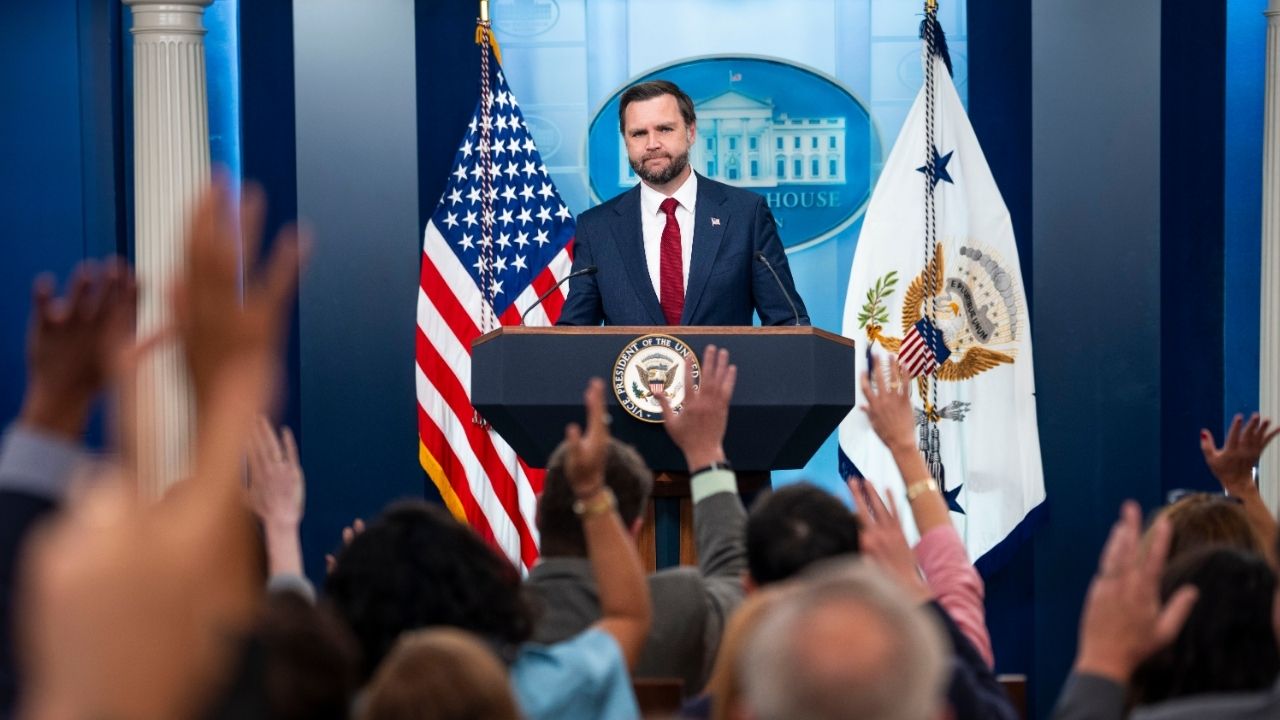
WASHINGTON — The Trump administration is moving to allow married couples with a stay-at-home spouse to collect childcare subsidies, a policy championed by Vice President JD Vance, using funds from a federal program intended to assist working parents, according to people familiar with the discussions.
The change would create the only federal subsidy to pay parents to stay home and raise their children, one of the most significant efforts to date by the Trump administration to harness federal funds to promote a traditional view of families.
To do so, officials are seeking to use a Health and Human Services Department fund that was created in the 1990s to help low-income and working-class parents afford childcare so they could work or go to school.

Under the draft new rule, parents who stay home with their children could benefit from the program, which typically provides about $9,000 a child each year, potentially reshaping which families receive federal childcare money.
The move could end up redirecting money away from working parents and their childcare providers, causing some to raise their rates or even close, critics said, potentially worsening what many experts say is a childcare crisis in the country.
About 80% of the 870,000 families who currently receive the childcare subsidies have single working parents, most of them mothers, according to Health Department data.
The policy change would effectively create a government incentive for parents to stay home with their children, an idea embraced as part of a broader conservative effort to advance policies that promote more mothers staying at home.
The new rule being drafted would allow married couples with one stay-at-home parent in certain income brackets to collect a subsidy, according to the people, who spoke on the condition of anonymity to describe the plan before it is approved. The change could be made without approval from Congress.
More than 80% of stay-at-home parents are mothers, according to the Pew Research Center.
The plan is being pushed by the White House and is seen as a top priority of Vance, according to several people familiar with the discussions. The draft rule also incorporates policies in legislation written by Secretary of State Marco Rubio when he was a senator from Florida.
Representatives for the White House, Vance and the Department of Health and Human Services did not respond to requests for comment.
Vance, whose wife Usha, a former corporate lawyer, gave birth to their fourth child in July, has long advocated for more mothers to stay at home with young children and called for efforts to open up childcare subsidy programs to those providing “kinship care.”
In 2021, Vance was a co-writer of an opinion essay in The Wall Street Journal contending that daycare can harm children and declaring, “Young children are clearly happier and healthier when they spend the day at home with a parent.”
He also wrote then on Twitter that “normal Americans” want a “family policy that doesn’t shunt their kids into crap daycare so they can enjoy more ‘freedom’ in the paid labor force.”
Some family policy experts said the changes to the program would hurt parents who have to work and have difficulty affording childcare.
“I am a big proponent of more support for stay-at-home parents. But this is not how I would choose to do it,” said Patrick T. Brown, a fellow at the Life and Family Initiative at the Ethics and Public Policy Center, a conservative think tank.
“Expanding the eligibility without increasing funding would mean more parents competing for the same dollars, and leaving more parents — particularly single working parents — worse off,” he said.
The $12 billion Child Care and Development Fund, which is run by the Health Department’s Administration for Children and Families, was created during the Clinton administration to support the employment of low to moderate-income parents. It subsidizes the care of children up to age 13 and currently offsets the costs for caring for about 1.3 million children.
Under the current rules, most of the money is distributed to states, which in turn distribute it to parents, usually in the form of vouchers or direct deposits to childcare providers.
To qualify, parents must prove that their income is lower than 85% of their state’s median income and that they are working, in school or receiving job training. Some states set a lower threshold of 60% of the state’s median income.
Under the proposed rule changes, the same pot of money would also be used to pay married parents who meet the income requirements when one parent works and the other cares for the child. The money would be intended to help offset the lost income of the stay-at-home parent.
The proposal “creates the option for a new category of care, parent-based childcare, that will allow one married parent to receive CCDF assistance to care for their own child, while a spouse works at least 35 hours per week,” according to a draft document viewed by The New York Times.
Unmarried couples in which one parent stays at home would not qualify under the draft. Single parents who do not work are currently not eligible for the subsidy, nor would they be under the new proposal for married couples.
The rule, which could still be changed before publication, would need to be approved by the White House and then would be posted online for public comment. If it is approved, it could go into effect as soon as next year.
Some department lawyers working on the plan have questioned the legality of requiring recipients to be married, according to the people familiar with the matter. Some have also raised concerns about whether the change could increase the risk of fraud, since the money would be going to individuals rather than businesses. The administration has sought to crack down on fraud in social services programs, particularly childcare.
In a letter to governors on Mother’s Day, Alex Adams, head of the Administration for Children and Families, previewed that policy changes were coming and urged states to “use every available” flexibility to distribute federal money in ways that “support married two-parent families,” and particularly “families who choose to have a parent remain at home with young children.”
Childcare policy experts said they anticipate that in some states, the rule change could lead to much of the money going to stay-at-home parents. States have some flexibility in determining how their subsidies from the Child Care and Development Fund are allocated, and lawmakers in some red states, including Idaho, Wyoming and Utah, have pushed for new policies for the states to support stay-at-home parents.
—
This article originally appeared in The New York Times.
By Coral Davenport/Doug Mills
c. 2026 The New York Times Company