
|
Getting your Trinity Audio player ready...
|
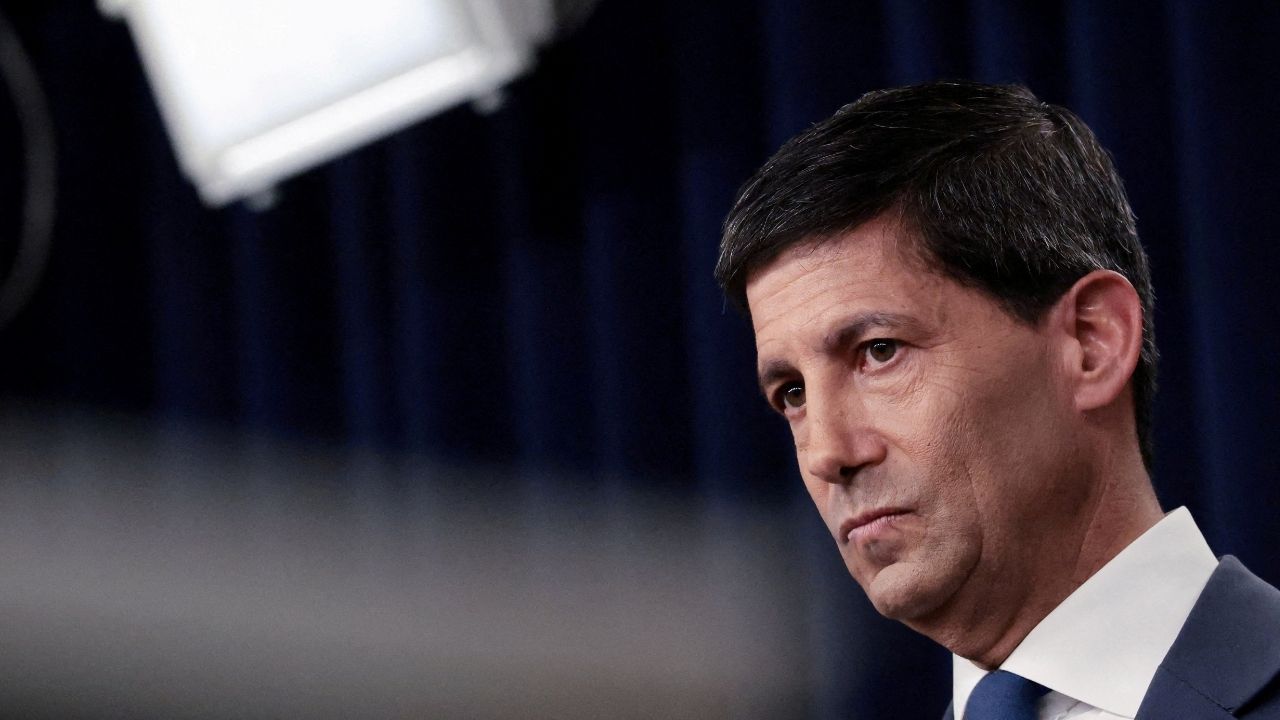
The Federal Reserve will “have work to do” if policymakers are not confident that underlying inflation is returning to its 2% target, Chair Kevin Warsh said on Friday in remarks that marked the closest he has come to acknowledging interest rate hikes may be needed to ease price pressures.
Short-term Treasuries sold off in anticipation of rate increases as soon as next month, with the 2-year Treasury yield rising 6.6 basis points to 4.29%, its highest in a month. The 10-year Treasury yield was flat at 4.672% and the 30-year Treasury yield was down 3 basis points at 5.16%.
U.S. stocks were little changed at midmorning on Friday, while the U.S. dollar index rose 0.4% to 99.55, again reflecting expectations that rates will rise. The rates market was showing a 46% chance of a rate increase next month, up from 35% on Thursday, according to CME data.

Comments:
Eugene Epstein, Head of Trading and Structured Products at Moneycorp in Stamford, Connecticut:
“At least for the time being, we’re getting more of the same Warsh-speak that we saw prior to any of the Fed decisions that he had been a part of. Meaning he’s saying a lot, but none of this seems really substantive. The initial reaction seems hawkish, but it looks like we’re just repeating or seem to be getting in the same route as we did leading up to the last Fed decision where the market was all hawked up heading into it. And in the end, there was nothing to be hawkish about and the dollar sold off.
“So we’ll see where this goes into the next meeting next month. But I feel like I’m watching him give the same speech for the fourth time now, maybe even fifth. Because frankly, he’s talking about, yes, they’re going to be focused on inflation. He’s not giving forward guidance, but inflation is not going in the direction that they want it to go. But he’s saying all the same hawkish talking points that he said leading up to the last decision. And then the last decision he’s basically like, well, the market’s doing all the work for us, so we’re good.
“So, it’s kind of like a fool me once, shame on you; fool me twice, can’t get fooled again, if you know that. Yeah, that’s where it seems like we’re going.”
Oliver Pursche, Senior Vice President, Wealthspire Advisors, Westport, Connecticut:
“The initial conclusion is that Charman Warsh is giving the market what it wants to a certain extent. He’s acknowledging that inflation is an ongoing issue but sticking to his guns of not being overly forward about predicting what the Fed may or may not do in the future. That’s as good as you could have hoped coming out of him. The market is reflecting that.”
Molly Brooks, Us Rates Strategist, Td Securities, New York:
“Markets took it a bit hawkishly. We saw the market price in more hikes. The long end reacted in a way that the Fed might be a little bit more serious about hiking, so therefore inflation credibility may be less at risk.
“The one hawkish thing to note is that he did mention that the labor market is stable and output is strong, and then obviously they’re concerned around inflation, so I think that’s what led markets to view this as somewhat hawkish.
“It puts the emphasis on the data that’s coming up now, so if we get a stable or stronger labor market signal next week and then we get a stronger inflation print the following, then that’s going to give a signal that maybe Warsh is ready to go as well.”
Peter Cardillo, Chief Market Economist, Spartan Capital Securities, New York:
“I don’t think (the Fed) is going to do anything in September. (Warsh) also alluded to the fact that the summer inflation numbers were better, but not convincing. So, I think he wants to wait for one more round of inflation numbers in September, October before pulling the trigger. But the market seems think the that the Fed will likely raise rates by year end.
“He alluded to his previous statements that during his terms, they will explore new models. That might be his way of saying we might need to change the metric in which we measure inflation, which he has said that when he first took on the job. So, I that’s where we’re going.
“He talked about AI can be a new tool for the economy. He’s not scaring the markets, but of course the fact that the Fed may need to do more work on inflation is what the bond market wanted to hear.
“He’s trying to cover a lot of aspects, but is the market going to be totally satisfied? I don’t think so. He’s basically a doing balancing act, you know. He has to satisfy the markets, and he has to satisfy President Trump as well.”
Sam Stovall, Chief Investment Strategist, CFRA Research, New York:
“I think really what he is doing is confirming that they are going to continue to make decisions without any kind of pre-announced intentions. He’s really sort of reiterating what he has said already.”
Jamie Cox, Managing Partner, Harris Financial Group, Richmond, Virginia:
“Warsh said a lot without saying anything. He wants to walk the middle ground and be noncommittal, trying very hard to re-Greenspan the Fed.”
Brian Jacobsen, Chief Economist, Annex Wealth Management, Menomonee Falls, Wisconsin:
“For better or worse, Chair Warsh wants to burn the monetary policy orthodoxy house down. I think it’s for the better. He said the quiet part out loud about how money matters for monetary policy. For years, the Fed ignored the monetary aggregates. In fact, they stopped publishing some of those aggregates because they thought they were useless.
“There are multiple ways the Fed can go about getting to work in guiding inflation to 2%. The federal funds rate is the primary tool, but with the Fed’s balance sheet expanding, that’s not helping matters.
“The problem with the Warsh approach to monetary policy is that it could collide with the Treasury’s interventions in the bond market. The new Treasury-Fed Accord could be more like a Treasury-Fed Discord. If Warsh wants to shrink the Fed’s balance sheet, that can work at odds with the Treasury’s desire to mop up some of the longer-dated debt out there.
“It’s been since 1939 when Chair Eccles dissented when we saw a Chair in the minority for a monetary policy move. It could be a matter of weeks before we see it again if Warsh argues for the Fed to stop expanding its balance sheet before it hikes rates.”
(Reporting by Saeed Azhar, Stephen Culp, Karen Brettell, Caroline Valetkevitch, Chuck Mikolajczak; editing by Colin Barr)