
|
Getting your Trinity Audio player ready...
|
Chief among President Donald Trump’s reasons for launching the war in Iran was preventing it from building a nuclear weapon. More than five months in, officials and experts say, the conflict may have slowed Iran’s nuclear program but not stopped it.
Because Iran has barred U.N. inspections of its most sensitive nuclear sites — a key part of any eventual peace deal — the precise fate of its highly enriched nuclear fuel is unknown. And despite strikes on three key nuclear sites in 2025 and 2026, Iran appears to have retained a stockpile of enough near weapons-grade fuel to quickly develop as many as 10 nuclear bombs, according to U.N. inspectors.
So far, the war has shown that Trump’s “‘maximum pressure’ policies and military misadventures did not, and cannot, destroy Iran’s nuclear weapons capacity,” Daryl G. Kimball, the executive director of the Arms Control Association, wrote in a recent analysis.

“The capability is largely still there,” said Ellie Geranmayeh, author of the European Council on Foreign Relations’ Iran Nuclear Monitor.
Here is a look at what we know about Iran’s three key nuclear sites.
The Ancient City With Half a Ton of Enriched Uranium
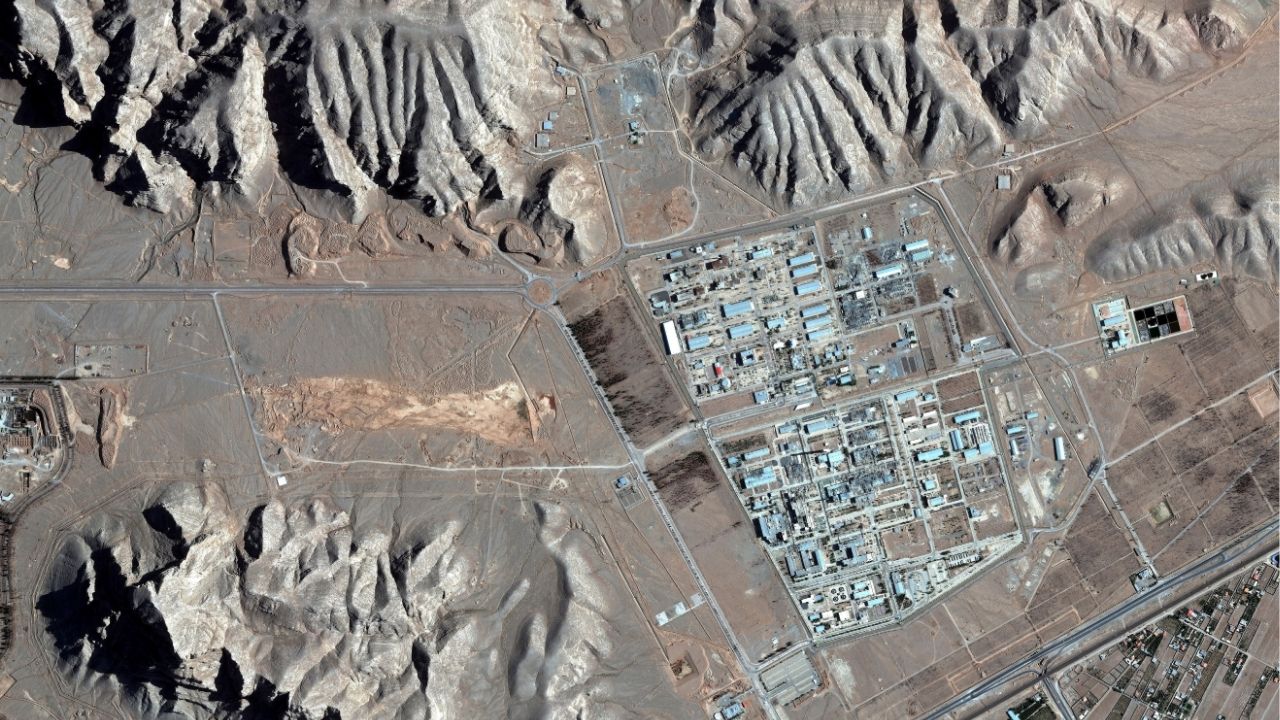
Iran stores most of its highly enriched uranium, which can fuel nuclear bombs, near the ancient city of Isfahan. In February, the International Atomic Energy Agency, the U.N.’s nuclear inspector, estimated its stockpile held about 970 pounds of uranium enriched to 60% — enough to make nine or 10 atomic bombs within a few weeks of processing.
The Isfahan complex was heavily damaged during U.S. and Israeli airstrikes against Iran in June 2025. Currently, two facilities to convert or enrich uranium remain significantly damaged, but the stockpile likely remains there, according to the Iran Nuclear Monitor, which runs an ongoing assessment of the country’s nuclear capabilities.
American intelligence agencies have determined that Iran could get to the stockpile, through a very narrow access point, although it is under constant U.S. surveillance.
The One-Time Secret Facility
The IAEA director, Rafael Grossi, said a smaller share of the highly enriched uranium may be at the Natanz nuclear facility. It is Iran’s largest uranium enrichment site, and one that Iran initially did not declare to the U.N. inspectors until it was identified by dissidents in 2002. Much of its work is underground.
The aboveground part of the Natanz plant was severely damaged in the June 2025 strikes. Entrances to the underground enrichment plant were damaged in attacks this past March, the IAEA reported, in what may have been an effort to bury the underground stockpiles.
About a mile away from Natanz is Pickaxe Mountain, which Iranian officials said in 2020 would hold a plant to build centrifuges, buried deeply underground to withstand powerful bunker-buster bombs. Experts say the site is not yet operational, although satellite imagery shows construction continued after the June 2025 attacks. Trump has repeatedly threatened to bomb Pickaxe Mountain but has so far held off.
The Site Thought to Be Iran’s Most Advanced
Iran long considered its deeply buried nuclear enrichment plant at Fordo its best-protected and most advanced site. It was badly damaged, and potentially rendered inoperable, by 12 massive bombs in the June 2025 attacks, according to U.S. intelligence assessments last year.
The four entrances to the plant remained buried under rubble from the 2025 attacks until mid-May at least, according to a June analysis by nuclear experts at the Institute for Science and International Security in Washington. Satellite imagery taken around then indicated Iran was adding obstacles on the roads leading to buried tunnel entrances, potentially to slow a potential attack.
The institute concluded that attacks on Fordo during the ongoing war this year were largely limited to strikes on Iranian air defense systems and a research center.
How Long Would It Take Iran to Rebuild?
Iran insists its nuclear program is peaceful, but its efforts to enrich uranium to levels approaching weapons-grade and evade U.N. inspectors has long raised alarm.
As recently as April, Trump insisted that his administration had “obliterated” Iran’s nuclear program.
Grossi, the IAEA director, said in a CBS News interview this spring that “one cannot deny that this has really rolled back the program significantly.”
But, he continued, “once the military effort comes to an end, we will still inherit a number of major issues that have been at the center of all this.”
James Acton, a physicist and Iran analyst at the Carnegie Endowment for International Peace, said enough of Iran’s nuclear program still exists that, if left alone, “I would imagine they could produce a bomb in less than a year at this point, possibly substantially less than year.”
Geranmayeh stopped short of putting a timeline on Iran’s ability to rebuild. Still, “without monitoring, Iran could rapidly enrich its existing uranium stockpile to weapons-grade,” she wrote in her most recent analysis.
—
This article originally appeared in The New York Times.
By Lara Jakes/Vantor Technologies
c. 2026 The New York Times Company