
|
Getting your Trinity Audio player ready...
|
The oppressive heat wave that has enveloped much of the United States upended plans for the nation’s 250th birthday that were years in the making.
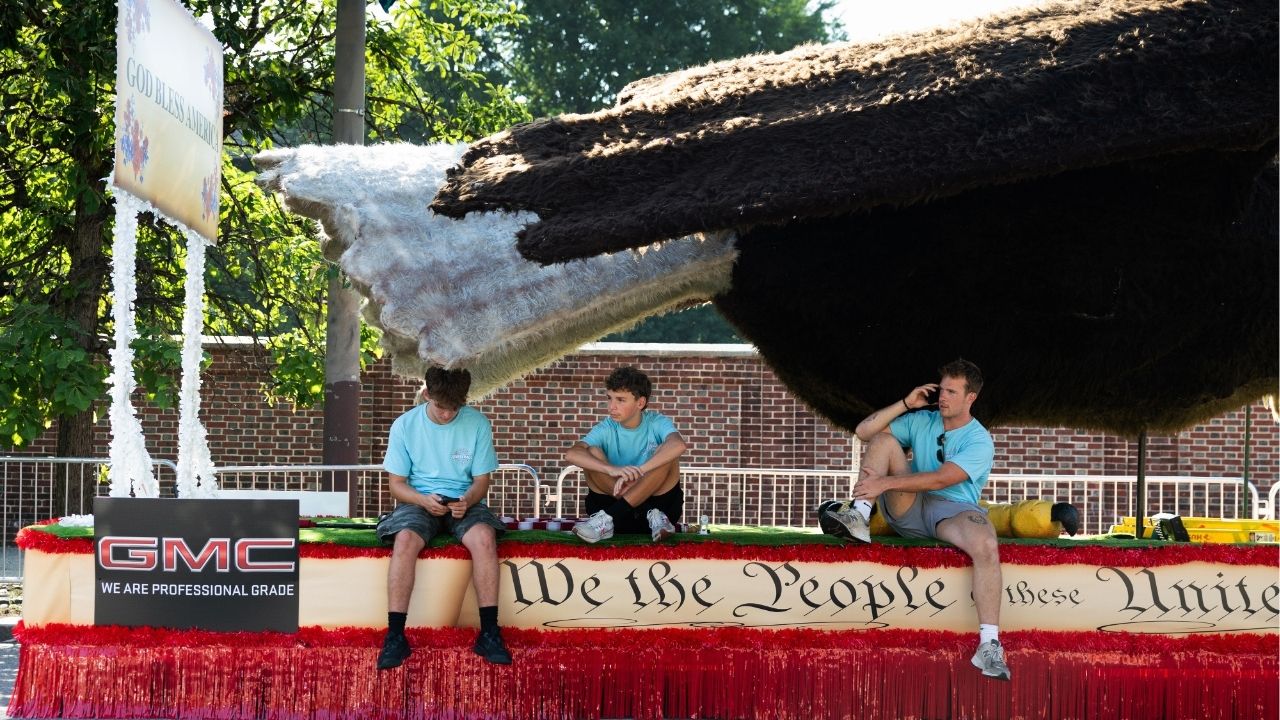
In Philadelphia, where the Declaration of Independence was signed, the extreme heat pushed organizers to scrap a parade Friday that was shaping up to be one of the biggest in the city’s history. More than 50 marching bands and about 20 floats were to participate in the event, which had been set to begin at noon.
Organizers canceled the parade, which had already been delayed, as the afternoon high in Philadelphia was expected to reach 104. It could feel like 112 with the heat index, a measure of how hot the air feels based on temperature and humidity.

In Washington, organizers of America’s Independence Day Parade, which brings bands, floats, balloons and spectators to Independence Avenue every July 4, said late Friday night that the event, scheduled to begin at 10:30 a.m. Saturday, had been canceled. Citing a forecast high of 102, with the heat index going up to 110, they said that the decision had been made “after extensive and careful consideration of the safety of our participants, spectators and staff.”
The announcement came after organizers of the Great American State Fair on the National Mall, one of President Donald Trump’s marquee events celebrating the country’s 250th birthday, temporarily closed the grounds to the public, citing the extreme heat. Daytime programming that was set to begin at 10 a.m. was postponed to 5 p.m. By 3 p.m. Friday, Washington had hit 100 degrees with a heat index of 112.
“The safety and well-being of our guests, volunteers, performers, vendors, and staff is our highest priority,” the fair’s organizers said on social media. “Conditions are expected to improve later.”
The blistering heat that settled over much of the eastern half of the country in recent days put a damper on efforts to bring people together to celebrate a milestone birthday for the nation, which finds itself embroiled in a deeply unpopular war with Iran at a time of extreme political polarization.
The long-lasting heat wave has brought dangerously high temperatures across the central and eastern United States. On Friday, the sticky, hot weather was focused in an area stretching from Ohio to New York and south into Georgia. As temperatures soared into the mid-90s to low 100s, around 180 million people were under extreme heat warnings or heat advisories Friday, with forecasters warning people to avoid going outdoors during the hottest part of the day.
On Saturday, the Fourth of July, when celebrations were expected to continue, millions will still be under warnings for the most extreme heat, with temperatures in New York, Washington and Philadelphia expected to climb near 100 degrees yet again.
In Boston, where the temperature was hovering just below 100 degrees at midafternoon Friday, organizers of the Boston Pops Fireworks Spectacular said the gates would open at 4 p.m. instead of noon Saturday for the concert, which begins at 7 p.m. “We encourage guests not to arrive at the Esplanade early,” organizers said.
Parades, which usually step off in the afternoon, were the biggest casualties of cancellations, while fireworks displays and evening concerts were expected to go on as scheduled. Among the towns scrapping plans for a July 4 parade was Norristown, Pennsylvania.
“The parade is one of our community’s most beloved traditions, and we share in the disappointment of its cancellation, especially as we celebrate America’s 250th birthday,” said Jayne Musonye, the borough’s interim municipal administrator. “With dangerous heat in the forecast, the safety of our families, our marchers, and our first-responders must come first.”
Officials in Monmouth County, New Jersey, rescheduled an outdoor concert in Freehold featuring Steven Van Zandt of Bruce Springsteen’s E Street Band from Friday to July 17.
Among the other cities and towns that canceled parades Friday were Bethany Beach, Delaware, and Lovettsville, Virginia.
Out West, continuing wildfires forced communities in Colorado outside the metro Denver area to cancel their fireworks displays.
Events at Gettysburg National Military Park in Pennsylvania observing the anniversary of the battle, which took place from July 1 to July 3 in 1863, were moved from indoors because of the heat.
“General Longstreet is famously quoted to have said, ‘Not retreat, sir. Re-deploy,’” the park said on social media. “We too shall re-deploy when it comes to the Extreme Heat Warning that Mother Nature has thrown our way during the upcoming 163rd Anniversary of the Battle of Gettysburg.”
As temperatures in midtown Manhattan hovered above 100 degrees Friday, a handful of tourists sipped water from paper cups in the basement of the Javits Center, one of about 200 cooling centers across the city.
“I don’t want to walk any more,” Ella Phillips, 6, said to her father, Conrad Phillips. “It’s too hot.”
Phillips, 36, assured her their genetics had prepared them for the heat.
“We’re Aussies, we’re fine,” he said.
“This heat, we know what to do with it: lots of sunscreen, lots of water — and lots of beer,” he added, smiling.
–
This article originally appeared in The New York Times.
By Adeel Hassan/John S.W. MacDonald/Amy Graff/Rachel Wisniewski
c.2026 The New York Times Company