

|
Getting your Trinity Audio player ready...
|
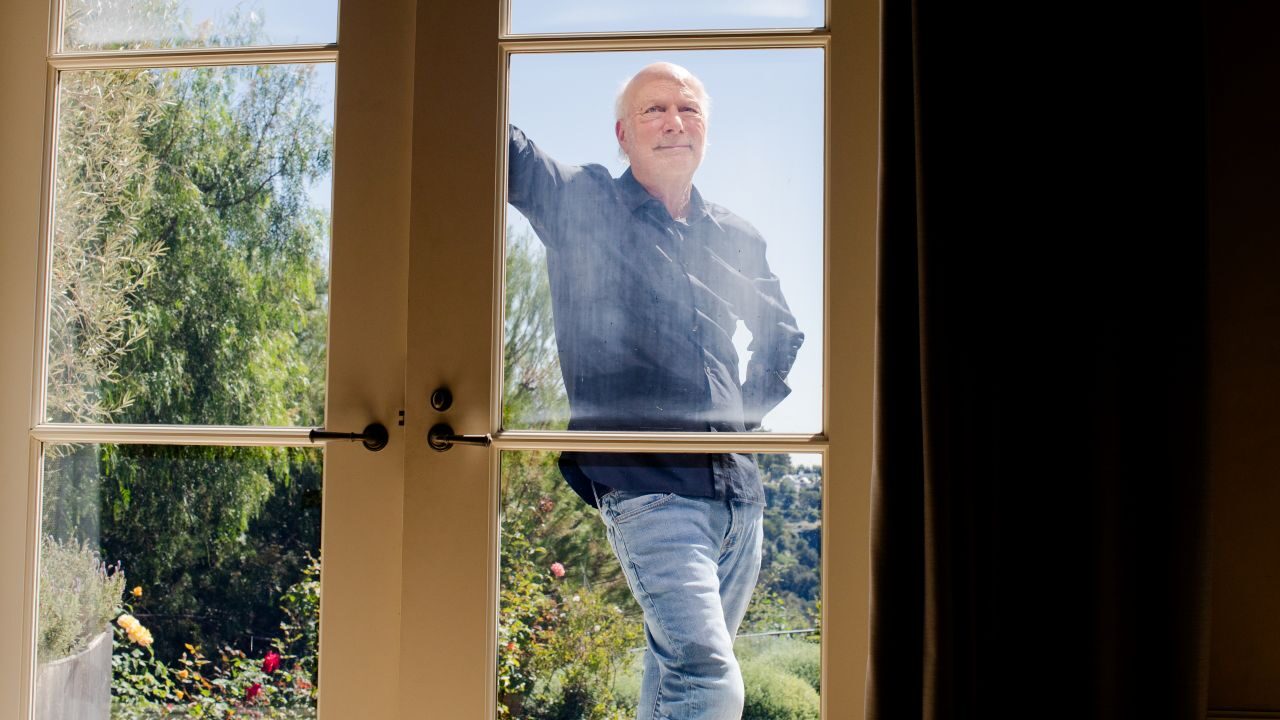
James Burrows, the genre-shaping master of the television situation comedy who was a creator of “Cheers” and directed more than 1,000 episodes of that show and other TV classics like “The Mary Tyler Moore Show,” “The Bob Newhart Show,” “Taxi,” “Frasier,” “Friends” and “The Big Bang Theory,” died Friday. He was 85.
His agent, Rick Rosen, confirmed the death but did not say where he died or specify a cause.
Burrows earned a reputation as the “Steven Spielberg of sitcoms,” winning 11 Emmy Awards and receiving 47 nominations in a career that spanned five decades. In 1995, Bill Carter, writing in The New York Times, described him as “the man whose visual style and comedic instincts have helped create more comedy hits than anyone else in television.”

Burrows Focused on the Laughs
With a unique flair for the multicamera sitcom, Burrows won audiences by focusing on the laughs.
“When I direct a television show, I try to reach that sweet spot where the best script meets the best performance and the best chemistry between performers,” Burrows wrote in his 2022 autobiography, “Directed by James Burrows,” written with Eddy Friedfeld. “Hitting that exact moment, where these factors land in combination, results in the sweetest and most enduring laugh.”
Whatever the setting, whether a New York taxi garage or a neighborhood bar in Boston, he sought to nurture his actors into ensembles. “I guess I have a gift for creating families,” he told the Times in 2023.
Distinctly different from film directors, who control every aspect of a movie’s creative development, television directors often act as traffic cops on a set and toil in relative anonymity. They are part of a creative team led by a writer and executive producer, who also acts as the showrunner.
Television directors don’t usually exert control ahead of the writers. But Burrows defied that tradition. He was so skilled that he became the most sought-after and highly paid sitcom director during the golden age of network comedies in the 1980s, ’90s and early aughts.
Burrows Grew Up Loving New York Theater
He grew up immersed in the world of New York City theater as the son of Broadway playwright and director Abe Burrows, who helped create such hits as “Guys and Dolls” and “How to Succeed in Business Without Really Trying.”
He even started his career approaching television episodes as if he was directing a stage play, and the ensemble casts, including such stars as Mary Tyler Moore, Bob Newhart, Judd Hirsch, Ted Danson, Jennifer Aniston, Sean Hayes and Kelsey Grammer, loved working with him.
“He is without a doubt the person any actor wants calling the shots when the cameras are rolling,” Grammer, who played psychiatrist Frasier Crane on “Cheers” and “Frasier,” said in a 2019 episode of “Inside the Actors Studio.”
Because of his intuitive understanding of the timing and structure of a successful sitcom episode, Burrows was in constant demand, often working on more than one series at a time. He directed a staggering 75 pilot episodes that became series.
“I try to break down those barriers between writer and actor and director, and make everybody feel like they’re all a part of the process, without incurring the wrath of a writer,” Burrows said in a 2023 interview on the public radio station KCRW.
Burrows Helped Cast ‘Friends”
In 1994, for example, Burrows not only directed but also helped cast “Friends.” Before shooting the pilot, he gathered the group of mostly unknown young actors — Lisa Kudrow, Courteney Cox, Matt LeBlanc, David Schwimmer, Matthew Perry and Aniston — and flew them on a private plane to Las Vegas for a dinner at Spago at Caesars Palace.
He wanted to ensure that the cast members bonded. At dinner, he told them, “This is your last shot at anonymity. Once the show comes on the air, you guys will never be able to go anywhere without being hounded.”
Having a Famous Father Was a Mixed Blessing
James Edward Burrows was born in Los Angeles on Dec. 30, 1940, to Abe and Ruth (Levinson) Burrows. When he was 5, the family moved to New York City, where he grew up. His mother was a homemaker and social activist who instilled a lifelong sense of social justice in James and her daughter, Laurie.
His parents divorced when Burrows was 8, a trauma he said he carried into adulthood. His father’s success exposed him to theater luminaries. Having a famous father, however, was a mixed blessing.
Burrows knew he would always be considered “Abe’s kid,” so to avoid his father’s long shadow, he decided he had no interest in a theater career. Nonetheless, he attended New York’s High School of Music and Art and eventually found himself unable to resist show business. Countless visits to his father’s productions and rehearsals left an indelible impression about how to work with actors and crews.
Burrows graduated from Oberlin College in 1962 and the Yale School of Drama in 1965. There, he realized he couldn’t sing, dance or write, but he became intrigued with the idea of directing.
After graduating, he became an assistant stage manager for “Breakfast at Tiffany’s,” a short-lived 1966 musical that featured Moore. After working as a stage director at dinner theaters for the next few years, Burrows realized that television situation comedies — which in essence are short stage plays in front of a camera — might be a perfect outlet for his skills.
In 1974, he wrote to Moore asking for a chance to work for her company, MTM, which produced her hit show. Her husband, Grant Tinker, invited Burrows to come to Los Angeles, where he was given his first shot at directing a sitcom. There, he met veteran TV director Jay Sandrich, who became a mentor.
‘Mary Tyler Moore Show’ and Its Many Spinoffs
After “The Mary Tyler Moore Show,” he directed episodes of the spinoffs “Rhoda” and “Phyllis” and later “The Bob Newhart Show,” “Laverne & Shirley” and “Taxi.” In 1982, he teamed up with writer-producer brothers Glen and Les Charles, whom he knew from “Taxi,” to create “Cheers,” which changed the trajectory of his career and eventually brought him vast wealth through syndication and residuals.
Of the 275 episodes of the series over 11 seasons, Burrows directed all but 35. Its finale, in 1993, drew the second-largest audience for a series finale in television history. (Only the finale of “M*A*S*H” in 1983 drew more viewers.)
In 1981, he married Linda Solomon, with whom he had three daughters, Kat, Ellie and Maggie. The couple divorced in 1993. Burrows married Debbie Easton in 1997. Complete information about his survivors was not immediately available.
This article originally appeared in The New York Times.
—
By Glenn Rifkin/Alex Welsh
c.2026 The New York Times Company