
|
Getting your Trinity Audio player ready...
|
WASHINGTON — The White House has approved a secret $9 billion request to acquire the cutting-edge computer chips that America’s spy agencies need to tap into the full capabilities of the latest artificial intelligence models, according to current and former U.S. officials.
New AI models use enormous amounts of computer power, more than many technology experts anticipated even a year or two ago. That has fueled concerns in the White House and in Congress that a chip shortage is causing intelligence agencies to fall behind in testing and deploying the tools for top-secret espionage work, the officials said.
The additional funding reflects how integral AI platforms have become to national security. The technology has helped the military and spy agencies sift through massive amounts of intelligence and is particularly valuable for tasks like finding overlooked communications intercepts.

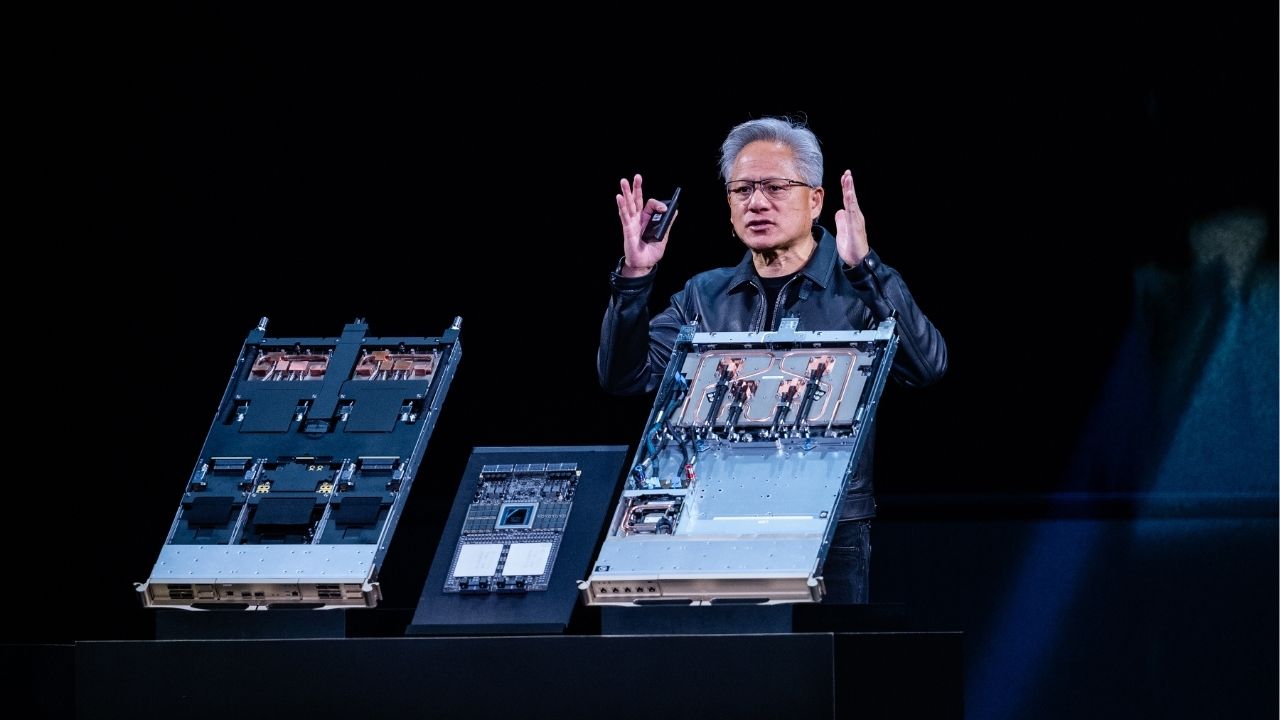
The $9 billion request is intended in part to boost the availability of infrastructure that can support Nvidia’s Grace Blackwell superchip, which requires data centers that can supply enormous amounts of electrical energy and specialized liquid cooling systems.
Congress still must approve that funding, but the administration is also reprogramming $800 million for a more rapid acquisition of computing capacity.
Even larger sums will likely be needed in the future, according to experts.
To work around the chips shortage, Susie Wiles, the White House chief of staff, has authorized the National Security Agency to continue to use an advanced model made by Anthropic, even though the Pentagon has designated the company a supply chain threat, U.S. officials said.
U.S. officials said Anthropic and the government are finalizing a classified contract that would allow the NSA to maintain access to Anthropic products. The company’s new model, known as Mythos, runs more efficiently on the new chips but can also run on a previous generation of chips.
Earlier this year, the Defense Department demanded the authority to employ Anthropic’s technology for “any lawful use,” setting off a fight between the two sides. The new contract does not include that language.
The contract will include a carve out to ensure that the AI model is not used on Americans’ data, said the officials, who added that the White House wants the contract to serve as a model for other companies.
The AI industry is struggling to keep up with seemingly insatiable global demand for top-tier chips. The shortage is especially acute for the Pentagon and intelligence agencies, which did not allocate enough funding in past years to build out adequate facilities for the current cutting-edge chips. The agencies primarily run their classified AI models on Amazon Web Services cloud networks. Amazon announced a $50 billion effort last year to upgrade its government cloud computing services.
Artificial intelligence has increasingly been a focus of the Trump administration. On Thursday, the White House abruptly canceled a signing ceremony for a new executive order on artificial intelligence hours before it was scheduled to begin. President Donald Trump told reporters he “didn’t like aspects of it.”
The order was seeking to formalize a process to share AI models with the government — including national security agencies — before they are publicly released, in recognition of the potentially expansive threat to cybersecurity the models now pose.
The chips shortfall has hampered the CIA, the NSA and other agencies that work on classified cloud networks from testing or using the newest versions of ChatGPT, which require Nvidia’s superchip.
“Our intelligence community needs the frontier — the best AI chips, models, systems, talent — on a timeline that matches the threat,” said Vinh Nguyen, the former chief data scientist at the NSA and a senior fellow on AI at the Council on Foreign Relations.
The shortage of Grace Blackwell chips poses a challenge for some of the most vital U.S. national security agencies at a time when artificial intelligence tools are increasingly blending into the day-to-day operations of the military and the civilian government.
In a sharply worded statement, the White House declined to discuss the chip shortfall or its efforts to address it.
“Sensitive national security deliberations are conducted with the seriousness they demand — not leaked to reporters and repackaged through selectively sourced, unverified claims designed to drive headlines rather than truth,” said Steven Cheung, a White House spokesperson. “The fact is the United States is leading the world in technology and is well prepared to deal with a variety of issues that may arise.”
Even if the money was approved immediately, the intelligence agencies would face a significant delay before the classified cloud networks run by Amazon Web Services and other providers would be able to build data centers with the Grace Blackwells.
The data centers that host the classified cloud are physically separate from unclassified networks and have stricter security protocols. Companies are not able to quickly upgrade commercial or unclassified data centers to serve classified government work.
OpenAI’s contract with the Pentagon does not currently include the NSA. So in addition to addressing the chip shortfall, OpenAI and the government must reach a separate deal for the spy agency to use its technology. Intelligence officials hope the contract with Anthropic to work with the NSA will pave the way for an agreement with OpenAI. (The New York Times has sued OpenAI, claiming copyright infringement of news content related to AI systems.)
Representatives of AWS, OpenAI and Anthropic declined to comment, because of the classified nature of the work. Nvidia did not return a request for comment. The Office of the Director of National Intelligence, the CIA and NSA declined to comment.
The shortage of cutting-edge chips has taken on more urgency within the intelligence community in recent months. Anthropic’s new Mythos model, released in April, is said to be so good at finding and weaponizing cybersecurity bugs that it was initially shared with only a small number of government agencies, banks and other firms in the U.S. and Britain. It still has not been made available for wider release.
Nvidia typically releases a new chip every year that aims to offer stronger processing capabilities for cutting-edge AI models. The Blackwell class of chips, released last year, is currently barred for export to China.
The supply of microchips has become a growing challenge for the booming AI industry in recent months, as frontier labs like Anthropic, OpenAI, and Google release increasingly powerful — and power draining — models and apps.
As a result, Anthropic has suffered outages for its chatbot Claude and has at times been forced to meter supply during peak hours, similar to an energy company relying on rolling blackouts to cope with electricity demand.
U.S. intelligence agencies face an additional problem because their classified networks are designed to never connect to the public internet and rely on isolated computer infrastructure.
—
This article originally appeared in The New York Times.
By Dustin Volz and Julian E. Barnes/Eric Lee
c. 2026 The New York Times Company