


|
Getting your Trinity Audio player ready...
|
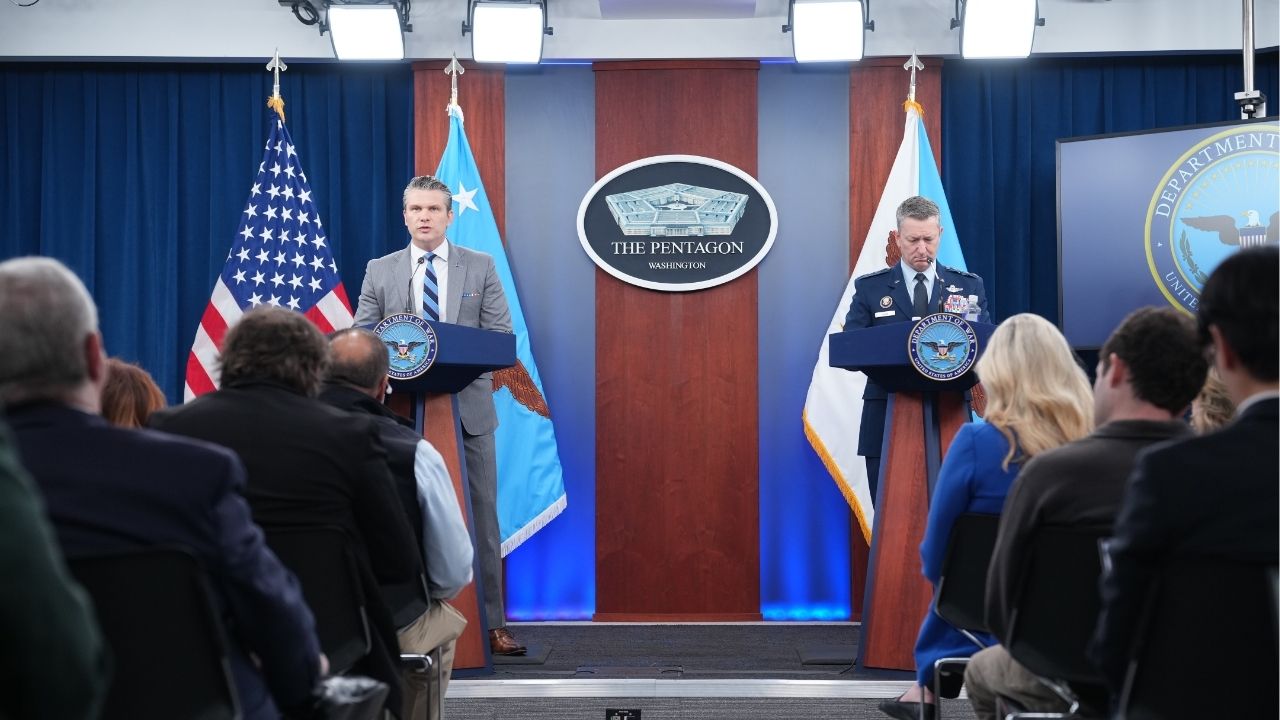
The U.S. Navy blockade of Iranian ships and ports will continue for “as long as it takes,” Defense Secretary Pete Hegseth said on Friday. Iran has made lifting the blockade a condition of resuming peace talks with Washington.
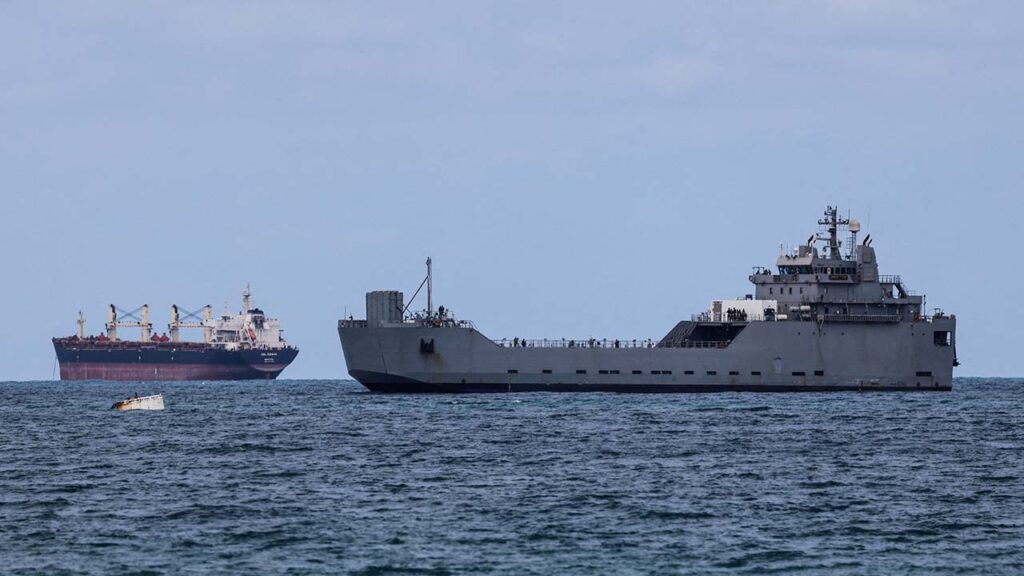
Hostilities between Iran and the United States have shifted to the waters in and around the Strait of Hormuz, a key conduit for oil and gas, since a ceasefire paused the war. Both sides in recent days have seized vessels they said were violating their respective restrictions on shipping.
“We have all the time in the world,” Hegseth told reporters at the Pentagon, even as he insisted that the war would not be “endless” and that the United States was not “anxious for a deal.”

But the conflict has significantly drained the U.S. military’s global supply of munitions, and rising energy prices caused by the conflict have put President Donald Trump under domestic pressure to end it.
Hegseth said that some ships could make it through the Strait of Hormuz. But he also acknowledged that commercial shipping through the waterway was “much more limited than anybody would like to see” in part because of Iran laying mines in the strategic waterway. U.S. military and intelligence agencies are divided on how many mines have been put in the waters.
Separately, the Israeli military said Friday that it carried out strikes on Hezbollah targets in southern Lebanon, a day after Trump announced a three-week extension of the ceasefire there, though there were no immediate reports of significant fighting between Israel and the Iran-backed militant group.
Neither Prime Minister Benjamin Netanyahu of Israel nor President Joseph Aoun of Lebanon commented on the announcement. Hezbollah did not have representatives at the talks, but a senior lawmaker with the group, Ali Fayyad, said in a statement Friday that the truce extension did not hold “any meaning in light of Israel’s continued escalation of hostile acts.”
Here’s What Else We’re Covering:
— Lebanon: Lebanon’s state-run news agency reported Israeli airstrikes and artillery fire overnight in several towns and villages in southern Lebanon, and the Israeli military said early Friday that it had struck two rocket launchers in the region. Under the terms of the ceasefire, Israel can act in self-defense but not carry out offensive operations against Lebanese targets.
— High price tag: White House officials have refused to estimate the cost of the war so far, but two independent groups say it has been staggering: between $28 billion and $35 billion, or just under $1 billion a day.
— World Cup: Iran’s soccer team will be allowed into the United States to play in the tournament this summer, but not Iranians with ties to the country’s military, Secretary of State Marco Rubio said.
—
This article originally appeared in The New York Times.
By Abdi Latif Dahir, Euan Ward and Qasim Nauman/Eric Lee
c. 2026 The New York Times Company