
|
Getting your Trinity Audio player ready...
|
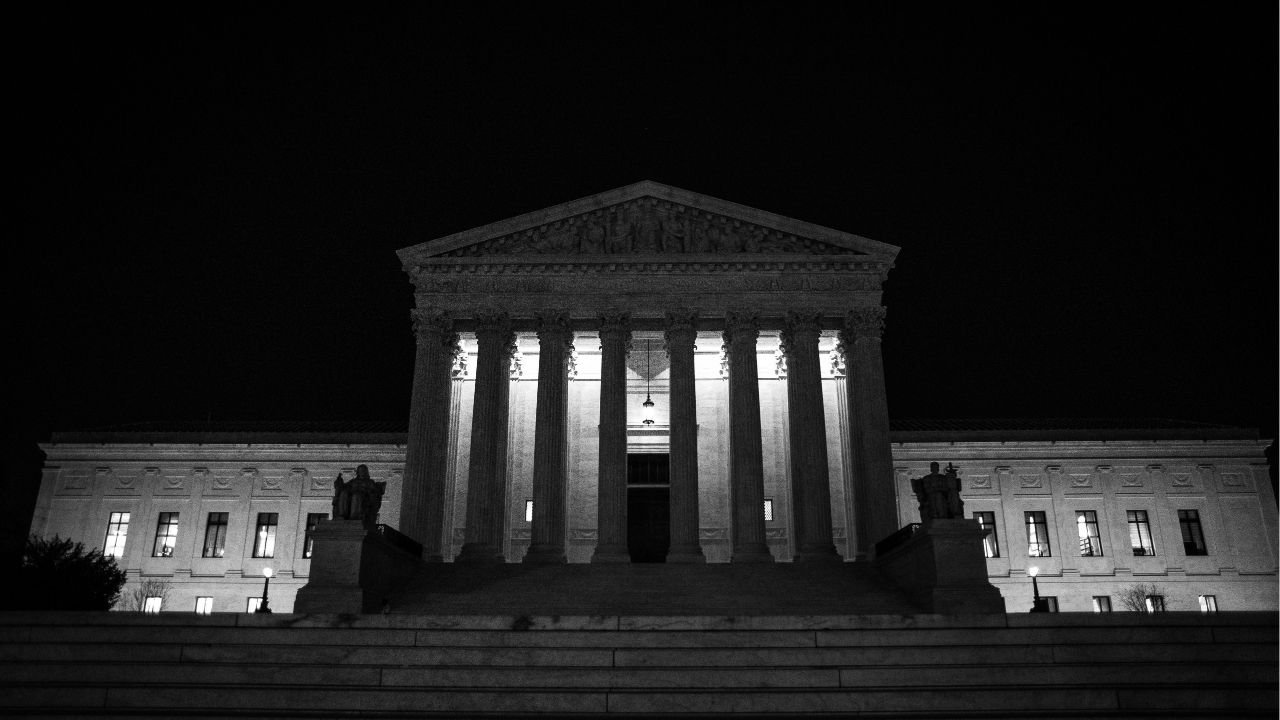
The New York Times is publishing seven confidential memos that were exchanged among the justices of the Supreme Court over five days in the winter of 2016. They tell a pivotal story.
The memos show how the justices stumbled into a new way of conducting their work in major cases on presidential power, short-circuiting long-standing procedures meant to ensure careful consideration and reasoned opinions.
In the papers, the justices debate taking an unprecedented step: halting a major climate change initiative from President Barack Obama before any lower court had addressed its lawfulness. By a 5-4 vote along partisan lines, the court did just that, without explaining its reasoning.

Emergency orders based on abbreviated briefing and almost no deliberation have now become commonplace, notably in cases arising from challenges to presidential actions. Critics call this new way of doing business the “shadow docket.”
View this post on Instagram
The Times obtained a secret trove of documents that offer a rare look at the justices behind closed doors.
The court is so secretive that the chief justice recently imposed nondisclosure agreements on employees. Scholars feared that the court would keep the public in the dark about the reasons for its 2016 shift until the justices’ papers were released decades from now. One professor wrote that he expected that only his grandchildren would someday learn the truth.
The memos obtained by the Times bring the birth of the shadow docket into the light.
Chief Justice John Roberts pushed his colleagues to short-circuit their usual procedures.
Chief Justice John Roberts’ public persona is mild and controlled. In the papers, he is impatient, seems testy with his colleagues and appears offended by what he considers defiance by the Environmental Protection Agency.
Obama and Roberts had a tense relationship. The papers show how keenly the chief justice was tracking the Obama administration’s actions, determined not to be outplayed.
The memos are relatively formal and legalistic. But they are nothing like the court’s usual painstaking work. The justices address one another by their first names, refer to a blog post and a television interview, express irritation and plead for more time.
The conservatives reacted to Obama’s use of power very differently from Donald Trump’s.
In the 2016 papers, two Republican-appointed justices are determined to check Obama, who they believe is overreaching. Justice Samuel Alito warned that if the court failed to stop the president, its own “institutional legitimacy” would be threatened. Now, in the era of President Donald Trump, he and the other conservative justices have often used the shadow docket to empower the president.
The justices do not seem aware of the momentous step they are taking.
The Obama administration’s plan to curb emissions, which was challenged by Republican-led states and industry groups, was set for a slow rollout, culminating in full compliance by 2030. But Roberts said the court had to jump in immediately, as states and businesses would have to start committing time and resources to comply with the plan right away.
The memos debating that weighty question and several related ones spanned just five days. None of the justices mention the threat of climate change, or acknowledge that they are embarking on a questionable new way of operating.
—
This article originally appeared in The New York Times.
By Jodi Kantor and Adam Liptak/Gabriella Demczuk
c. 2026 The New York Times Company