
|
Getting your Trinity Audio player ready...
|
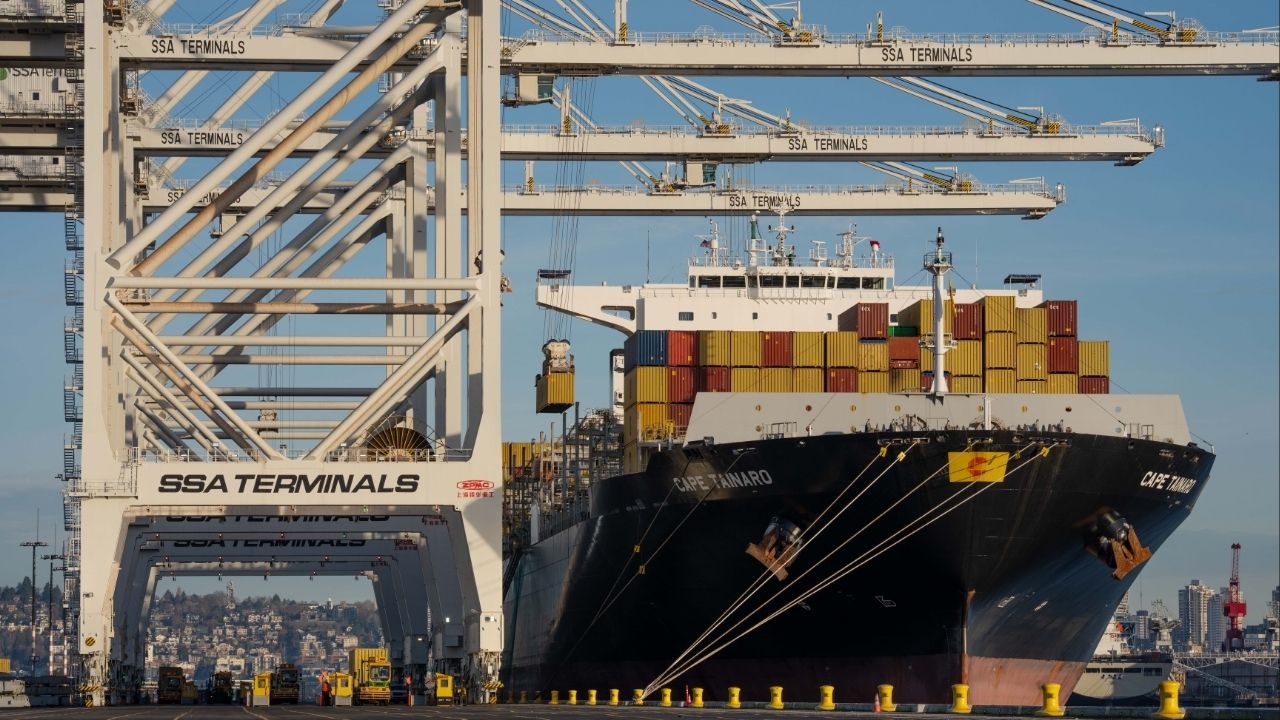
U.S. imports grew and the trade deficit remained historically large last year, data released Thursday showed, as steep tariffs imposed by President Donald Trump scrambled trade but did not halt it.
High tariffs and unpredictable policy drove huge swings in trade last year. Companies stockpiled products before tariffs went into effect, then halted imports. American investors bought and sold large quantities of foreign gold as a hedge against volatile markets.
But although hefty tariffs dampened purchases of imported cars, household consumer items and other goods somewhat, U.S. trade with the world remained relatively robust. The United States imported chips to fill new artificial intelligence data centers and Americans snapped up foreign weight-loss drugs, all helping to buoy cross-border trade.

Trade Deficit Shrank Slightly
The total trade deficit, including trade in both goods and services, shrank slightly last year, as growth in exports narrowly outpaced growth in imports. But that was entirely the result of an expanding trade surplus in services. The trade deficit in physical goods, which has been Trump’s focus as he has sought to use tariffs to restore the U.S. manufacturing sector, was the largest on record in 2025.
Overall imports of goods and services increased 4.7%, to $4.3 trillion, in 2025, while exports rose 6.2%, to $3.4 trillion. The trade deficit — the amount by which imports exceed exports — was $901 billion, down from $903 billion in 2024.
The trade deficit grew sharply at the end of the year, rising 32.6% in December as imports rose and exports fell.
Tariffs did lead to drastic shifts in the countries with which the United States trades. Trade with China slowed sharply as companies turned to factories in other parts of the world. The goods trade deficit with China fell to $202 billion, making it smaller than the deficit with the European Union. Trade deficits with other countries rose, however, as Americans bought more products from countries like Vietnam and Mexico instead.
Shuffling Trade
The data has raised questions about whether Trump’s trade policy is restructuring the United States to be less dependent on imports, or mostly shuffling trade around.
Trump has said steep tariffs and new trade deals will boost American factory production, making the country less dependent on foreign goods. Many importers have responded to tariffs and the threat of them by adjusting the timing of deliveries, and the countries from which they purchase, at great cost and inconvenience.
But whether the policies lead to lower imports, higher exports and a narrower trade deficit in the long run still appears something of an open question.
Bernard Yaros, the lead economist at Oxford Economics, said it was “a bit too early to tell what the lasting impacts of Trump’s trade policies are.”
He said U.S. imports were now hovering below their trend from the decade before Trump’s second term. Part of that was payback for the huge spike in imports at the start of last year, and part was the impact of tariffs had on the relative price of imports rising.
“We still need to see where imports settle once the ‘inventory effect’ from massive stockpiling in early 2025 wears off,” he added.
Companies Rush to Bring Goods
After Trump’s election, companies had rushed to bring goods into the country before tariffs took effect, causing imports and the trade deficit to soar.
Imports began to fall back after Trump announced global tariffs in April, including draconian levies on China. The president temporarily paused most of those tariffs to allow for trade negotiations, but reimposed them at lower levels in August. As of Jan. 19, U.S. consumers faced an overall average tariff rate of 16.9%, the highest since 1932, according to calculations by the Yale Budget Lab.
In recent months, the trade deficit has fallen, one of Trump’s goals. In October, the trade deficit fell to the lowest monthly figure since June 2009. But much of that drop appeared to be the result of temporary fluctuations in trade, particularly in gold. The trade deficit rebounded somewhat in November before growing further in December.
The president has long seen trade deficits as a sign of a weak U.S. economy, and argued that high tariffs would encourage more U.S. factory production and cause the trade deficit to fall. Many economists disagree with a single-minded focus on the metric, saying that the trade deficit can fall for many reasons, not all of them good.
The tariffs have also shuffled U.S. trade with various countries. In particular, the trade deficit with China has shrunk, as companies rejiggered their supply chains in anticipation of higher tariffs on the country.
But Brad Setser, an economist at the Council on Foreign Relations, said U.S. tariffs on Chinese exports had not ended up being that much higher that tariffs on goods from other parts of Asia, raising the question of whether companies would continue moving supply chains out of China.
Setser said that the United States had also simply started importing more from elsewhere in Asia. The drop in the U.S. trade deficit with China was mostly offset by a big rise in the U.S. trade deficit with Vietnam, other countries in Southeast Asia, India and Taiwan last year.
In some cases, shipments to the United States from elsewhere in Asia have still come from Chinese companies. Chinese firms have set up new factories outside of China to be able to export to the United States without paying the higher tariffs. China’s trade statistics show that, while its trade surplus with the United States has fallen, its trade surplus with the rest of the world has soared, Setser said.
—
This article originally appeared in The New York Times.
By Ana Swanson and Ben Casselman/Ruth Fremson
c. 2026 The New York Times Company