
|
Getting your Trinity Audio player ready...
|
In the run-up to the midterm elections, Elon Musk deployed both his wealth — to the tune of nearly $500 million — and his public influence to help Republican candidates win.
But in the wake of Democrats’ resounding victory at the ballot box, Musk is seeking to portray himself as more of a political moderate, saying, “There are positives and negatives in both parties.”
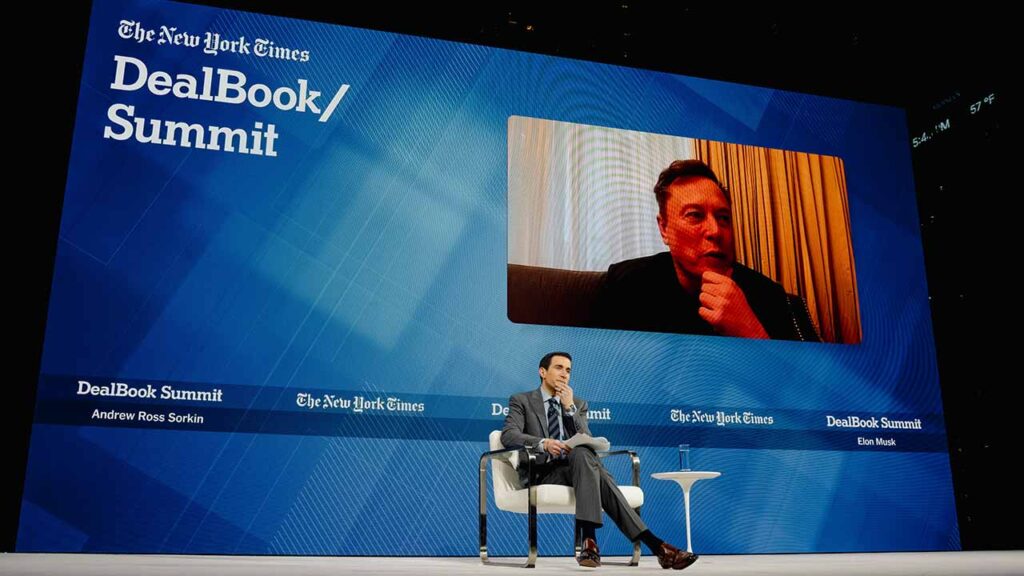
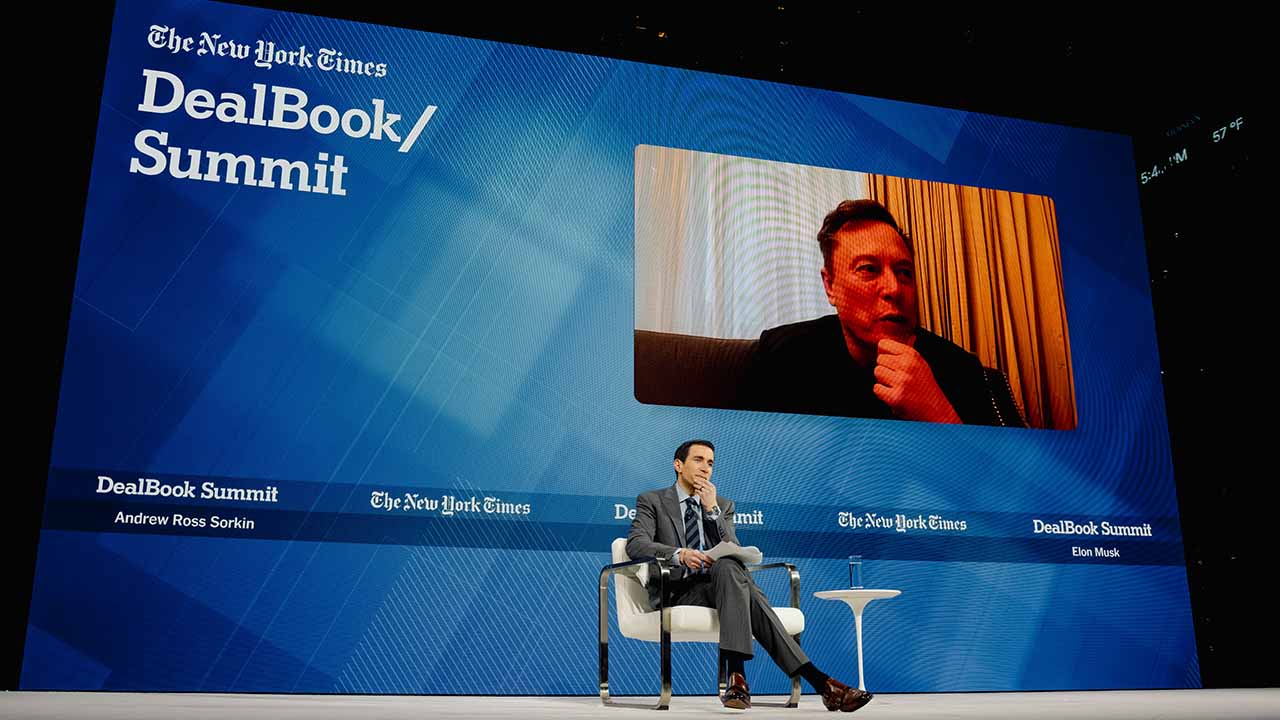
“I’m not MAGA,” Musk, the CEO of SpaceX and Tesla, said at the DealBook Summit on Wednesday. “If that means sort of blind adherence to a set of policies by the Republican Party, then I certainly don’t have that.”

(Musk has previously declared himself MAGA — and even “dark gothic MAGA.”)
Musk’s remarks were his most extensive to date after his midterms spending spree flopped. He bluntly said his effort “failed, by the way, obviously.” And it had him questioning, at an existential level, whether spending money on politics even worked.
Musk spent more money on the election than any person ever has in a cycle where they were not the candidate.
What about his spending millions in support of losing candidates like Ken Paxton, who ran for the Senate in Texas? “I feel pretty foolish about having spent so much money and not seeing much for it,” Musk conceded. “Probably if I could rewind the clock, I would have spent less money.”
The pivot by Musk was the latest effort by business leaders to grapple with the aftermath of the midterms, particularly as newly empowered Democrats took aim at billionaires and businesses like data centers.
Throughout the interview, Musk largely avoided the often fiery (and sometimes profane) declarations that punctuated his last appearance at the DealBook Summit, in 2023. He predicted that things in Texas would be “fine” under Gina Hinojosa, the incoming Democratic governor, who supports maintaining a moratorium on new data centers in the state. Musk, a Texas resident, called her “quite moderate” and “not a far-left governor.”
Musk spoke at length about less politically divisive topics, like potentially merging SpaceX and Tesla and helping humanity achieve interstellar travel.
He also defended Jensen Huang, the former CEO of chipmaker Nvidia, whom he described as “a friend of mine” and whom he supported returning to that role. Though U.S. intelligence considers that an executive whom Huang had an affair with was a Chinese intelligence asset, Musk said, “I don’t think he’s disloyal to the United States.”
Still, Musk was willing to be combative, particularly when it came to Ukraine.
Addressing restrictions on the Ukrainian military’s access to the satellite communications network that SpaceX runs, Musk said that the system, Starlink, was never meant to be used for offensive strikes in war.
“Do not ask me as a private individual to make kill decisions that sometimes result in the loss of innocent lives,” Musk said.
When asked about claims by Ukrainian President Volodymyr Zelenskyy that his country’s forces were using the military version of Starlink — which can be used for attacks — Musk shot back, “He’s not always truthful.”
—
This article originally appeared in The New York Times.
By: Michael J. de la Merced and Theodore Schleifer/Shuran Huang
c.2026 The New York Times Company