
|
Getting your Trinity Audio player ready...
|
ANTALYA, Turkey — Chestnut trees in England that normally bloom in April are flowering in November. Whale sharks that typically stay in tropical waters are swimming off the California coast. And in Zimbabwe, rains that sustain the country’s agriculture have yet to arrive, leading to a drought that is threatening the food supply.
As negotiations continue this week in Turkey at the United Nations climate conference, diplomats and scientists there are confronting a planet where warning signs are flashing. From the Arctic to the tropics, unusual weather and extreme heat are sparking worry about how quickly humans are reshaping the Earth’s natural processes.
“Everything that scientists were warning about is happening,” said Rachel Cleetus, director of the climate program at the Union of Concerned Scientists. “We’re profoundly changing the planet for every life-form that exists. It just feels like we’re letting the whole thing break before our eyes.”

At the start of the 12-day climate summit, which runs until Friday, world leaders detailed how climate change was wreaking havoc in their countries. Their top ministers are negotiating over ways to try to constrain global warming.
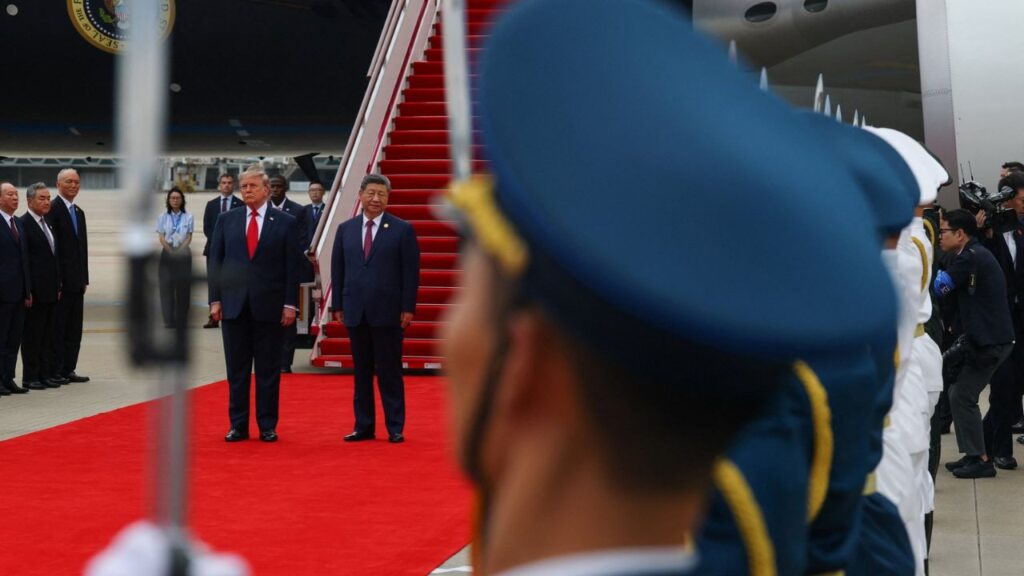
At the same time, leaders of the biggest polluting nations, President Donald Trump, President Xi Jinping of China and President Vladimir Putin of Russia, were set to meet in Shenzhen, China, where climate change is not expected to be discussed. (The United States did not send a delegation to the conference, which is known as COP31.)
Under the 2015 Paris climate agreement, almost every country pledged to try to limit global warming to 1.5 degrees Celsius, or 2.7 degrees Fahrenheit. Just 11 years later, that goal is effectively dead. Scientists say that without drastic efforts to cut carbon emissions, the planet will likely warm at least 2.6 degrees Celsius, or 4.7 degrees Fahrenheit, above preindustrial levels by the end of the century.
For those gathered at the U.N. climate conference, there was growing alarm that the effects of human-caused global warming were spiraling out of control.
“The climate crisis has not gone away; in fact it’s worsened,” said Chris Bowen, minister for climate change and energy for Australia, who is leading the negotiations in Turkey. “Countries around the world are dealing with natural disasters which are no longer natural, and dealing with impacts they never thought they would have to deal with.”
Fueling much of the extreme weather at the moment is an extraordinarily powerful El Niño, a natural climate pattern characterized by intense warming in an area of the eastern tropical Pacific Ocean.
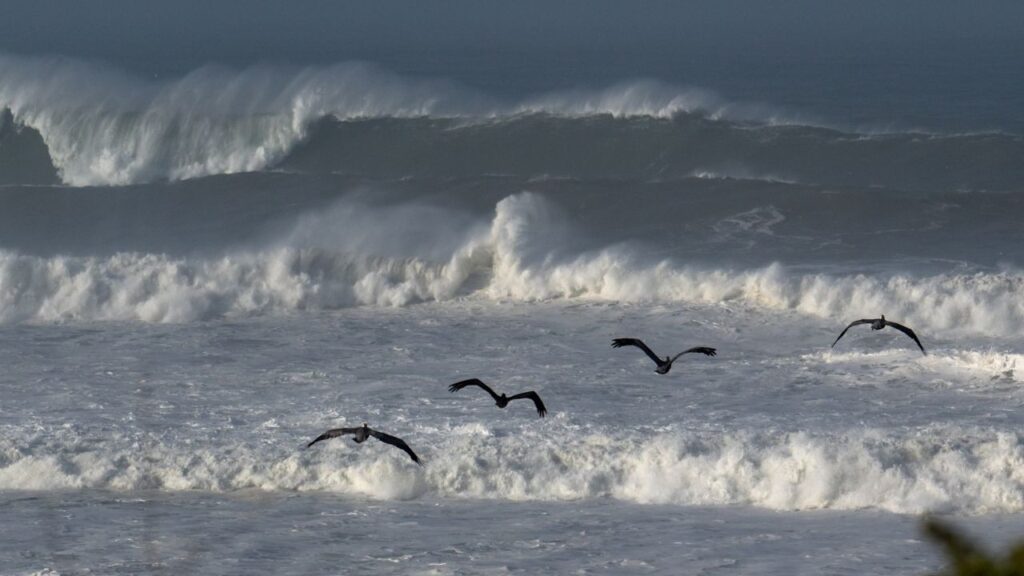
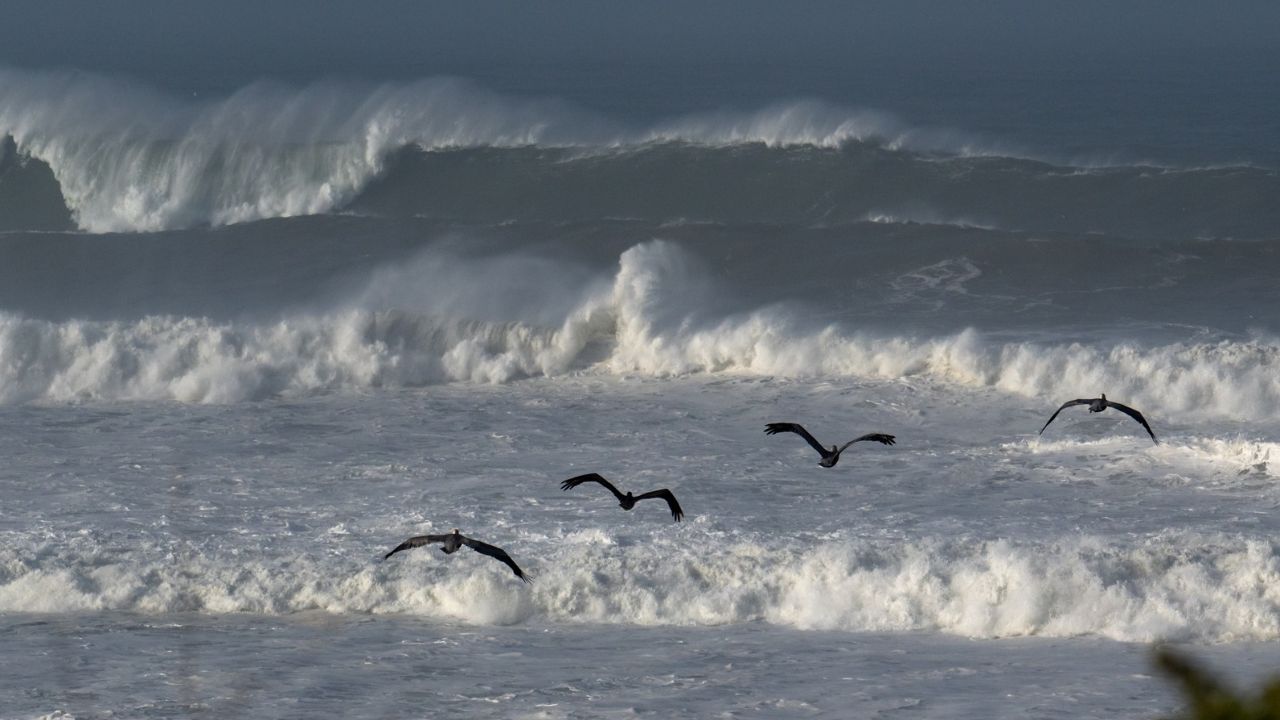
In recent weeks, waves of more than 50 feet driven by El Niño have crashed into the West Coast, which is also bracing for atmospheric rivers that are expected to dump record amounts of rain on California.
Near Peru, the waters are so warm that the country’s anchovy harvest has collapsed. Tropical fish are following warmer waters far from their usual habitat. In addition to the whale sharks off Malibu, California, there have been rare sightings of juvenile garibaldi fish in Monterey Bay, California.
According to Copernicus, Europe’s climate agency, ocean temperatures in August were the highest in recorded history.
“It’s shocking to see sea surface temperatures go completely off the charts,” said Johan Rockström, a Swedish scientist who is the director of the Potsdam Institute for Climate Impact Research in Germany. “If this new rate of warming is the new normal, that would be very scary.”
The heat is also leading to unseasonable foliage worldwide. In Chile, the Atacama Desert is covered with wildflowers after rains from El Niño. And in England, an unusually warm autumn led chestnut trees to flower six months early.
Research published this year found that even after accounting for other phenomena such as volcanic eruptions, solar radiation and natural variability, the rate of global warming has accelerated since 2015.
If global warming is speeding up, that means the worst effects of an overheated planet could arrive sooner than expected.
“It’s become clear that the consensus-based scientific process has vastly underestimated the speed and severity of climate impacts,” said Páll Gunnarsson, executive director of the Reykjavík Institute, a research organization in Iceland focused on climate tipping points. “What we’ve been seeing in the past few years goes way beyond what the models predicted.”
Last week, the polar vortex that usually keeps cold air trapped above the North Pole weakened unexpectedly, sending frigid air south. It is the earliest such event on record and yet another sign that the planet’s natural systems may be out of whack.
Recent studies suggest that a powerful ocean current, the Atlantic Meridional Overturning Circulation, or AMOC, that pulls heat up to Northern Europe could be at risk of breaking down.
“We find ourselves now facing a very credible threat,” Gunnarsson said of the potential of major changes to the current. “The more pessimistic scenarios are becoming more likely.”
—
This article originally appeared in The New York Times.
By David Gelles/Mike Kai Chen
c. 2026 The New York Times Company