

|
Getting your Trinity Audio player ready...
|
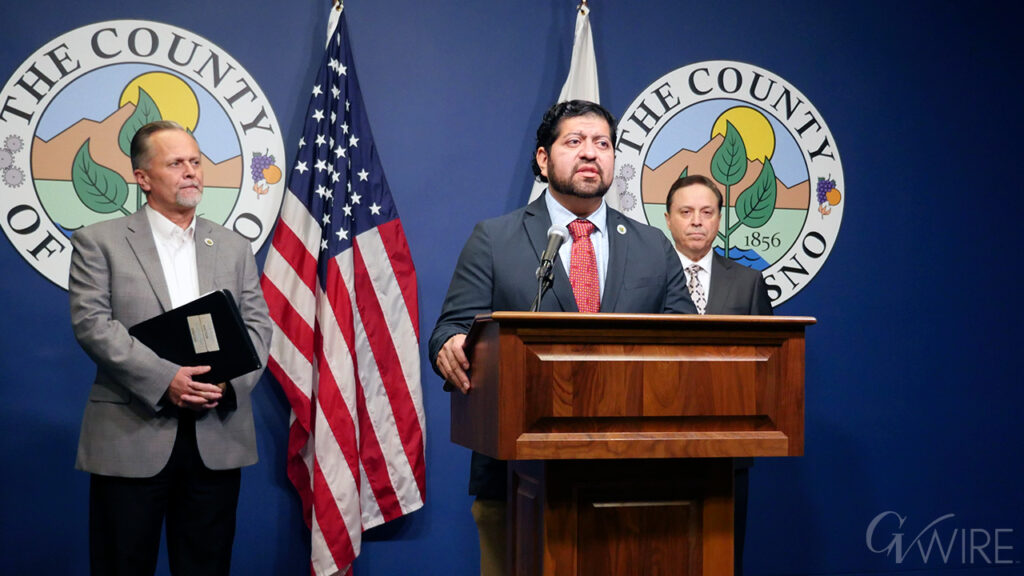
The long-awaited audit of the Fresno County Child Welfare Services came back with violations that could result in a new committee and a department-wide shakeup after “extremely troubling” findings that endanger the county’s vulnerable children, supervisors said Monday.
Findings include lengthy response times to child abuse calls to the hotline, prioritizing reunifications against staff recommendations and without necessary safety assessments, reported investigation dates being changed to reflect compliance with state regulations, and noncompliance with Indian Child Welfare Act.
Understaffing and High Caseloads
Auditors reported understaffing and high caseloads, as well as county workers completing documentation unpaid after hours to meet requirements.

The county now has 12 months to overcome those problems or it risks more state intervention.
“The results are extremely troubling and identify serious deficiencies in Fresno County’s Child Welfare Services operations and reflect systemic problems within the department,” said Fresno County Board of Supervisors Chair Garry Bredefeld.
Part of that response includes a new independent committee to provide continuous audits of the department, said Supervisor Luis Chavez.
“We need to set up a system that has a safety net built into it so that even if that child doesn’t have an advocate or somebody looking out for them, the system will catch a lot of these deficiencies and a lot of the challenges that they have,” Chavez said.
Whistleblower Calls for Top-Level Changes
With the state now intervening in the department, Fresno County will over the next 12 months have to come up with a response plan or face mandatory corrective actions. The state put in place benchmarks every three months to come into compliance.
And while whistleblower Lorraine Ramirez praised supervisors’ calls for action, she said the department needs leadership changes. Supervisors said those are under consideration.
Ramirez, a retired social services worker, also warned that any new committee needs to be truly independent and given authority that the county has not entrusted to the existing oversight committee. Ramirez in 2021 also alerted media about Fresno County having foster youth sleeping in offices and on desks. Those reports led to the retirement of then-director Delfino Neira.
She said the problems need to be addressed from the top.
“It needs to happen. (Director Sanja Bugay) has been given the ability to show what she can do,” Ramirez said. “But when you have to have people around you that we’re paying for them to help you do your job and you’re still failing, we’re wasting money.”
Seven ‘Critical Findings’ in Audit
Bredefeld and Chavez called for the audit in March after Ramirez raised concerns that the department had ignored staff recommendations and prioritized reunification of foster youth with their families at the cost of their safety.
The state’s audit corroborated those claims. State auditors conducted an on-site visit over two days in June, interviewing staff and supervisors. They reviewed 50 referrals and 40 foster care cases. One county worker told GV Wire the department sometimes reviews 40 or more referrals in a day.
The audit pointed out seven major deficiencies that the county needs to correct, according to Bredefeld:
- Significant delays in responding to child abuse allegations. While the county responded to child abuse calls needing an immediate response 87.5% of the time in a timely manner, timely responses to 10-day calls were only completed 23.5% of the time. On average, it takes county workers 17.1 days to make in-person contact, the longest wait since 2004. Auditors found it once took two months for an initial in-person contact to occur. Closing referrals also takes an undue amount of time — 69.2 days on average. The state said that delays in closing referrals resulted from understaffing and high caseloads.
- Child safety assessments not compliant with state law. Only 10 of 23 safety assessments reviewed were completed according to policy. In 60% of investigative referrals, risk assessments were missing, incomplete, or late.
- Investigation dates improperly changed. After reviewing duplicate referrals, staff used later dates to start the investigation clock.
- Children returned home or to a family member without a safety assessment. The audit found that 83% of reunification cases did not have a reported safety protocol. Among 12 cases involving reunification, 83% had no safety or risk assessment before returning home. In 41% of those cases, there was another referral within six months.
- Staff decisions overridden, retaliation fears. Auditors reported a “power struggle” between staff and supervisors. Staff said decisions were often overridden, even when it came to child safety. Supervisors reported that staff documentation did not “adequately capture child safety concerns,” saying additional details were needed.
- Inadequate documentation, insufficient investigative contact. In 14 of 40 foster case cases, the rationale for major decisions was unclear. In 12 of 25 investigative referrals, only the initial contact was made. Twelve percent of referrals were closed without face-to-face family contact.
- Out of compliance with Indian Child Welfare Act. Required inquiries were not completed in 32% of referrals reviewed.
County Has 12 Months to Show Compliance
With the audit completed, the state will monitor child welfare services to ensure compliance, Bredefeld said. The county now has to work within a 12-month timeline to meet state laws or risk losing state and federal funding.
Within three months, it needs to come with up an action plan and implementation steps. Between months three and nine, the county needs to implement that plan and identify any barriers or challenges.
By the end of the 12 months, the county needs to show it is in compliance with state law and the audit findings.
Bredefeld said there will be “full accountability” for problems in the department.
“The problems outlined in the report will not be tolerated and will be addressed and corrected immediately,” Bredefeld said.
‘Power Struggle’ Between Staff and Supervisors
Ramirez said the problems begin at the top. She said the county has hired experts to help director Sanja Bugay, including ombudsman Catherine Huerta, but problems persist.
Bugay came to Fresno County in 2022 as a replacement for Neira, previously serving as director of the Kings County Human Services Department.
Part of Bugay’s priorities included family reunification. When supervisors first considered the audit, Bugay touted decreased social worker caseload, which Ramirez largely credited to premature reunification.
“They’ll be so set on returning every child, regardless if the family’s got a criminal history, regardless if mom needs extra services — send the kids home,” Ramirez said.
County Administrative Officer Paul Nerland estimated that there are about 2,000 children in the foster youth system, down from highs nearing 3,000.
The audit found no clear policy for reunifying children. Of reviewed cases, nearly 42% of children had referrals back to child welfare services within six months of returning home.
83.3% of children in reviewed cases were returned home with safety or risk assessments. Two cases still had safety concerns documented at the time children were returned.
Ramirez said the county also exempted homes of family members from safety assessments to prioritize reunification.
“No, we have to vet everybody. This is a child, especially a child under the age of five that doesn’t have the language skills to protect themselves,” Ramirez said.
New Committee
Part of the plan includes the creation of a committee using service providers from outside the county, Chavez said.
“I think oftentimes we’ve looked internally for folks to solve this challenge, I think we need to get our community involved,” Chavez said.
Those considered for the committee include the Fresno Council on Child Abuse Prevention, CASA of Fresno & Madera Counties, foster family agency Angels of Grace, and the Fresno American Indian Health Project.
Valley Teen Ranch and SEIU will also be considered, Chavez said.
Ramirez said many of the groups mentioned by Chavez have strong histories of being advocates for children and for bringing concerns to light. The problem, however, is the county’s history of keeping committees in the dark, she said.
Chavez, who becomes the supervisors board chair in 2027, said the committee would have access to whatever information can be provided within the confines of confidentiality.