
|
Getting your Trinity Audio player ready...
|
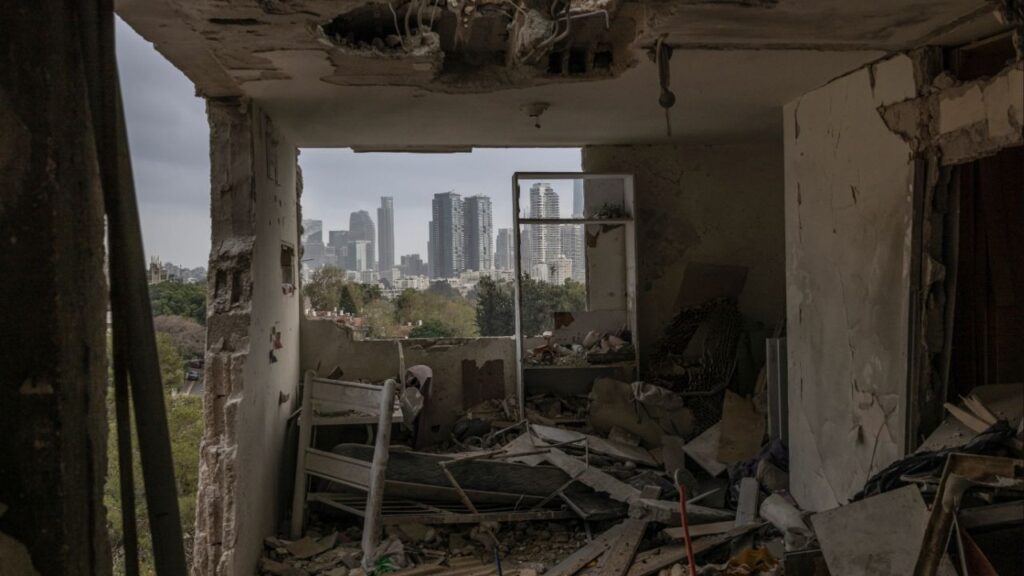
WASHINGTON — Senate Republicans on Thursday blocked a measure that would have barred President Donald Trump from continuing his offensive against Iran without authorization, moving for the second time since the conflict began to shut down a Democratic bid to limit his power to use U.S. military force without congressional approval.
It was the latest in a series of efforts by Democrats in recent months to challenge Trump’s unilateral military moves and insist that Congress have a say in the use of U.S. force abroad. And it came as Democrats have vowed to continue forcing such votes in a bid to compel top Trump administration officials to testify publicly about the ongoing conflict in Iran, about which they have so far briefed lawmakers only in classified settings.
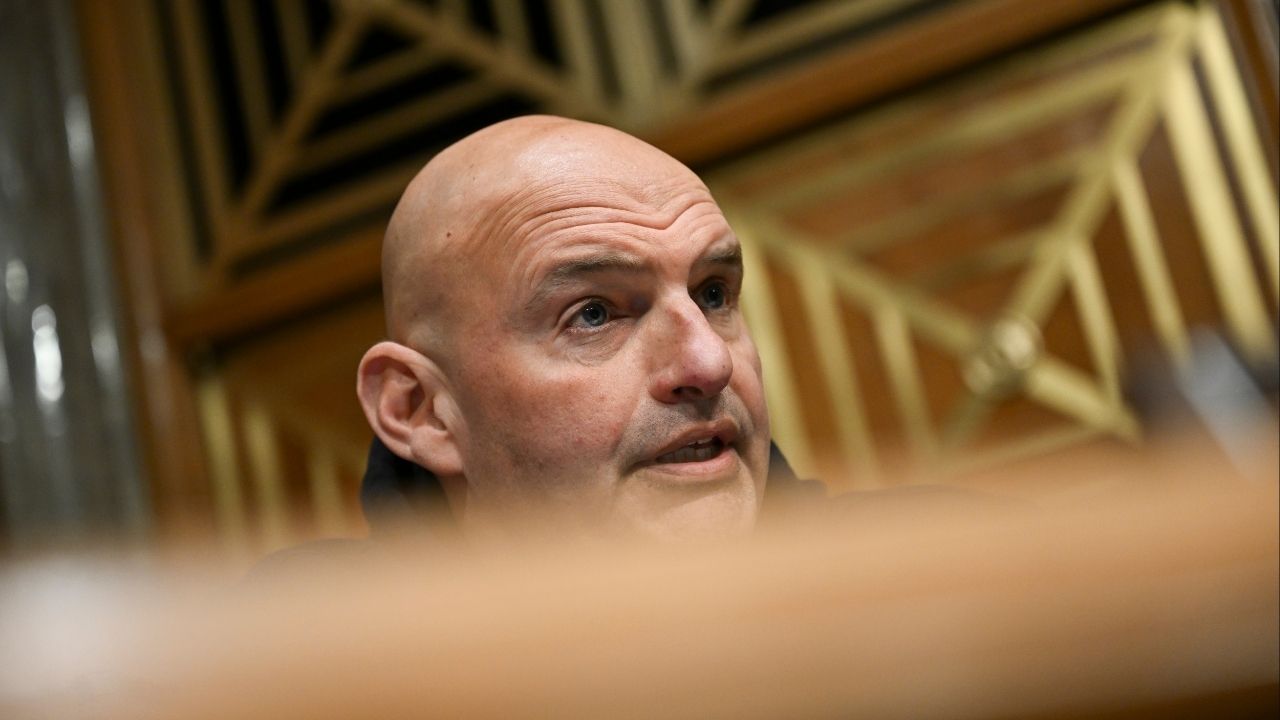
The vote was 53-47, almost entirely along party lines, to block the measure, which would have halted offensive U.S. military operations in Iran and forced Trump to secure a vote of Congress to authorize it. Every Republican except Sen. Rand Paul of Kentucky, a libertarian who routinely backs such war powers resolutions, opposed the measure, while all Democrats except Sen. John Fetterman of Pennsylvania supported it.

Since the United States and Israel began joint airstrikes against Iran late last month, Democrats have demanded that the Trump administration share more information on the objectives, timeline and costs associated with the military campaign.
“We do not know Trump’s goals. We do not know Trump’s timeline,” Senate Minority Leader Chuck Schumer, D-N.Y., said before the vote pushing for more transparency and public communication from the White House. “We do not know what victory even looks like in his eyes. Enough is enough.”
Days after the hostilities began, Sen. Tim Kaine, D-Va., was the first to offer a war powers resolution, in keeping with his role as the party leader forcing the issue. Wednesday’s measure was sponsored by Sen. Cory Booker, D-N.J., with backing from Kaine, among others.
“In the span of just two weeks, 13 U.S. service members have been killed and at least 200 of our American men and women have been injured,” Booker said in a speech before the vote. He implored his colleagues to support the measure, but the outcome appeared to be foregone as Democrats had no indications that any Republicans had shifted in their support since the conflict began 18 days ago.
Booker and his colleagues noted that in that time period, the conflict had expanded and still no public hearings had been held on Capitol Hill. “This administration, amidst all of this, has failed to come before the United States and the American people for public hearings to make its case on the biggest military war engagement since the war in Afghanistan,” Booker said.
Four other Senate Democrats have introduced similar resolutions that seek to invoke a provision in the 1973 War Powers Act, which requires expedited consideration of a challenge to the president’s ability to engage in hostilities without approval from and consultation with Congress. Both the Constitution and the War Powers Act allow the president to direct military actions in self-defense, which Trump and senior administration officials have argued was the case for the strikes in Iran.
During his State of the Union address days before the military campaign began, Trump claimed that Iran was “working to build missiles that will soon reach the United States of America.” And immediately after the strikes began, on Feb. 28, he said in a recorded video that the objective of the mission was to “defend the American people by eliminating imminent threats from the Iranian regime.”
Sen. Tom Cotton, R-Ark., contended that Iran and the leadership that has ruled there for nearly five decades had posed a risk to the United States during its entire existence.
“Iran has been an imminent threat to Americans for 47 years,” Cotton said, pointing to the Iran hostage crisis, the bombing of a U.S. base that killed more than 200 Marines and other deadly attacks led by Iran.
But critics of the operation have said the administration has failed to provide evidence that such a threat currently existed and warranted the strikes. And top officials have offered shifting explanations of what prompted them, raising questions about the legal justification.
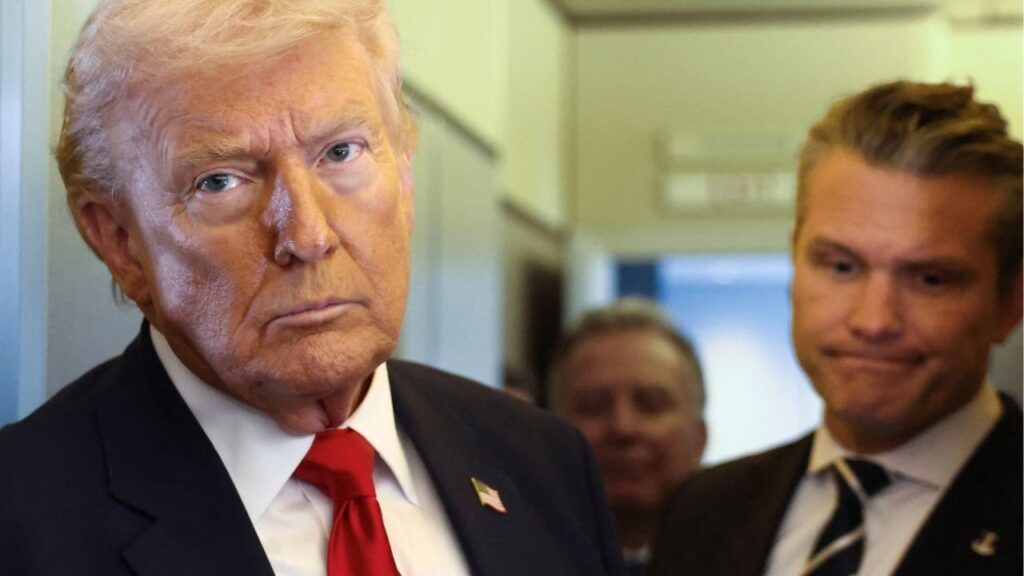
Sen. Roger Wicker, R-Miss., chair of the Armed Services Committee, said last week that he expected Defense Secretary Pete Hegseth and Secretary of State Marco Rubio to testify before relevant committees “in a nonclassified setting,” but did not provide a timeline for when such hearings would take place.
—
This article originally appeared in The New York Times.
By Robert Jimison/Kenny Holston
c. 2026 The New York Times Company