

|
Getting your Trinity Audio player ready...
|
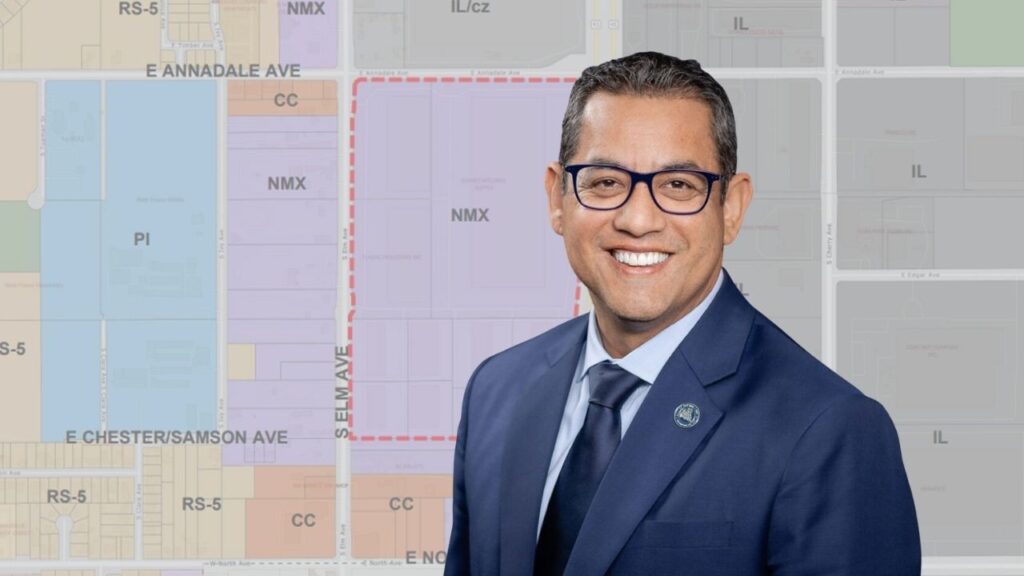
Despite a $100 million claim against the city that a 2018 rezone devalued two property owners’ investments in southwest Fresno, community leaders say the city must stand by that decision and not let developers control policy.
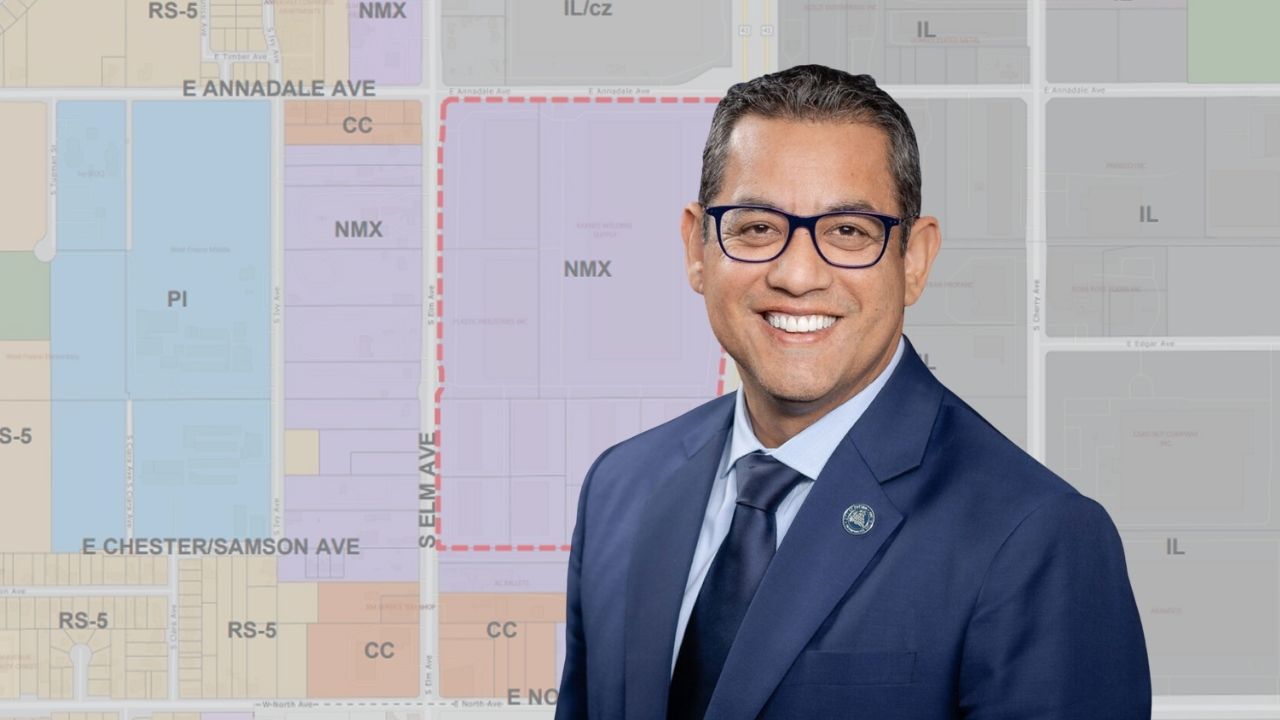
At a Wednesday news conference, Fresno City Councilmember Miguel Arias said the city attorney’s office has reviewed the claim and said the city council can move forward with two land use decisions that would affect property owners Buzz Oates and Span Development.
“We feel comfortable there is no legal foundation for their claims,” Arias said at the conference.

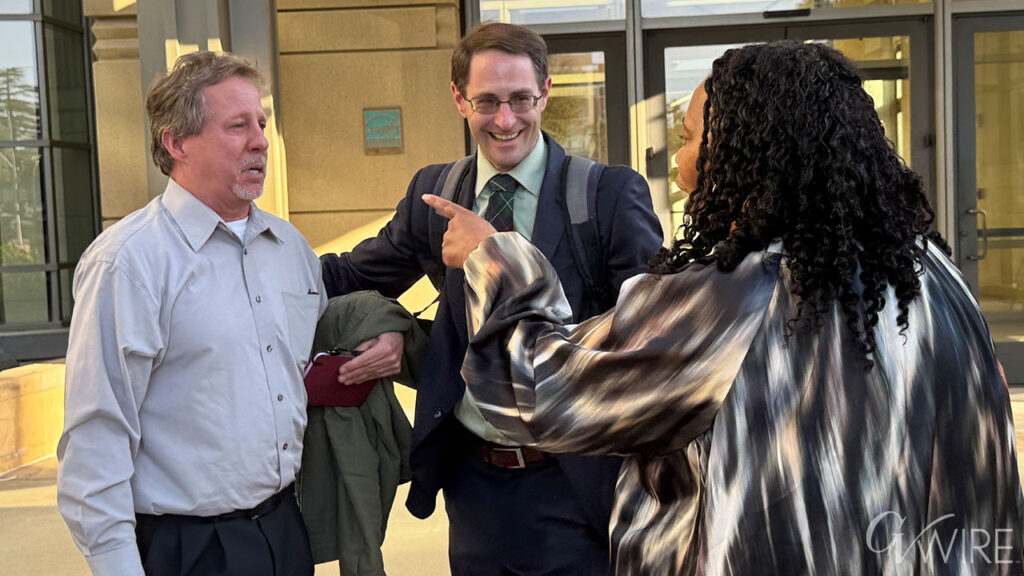
Also at the conference were Debbie Darden and Bob Mitchell, chair and vice chair of the Golden West Side Planning Committee, Pastor BT Lewis of Rising Star Missionary Baptist Church, Jose Leon Barraza, president of the Southeast Fresno Development Corporation, and Fresno Unified Trustee Keshia Thomas, who is running for Fresno City Council District 3.
Related Story: Fresno Landowners File $100M Claim Against City for Elm Avenue Rezone
Southeast Fresno Awaiting Specific Plan for More than a Decade
On Thursday, Fresno City Councilmembers will hear two land-use items: one, the Central Southeast Area Specific Plan, would prime southeast Fresno for redevelopment and designate more housing in the area.
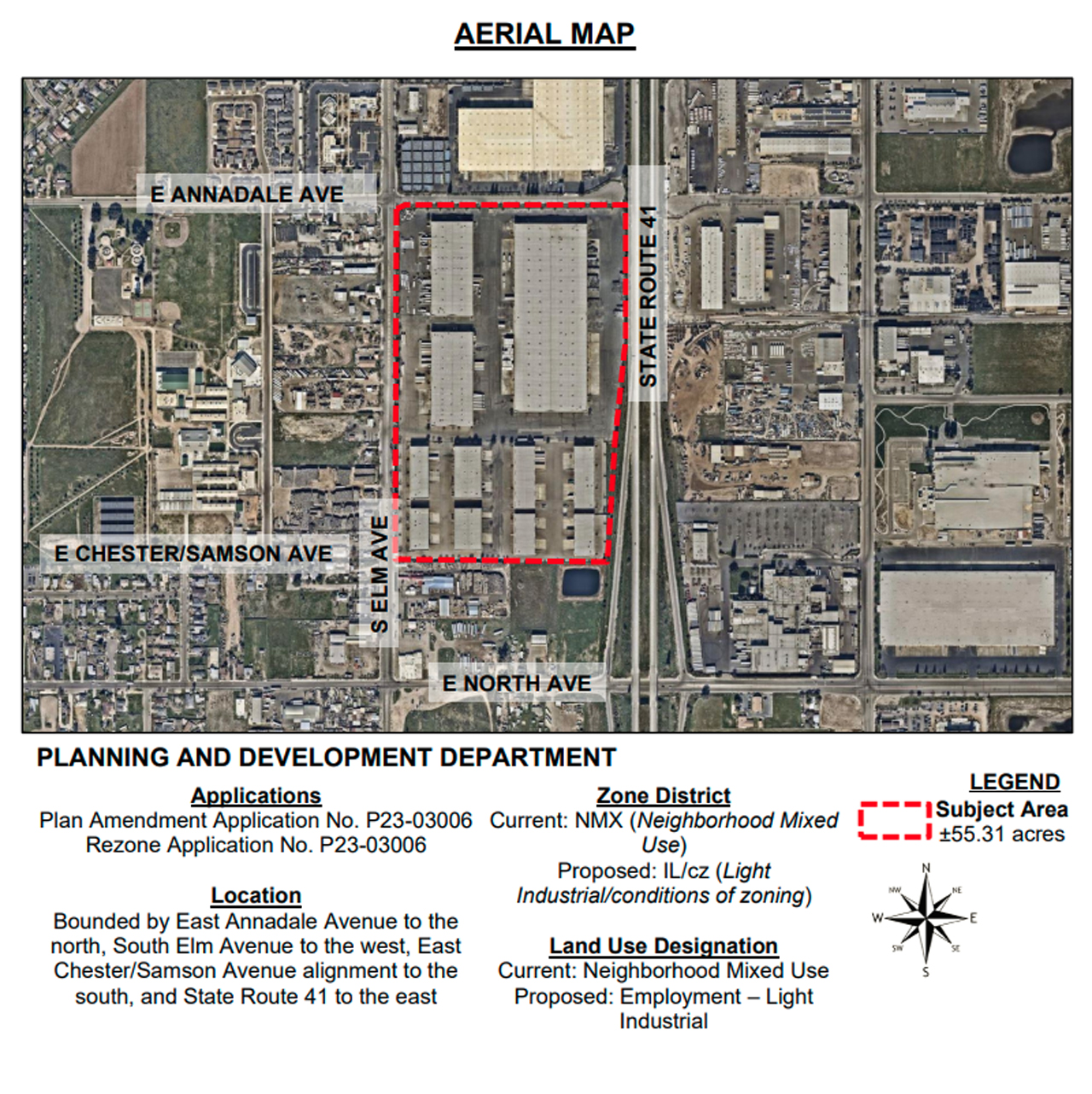
The other, a request to rezone 55 acres of land at Elm and Annadale Avenues back to industrial from commercial and residential use, has developers Buzz Oates and Span Development pitted against community members who say they want industrial businesses gone from the area.
The two companies had earlier wanted to use the increased housing designation to justify reverting land use back to industrial — a condition California law places on any land-use changes that reduce potential housing.
Additionally, the two companies say they paid the city more than $64,000 for environmental work to add more housing potential. With the city unwilling to add the accommodation at the same time, business owners want the discussions to happen all at once.
Arias, however, said applicants for one item don’t get a say in other city matters.
“These neighbors in southeast have waited nearly a decade for the southeast specific plan to be approved. This today isn’t about politics,” Arias said. “This is about a long- overdue opportunity for the working families of southeast Fresno that have been left behind to finally have a thorough plan for economic development in their area.”
Southwest Needs a Specific Plan: Darden
On Tuesday, attorney Andrew Skanchy, representing developers Buzz Oates and Span Development said the city’s decision to zone away from industrial use devalued their property and made doing business difficult.
While the changes in the 2018 Southwest Fresno Specific Plan allow continued industrial use, selling the building or waiting too long between tenants can make their businesses noncompliant.
Neighbors, however, say the changes are essential to revitalizing southwest Fresno, which is one of the most heavily polluted areas in the country. In addition, residents say they lack necessary retail and adequate housing, forcing people in the area to travel long distances for amenities.
Industrial presence in southwest Fresno has discouraged those businesses from coming to the area, said Lewis.
Darden, who with Lewis was instrumental in creating the specific plan, said the plan has laid the groundwork to turn that around.
“For a long time, we had to listen to developers to include retail and stores that say you don’t have enough rooftops or you don’t have enough businesses,” Darden said. “Now, we started to understand why we didn’t have that. It was because we didn’t have a specific plan.”
Mitchell, also with the planning committee, said reverting the zoning would be a push backwards.
“We’re hopeful that other members of the council will do what is right, do what is just, and do what’s fair and deny this Elm Street rezone,” Mitchell said.
Skanchy said the two companies paid the city more than $64,000 to do environmental work on a piece of land within the southeast specific plan that would make up for lost housing if his client’s land was zoned back to industrial.
They say an agreement with the city came with the understanding both items would be heard at the same time. The city’s interpretation of state law requires that any loss of potential housing — such as with the Elm Avenue rezone — must be made up for at that same meeting.
Arias said the city followed the law in executing the land-use change, saying property owners had 90 days after the 2018 decision to appeal the choice. Property owners have long maintained they were left out of those conversations.
Elm Avenue Discussion Quickly Becomes Political
The Elm Avenue discussion has spurred much political infighting at the dais.
In anticipation of the Elm Avenue rezone hearing, Arias held a community listening session and posted several comments letting people know about the hearing.
In response to those actions, political consultant Alex Tavlian, who represents Elm Avenue business owners, sent out a news release earlier this week saying Arias needs to recuse himself in the discussion because the matter is quasi-judicial.
“Council members are required to sit in a judge-like manner and act impartially, only rendering decisions based on evidence and information present during the hearing,” Tavlian’s new release stated. “They cannot advocate for one side or the other, or organize opposition or support.”
Tavlian is also a political consultant for Councilmember Mike Karbassi.
Arias pushed back, saying that gathering input from community meetings is what his job calls for.
City Attorney Andrew Janz confirmed to GV Wire that the community meeting would not interfere with Arias’ ability to participate in decision-making.
He went so far as to play a voicemail reportedly from Kevin Ramos, chief investment officer for Buzz Oates, requesting a meeting with Arias. A call to Ramos by GV Wire to confirm the call was not returned.
“The idea that listening to residents creates a bias is not just wrong, it’s backwards,” Arias said. “The same applicant who claims that I should be recused because I had an informational town hall meeting, left me voice messages asking to meet with me to lobby me.”