

|
Getting your Trinity Audio player ready...
|
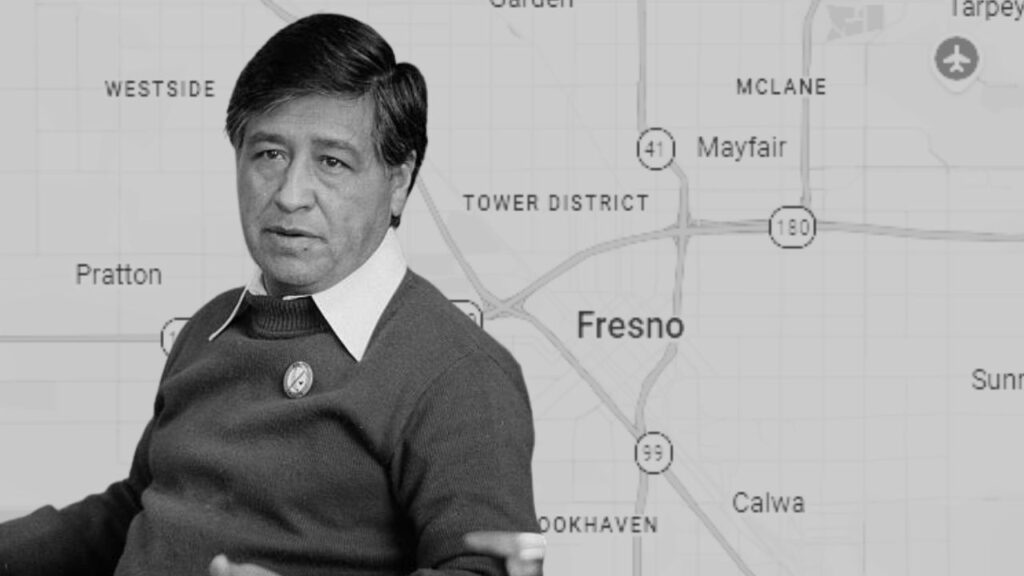
Every year, thousands gather to celebrate Cesar Chavez, the labor leader who rose from the poverty of Arizona’s lettuce fields to build one of the most influential labor movements in American history. Chavez secured better wages and health care for generations of farmworkers while forging a new era of Latino political agency, reshaping not just labor law but the country’s sense of who deserved dignity at work.
President Bill Clinton, after Chavez’s death in 1993, likened him to “a Moses figure,” whose crusade inspired a nation.
But while he was working to help immigrant farmworkers, he used women and girls for his sexual gratification, The New York Times found. That included underage girls, who described being sexually assaulted by him, and Dolores Huerta, the cofounder of his United Farm Workers union, who said that Chavez raped her.

The Times investigation featured on-the-record interviews with those who were assaulted, who are speaking publicly of those experiences for the first time. Their accounts were corroborated, in part, by interviews with more than 60 top aides, union members and relatives, as well as a review of hundreds of pages of union records, confidential emails, photographs and contemporaneous audio recordings.
Here are six takeaways:
Chavez Sexually Abused Two Underage Girls in the 1970s
Ana Murguia and Debra Rojas, both 66 now, were the daughters of longtime United Farm Workers organizers and had known Chavez since they were children. Both women lived at La Paz, California, the union’s sprawling compound in the Tehachapi Mountains, more than 100 miles north of Los Angeles.
Murguia met Chavez when she was 8. (He was in his 40s.) It was in the privacy of Chavez’s office that he began to molest her, starting when she was 13. He told her to keep it a secret, saying others would get jealous. She said the sexual abuse lasted until she was 17.
Rojas said she was 12 when Chavez first touched her and fondled her breasts, in the same office where he’d meet with Murguia. When Rojas was 15, he arranged to have her stay at a motel during a weekslong march through California. There, he had intercourse with her — rape, under California law. She was a virgin. He told her that he had known they belonged together since he saw her at the age of 9.
Both women have struggled with depression, panic attacks and substance abuse in the years since. They maintained their silence for decades, fearing speaking out would tarnish Chavez’s legacy, but decided in recent months, after being approached by reporters, that their stories also counted.
Chavez Sexually Assaulted Dolores Huerta in 1966
Chavez and Huerta had a 30-year working partnership, which from the outside looked like a remarkably egalitarian bond at a time when few women led union movements.
But in her interview, Huerta, now 95, described being raped by Chavez, a secret she had held on to for nearly 60 years.
One night during the winter of 1966, she said, Chavez drove her out to a secluded grape field in Delano, California, parked and forced her to have sex inside the vehicle. She said she chose not to report the assault to the police because of their hostility toward the movement, and she feared that no one within the union would believe her.
She also described an earlier encounter in August 1960, when she said she felt pressured to have sex with Chavez in a hotel room during a work trip in San Juan Capistrano in Southern California.
But she did not publicly accuse Chavez, in part, she said, because she was a woman struggling for acceptance in the male-dominated world of union organizing in that era.
Chavez Fathered at Least Four Children Outside His Marriage
Chavez married Helen Chavez in 1948, when she was 20 and he was 21. They had eight children together. Chavez also fathered at least four children with three other women. He never publicly acknowledged them.
Huerta said she had two children with Chavez from the two encounters she described. She said she concealed both pregnancies even from Chavez. She placed both infants with families she believed could provide more stable lives.
Another of the women, the sister of a union volunteer, gave birth to a boy in 1963, when she was 21, and gave the infant to a friend to raise. Another, a volunteer in Oxnard, California, gave birth to a girl in 1960.
Chavez Pursued Other Women in the Labor Movement
At least a dozen women described being pursued, and some sexually harassed, by Chavez, Some of them chose to make their story public while others preferred to remain anonymous.
Esmeralda Lopez said he was 61 and she was 19 when he attempted to have sex with her. Lopez, the daughter of a longtime union leader, Cynthia Bell, had known Chavez since she was a child. She said she had accompanied him on a speaking tour in Michigan in 1988. During the tour, Chavez had Lopez join him in a camper and told her that he could name a street after her if she slept with him. She refused. Chavez fired her and a female co-worker not long after that.
Bell said the union leader also had made sexual advances toward her during a dance at a fundraiser in the early 1970s. She was in her early 20s at the time. She said she avoided being in a room alone with him for years afterward.
Reports of Chavez’s Behavior Had Circulated in the UFW for Years
Whispers within the movement had circulated privately for decades. Susan Drake, Chavez’s secretary from 1971 to 1973, initially saw nothing suspicious. She said she only learned of the abuse in the 1980s through a union volunteer, though she admitted she was initially reluctant to believe it. “I think it goes back to wanting to protect the positive image,” she said.
Several relatives and former union leaders have long been aware of Chavez’s sexual misconduct. In the early 2000s, union supporters reportedly informed his son, Paul Chavez, who chairs the board of directors at the Cesar Chavez Foundation, of the allegations. When asked about his reaction at the time, Chavez responded: “It was unimaginable to me, just hard to process. You’re talking about my dad.”
Internal emails from over a decade ago further document union members discussing the effects of the abuse on Murguia. One of her relatives had even confronted Chavez directly about the allegations as early as the 1980s.
Moreover, more than 10 years ago, members of a private Facebook group for longtime Chavez organizers and supporters were stunned to read a post from Rojas that she wrote in a fit of anger, although she deleted the message several days later. Her post read, in part: “Wake up people. This man u march for every year molested me.”
The Women’s Claims Are Already Prompting a Reaction
The Times’ investigation into Chavez triggered immediate concern among his allies, even before it published. In response to the reporters’ inquiries, the UFW canceled its annual celebrations for its former leader on his birthday March 31, describing the allegations as profoundly shocking. “We need some time to get this right, including to ensure robust, trauma-informed services are available to those who may need it,” the union said in its statement Tuesday.
Several parades were canceled, including in Texas and California, while one city in Michigan canceled a dinner held annually to honor the labor union’s legacy.
This article originally appeared in The New York Times.
By Sarah Hurtes and Manny Fernandez/Ariana Drehsler
c.2026 The New York Times Company