
|
Getting your Trinity Audio player ready...
|
This story was originally published by CalMatters. Sign up for their newsletters.
Since California made it easier for sexual abuse survivors to sue government agencies, victims have brought forth more than $3 billion in claims. But even agencies that haven’t been sued are facing financial hardship as a result of the law — through skyrocketing insurance premiums.

By Carolyn Jones
CalMatters
School districts, counties and other public agencies in every corner of California have seen their liability insurance premiums soar, in large part because of that law, which passed in 2019. Some districts have seen their yearly insurance costs jump by $1 million or more.
To pay the premiums, schools have had to leave teacher vacancies unfilled, scrap renovation projects and make other cuts that affect students. Counties have cut back on public safety, roads, health care and social services.
“It’s become unmanageable,” said Dorothy Johnson, a legislative advocate for the Association of California School Administrators. “We desperately need guardrails, or the situation will become very dire.”
School districts and other public agencies are begging the Legislature to intervene by capping the settlements, similar to the way medical malpractice settlements are capped. That could also include capping attorney fees, which can top 40%.
The agencies don’t have traditional private insurance. Some larger ones are self-insured, but most belong to risk pools made up of a few dozen other agencies. So when one agency faces a large settlement, premiums increase for everyone.
At schools, the law has had a direct impact on student learning, according to research by the California Association of Joint Powers Authorities, which represents public agency risk pools.
A year after the average school district paid a settlement of $1 million or more, the number of its students who met the state’s math standard fell by 3.7 percentage points, and the number of students meeting the reading standard dropped by 3.4 percentage points, according to the group’s research. The reason, the study states, is that those schools had to cut back on tutoring, after-school programs, field trips and other offerings aimed at helping students stay engaged in school.
Those numbers are a contrast to statewide scores, which have been generally rising since the pandemic ended.
“Classrooms are being impacted because there’s money being pulled out of the education system,” said Faith Borges, legislative advocate for the California Association of Joint Powers Authorities. “I don’t think that there’s an understanding that these really, truly are taxpayer dollars. We need to have an informed conversation about where this money is coming from.”
There’s no end in sight. The law allows survivors to sue within five years of remembering they were abused, in perpetuity.
Public agencies rarely contest plaintiffs’ claims. The main reason is the horrific nature of the incidents; agencies generally believe victims should be compensated. Another reason is the lack of evidence, particularly for cases more than 20 or 30 years old. In those cases, the perpetrator and other school staff are often long gone or even dead, and schools typically don’t have paperwork dating back that long. They often don’t even know who their insurance carrier was.
Taxpayer-Funded Insurance
For most public agencies, the size of the settlements is the primary problem. Many exceed $10 million. Los Angeles Unified, the state’s largest district, recently issued $500 million in bonds to settle cases. Los Angeles County agreed to pay $4 billion to settle more the 6,800 claims. The settlements are paid by taxpayers through a combination of the agency’s general fund dollars, reserves and insurance.
The law that lowered obstacles for sexual abuse survivors to sue, AB 218, was intended to bring a degree of justice to sexual abuse victims. In some cases, school staff had been abusing students for years, even after administrators learned it was happening. Incidents range from inappropriate comments to rape. A 2004 report by the U.S. Department of Education estimated that 1 in 10 students nationwide had endured misconduct by school staff.
To bring further accountability to schools, California passed another bill in October that requires schools to train staff and students on preventing sexual misconduct. The law, SB 848, also mandates that the state create a database of school employees that have been credibly accused of abuse, in an effort to keep abusers from getting rehired elsewhere and continuing to harm children.
‘Doing the Best We Can’
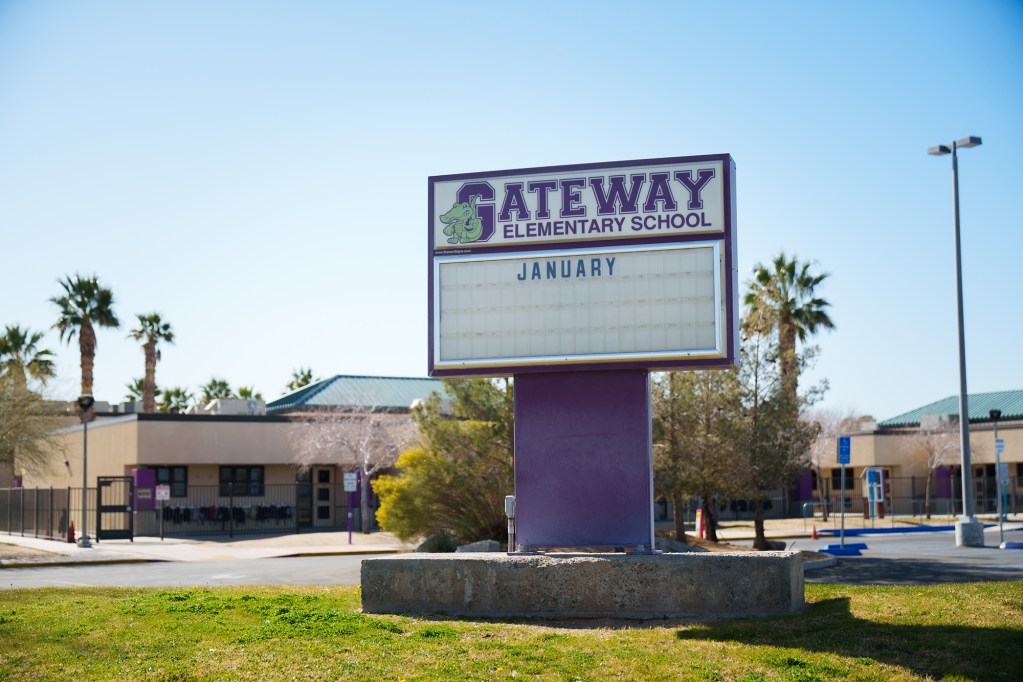
Sierra Sands Unified is a medium-sized district in Ridgecrest, in the high desert about two hours east of Bakersfield. It’s in a remote and harsh environment: Summer months exceed 100 degrees most days, and winter temperatures often drop below freezing. Rain is rare, and dust storms are frequent.
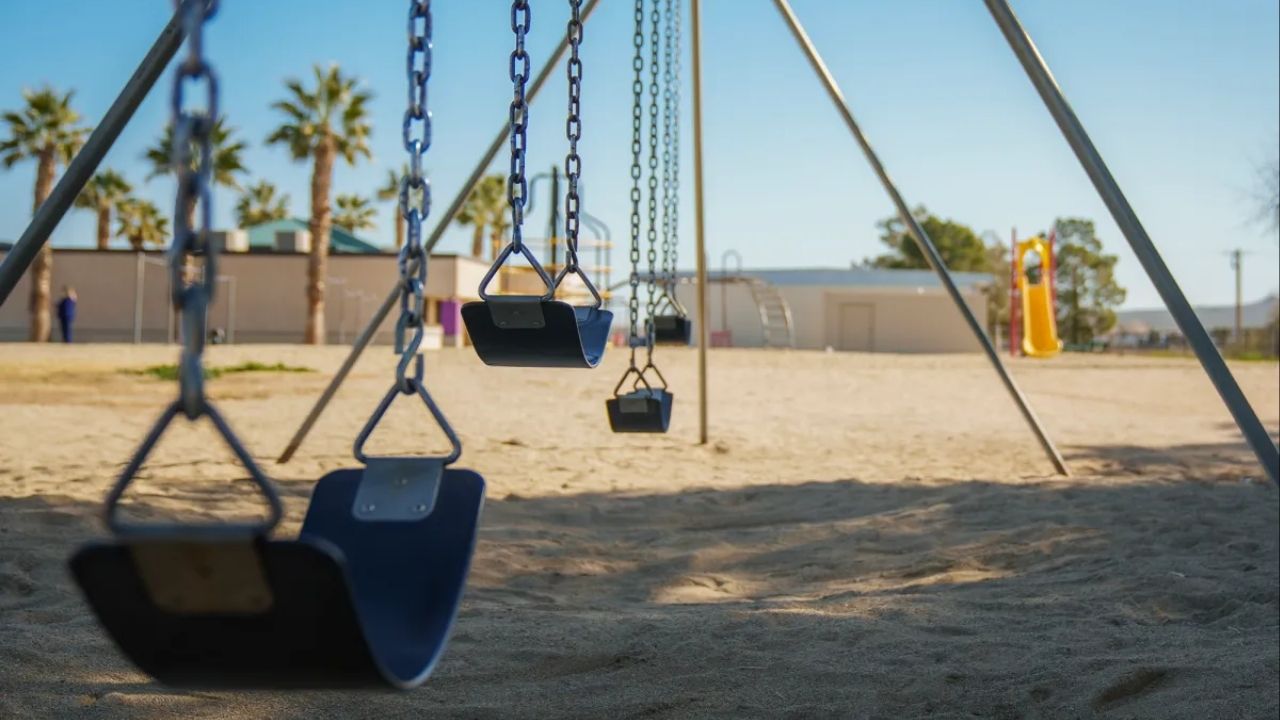
Those conditions take a toll on school facilities. The relentless sun degrades anything outdoors, including ground cover and play equipment. Maintenance staff remove pieces of monkey bars and slides as they become damaged, leaving “ever-shrinking” play equipment on hard-packed dirt, said Superintendent April Moore.
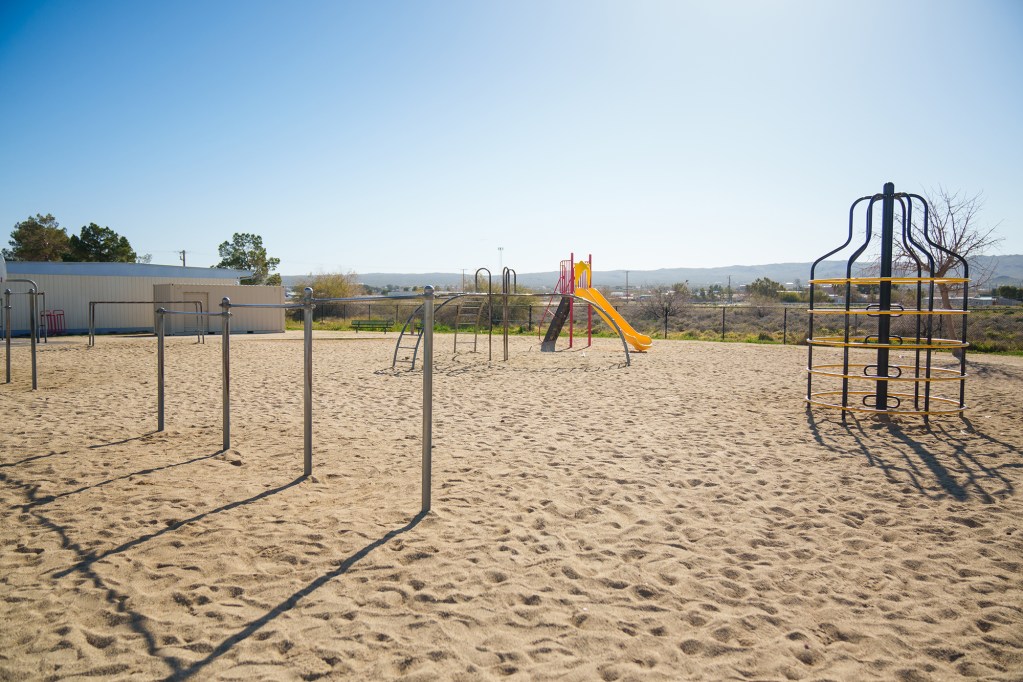

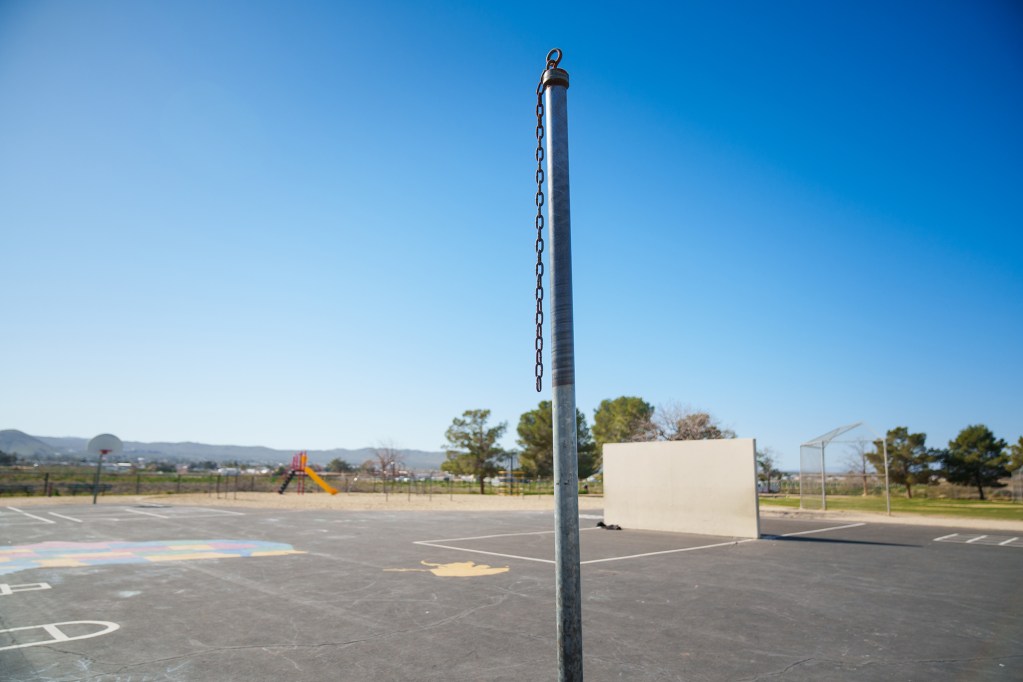
The district planned to replace its elementary school play structures last year, but had to cut back that plan because of soaring insurance premiums. In the past three years, the district’s yearly total insurance costs have gone up $500,000 a year, to nearly $1.2 million annually. The district’s annual budget is $80 million, nearly 90% of which goes toward salaries. That doesn’t leave much extra to pay for things like repairs.
As a result, the district was only able to replace two of the seven elementary school play structures. It also had to limit raises for staff, which Moore fears will hamper the district’s ability to attract and retain teachers — already a tough proposition in such a remote area.
The cuts have been hard on morale for the entire community, Moore said.
“I don’t want our staff to feel like they’ve settled by staying here, or they’re stuck. I want them to feel valued and respected,” Moore said. “In our remote area, our students and staff and families are all one. For me, this is all one conversation. Everyone is affected.”
Moore said she often worries about the future. The district’s insurance premiums are certain to continue increasing, which makes it hard to plan.
“We’re having to budget for these unknowns. … Sometimes I feel helpless,” Moore said. “And it’s affecting the kids of today.”
Striking a Balance?
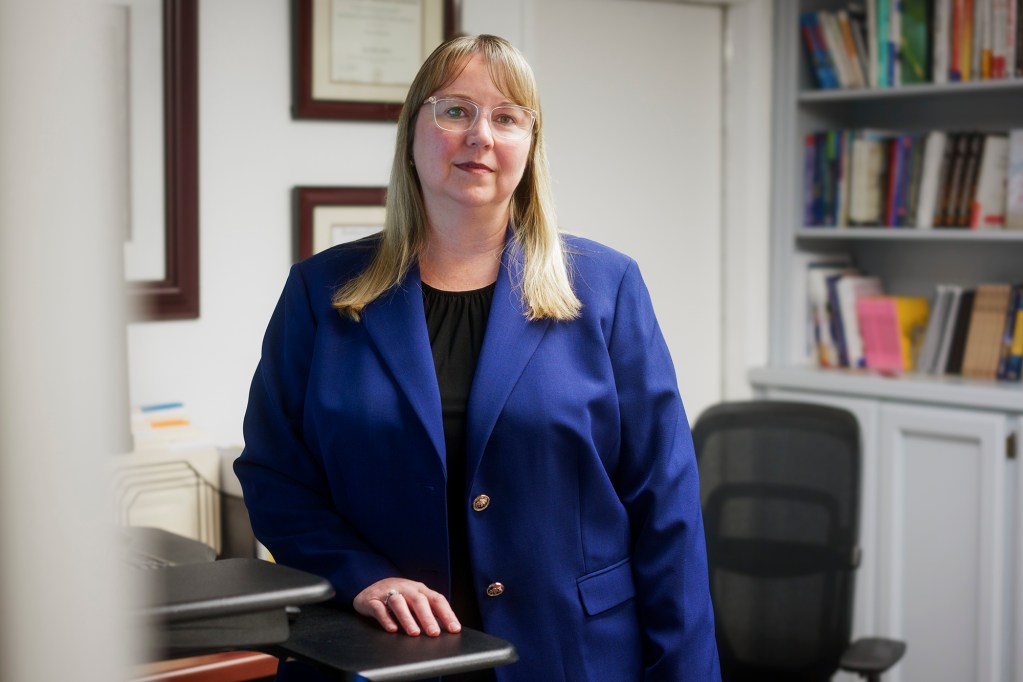
Schools and other public agencies have pushed to reform the laws governing sexual abuse suits. So far, they haven’t gotten anywhere.
A bill last year by Sen. John Laird, a Democrat from Santa Cruz, would have reined in the settlements by creating a statute of limitations, but the bill died amid vehement opposition from trial attorneys.
Assembly Speaker Robert Rivas, a Democrat, has asked several legislators to “explore solutions that strike the right balance on this critical issue: ensuring meaningful access to justice for all survivors, while safeguarding schools and cities from financial consequences that could lead to lost or reduced services,” according to Rivas’ spokesman, Nick Miller.
“(Rivas) has a long history of defending and supporting survivors, and has consistently been a steadfast advocate for survivors of childhood sexual assault,” Miller said. “We will closely review any proposals brought forward this legislative year.”
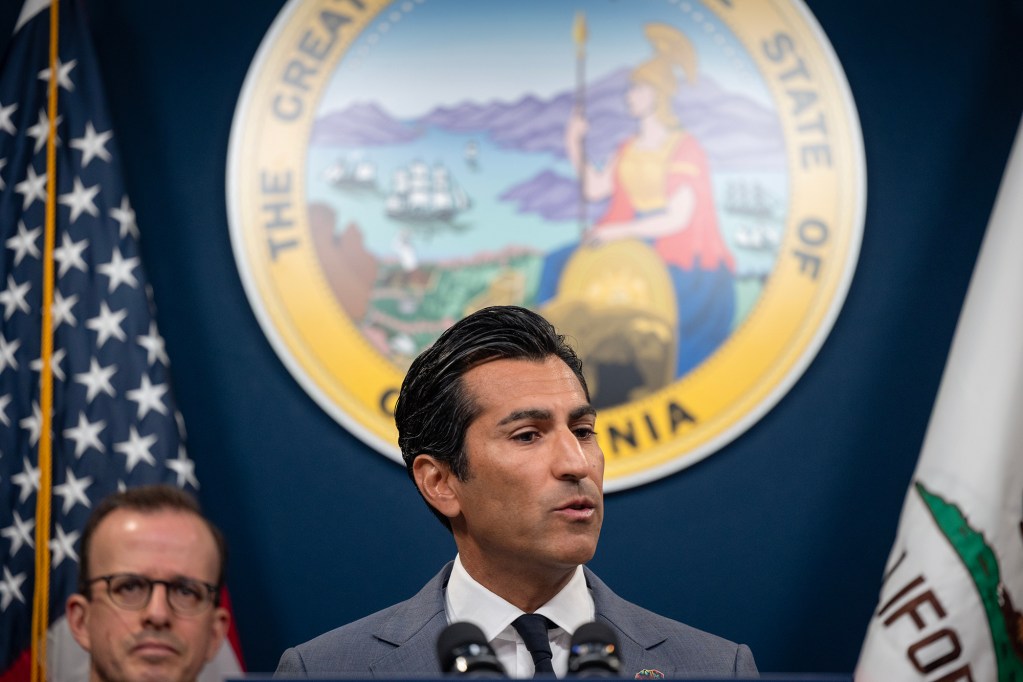
Trial attorneys have been aggressive in defending AB 218. Last year, when legislators were considering limits to the law, an Orange County law firm bought social media ads featuring a large photo of Rivas with the words, “STOP the Predator Protection Law. Stand with Child Victims.” The bill died.
John Manly, a partner at the firm that purchased the ads, said he doesn’t plan to back down.
“What kind of idiot politician is going to put up a bill that protects people like Epstein? It’s radioactive,” Manly said. “Any attempt to limit these lawsuits is a cynical, disgusting, wrong-headed attempt to keep the public from knowing the full extent of this problem.”
Manly’s firm has represented thousands of victims who say they were abused in California public schools, he said. He believes schools’ claims of financial hardship are “a scam,” and politicians who seek to cap settlements are essentially enabling child predators.
“Kids who’ve been abused take a hit for life. And we’re going to cap settlements? Any politician
who tries to do that we’re going to chase to the ends of the earth,” Manly said.
‘No Voice, No Power’
Nancy, a woman who sued Los Angeles Unified in 2020 after she said she was abused in middle and high school, said money was not her primary motivation for filing a claim. It was more about empowerment and seeking changes in the system, she said.
“I felt I had no voice, no power,” said Nancy, who asked that her last name not be used to protect her privacy. “I want to see policies change. Unfortunately, money gets people’s attention.”
Nancy was in middle school in the early 1990s when her math teacher began paying her compliments such as “You’re attractive, intellectually and physically,” and “I like you,” Nancy said. The attention made her feel special, and soon she had developed a friendship with him. By the end of the school year it had become physical, she said.
In her junior year of high school, a music teacher took a similar interest in her. Because of her previous experience, she was especially vulnerable to his attention, she said.
She told almost no one about either experience and put it out of her mind for years. In her 30s, she began talking about it with a therapist, and spent years trying to overcome the shame and guilt she felt, she said. Eventually, she felt confident enough to file a police report. A year later, she filed a civil lawsuit against the school district.
In all, Los Angeles Unified has faced about 370 abuse claims since AB 218 passed. Nancy’s former math and music teachers are no longer employed by the district, she said.
“I hope everyone knows that behind every payout is a person, someone who was harmed as a child,” said Nancy, who now works as a special education teacher. “There’s a soul behind every story.”
Hardships for Counties
In Napa, insurance premiums are expected to climb to $20 million annually in the next few years, said the county’s chief executive officer, Ryan Alsop. Wildfires and other factors have also led to the increase, but abuse claims have also been a significant factor, Alsop said. The county will have to find room in its $400 million general fund to pay it, likely cutting more services.
There’s an extra concern, he said, because President Donald Trump’s cuts to Medicaid and food assistance will soon put new demands on counties to cover the gaps. Statewide, counties will have to come up with an extra $9.5 billion a year to make up for federal funding shortfalls, according to the California State Association of Counties.
“It’s a real problem, not just for Napa but for all counties,” Alsop said. “Obviously victims deserve justice, but the effects of AB 218 are real.”
—
This article was originally published on CalMatters and was republished under the Creative Commons Attribution-NonCommercial-NoDerivatives license.